Five Critical Bitcoin Developments This Week as BTC Eyes 2021 Price Levels
Cryptocurrency traders issue warnings about potential Bitcoin bottoms below $50,000 as price movement trends toward 2021 bull run peak levels.
The opening week of February saw Bitcoin (BTC) trading near 16-month lows while market participants anticipate additional downward movement ahead.
- Following a disappointing weekend, BTC price vulnerability intensifies as BTC/USD touches price points last observed in November 2024.
- The primary foundation for anticipating a market recovery comes from RSI measurements.
- Macroeconomic transformations are starting to emerge as analysts caution that Bitcoin may be forecasting upcoming market distress.
- Precious metals including gold and silver decline alongside equities, while the US dollar demonstrates renewed vigor.
- The Coinbase Premium indicator plunges significantly into negative range, highlighting insufficient Bitcoin demand from United States investors.
Bitcoin approaches 2021 peak while analyst targets $50,000
The weekly and monthly candle close saw Bitcoin price movement leaving most market participants decidedly pessimistic.
The situation deteriorated further on Monday, with BTC/USD surpassing its April 2025 bottom to register its weakest performance since November 2024, according to data provided by TradingView.
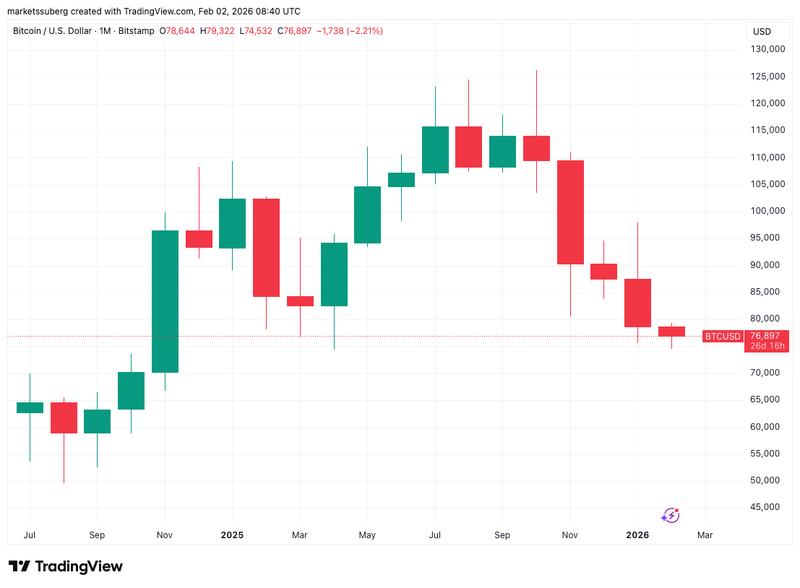
In response to these developments, several market observers had already expressed apprehension regarding Bitcoin's inability to demonstrate strength since the previous year, asserting that further deterioration lies ahead.
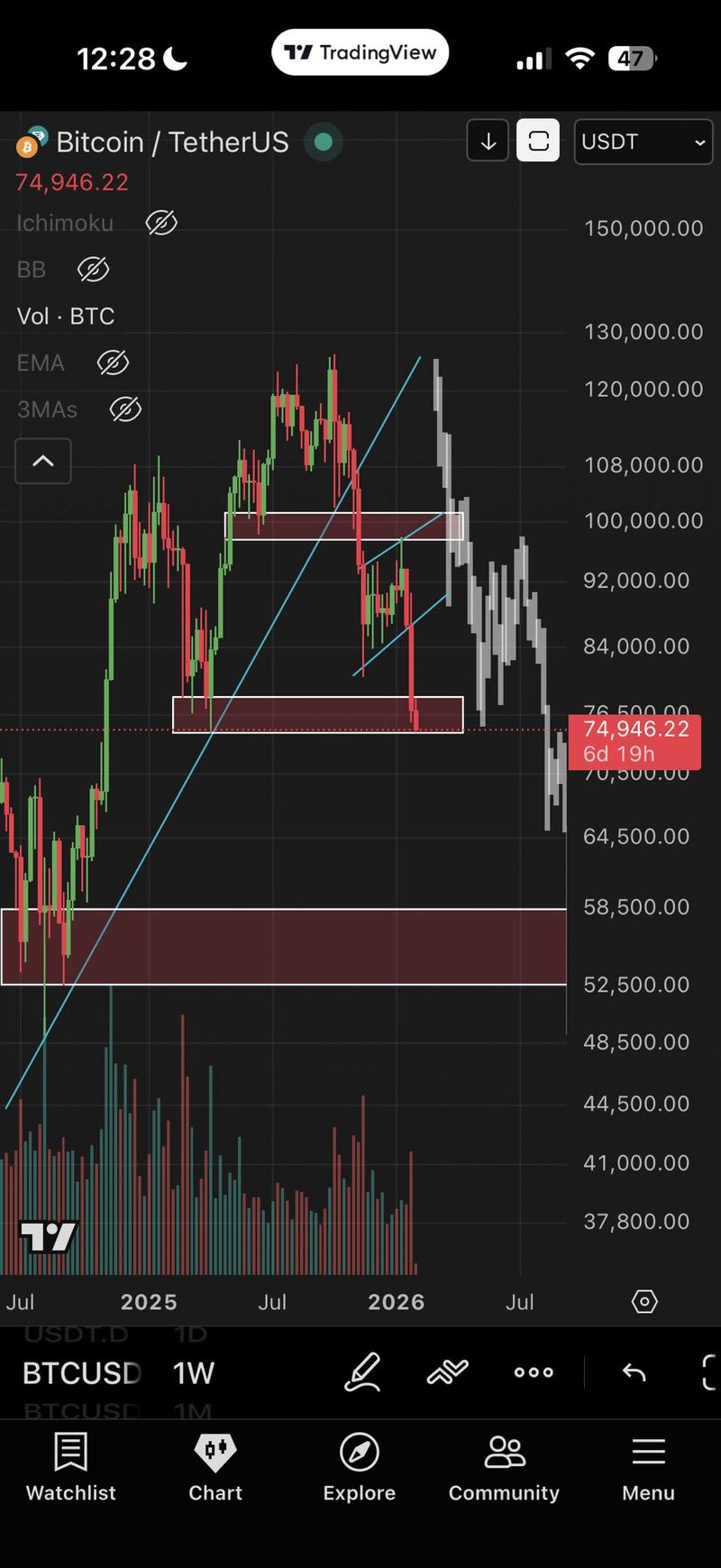
"76k is the last support before 50k area," trader Roman stated in his most recent analysis published on X.
"Lots of volume on the drop which is further confirmation of bearish price action. Again, we are in the bear phase of the market and I'm anticipating 50k and potentially lower."
Previously, Cointelegraph provided coverage on multiple bearish BTC price projections that extend beneath the $50,000 threshold.
Cryptocurrency trader, market analyst and business entrepreneur Michaël van de Poppe advised his X audience to monitor precious metals for bottoming signals before the cryptocurrency "bloodbath" concludes.
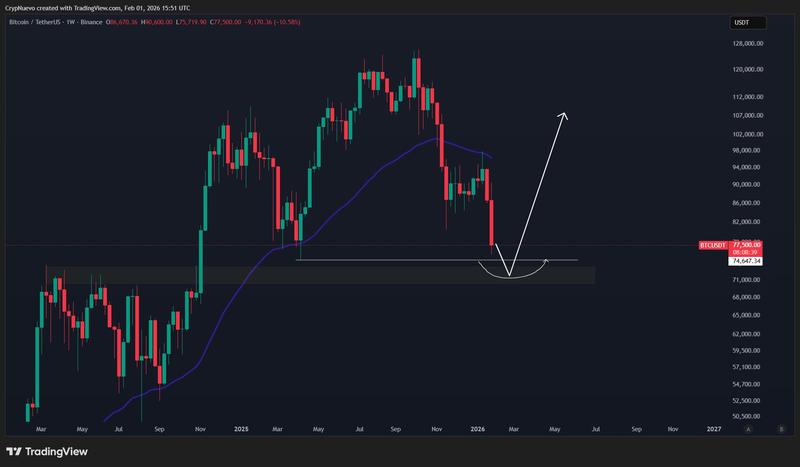
For trader CrypNuevo, conversely, even a possible short-term recovery bounce appeared unlikely in the immediate future.
In his update to followers regarding his expectations for the coming week, he indicated that a BTC price turnaround would commence only following a return to the vicinity of previous all-time highs established during the 2021 bull market cycle.
"Now, we're very close to this level and I'll pay attention to it," he confirmed.
Meanwhile, focus also shifted toward unfilled "gaps" present in CME Group's Bitcoin futures marketplace, with these positioned at $84,000 and $95,000.
"Large CME gap implies that this latest move was rather a 'fake out' to the downside," Andre Dragosch, European head of research at crypto asset manager Bitwise, said.
Bitcoin RSI approaches 2022 bear market bottom levels
In their search for indicators suggesting a macro bottom and positive reversal for BTC price movement, market observers monitored a traditional leading indicator.
The relative strength index (RSI) for Bitcoin on weekly timeframes is nearing an important threshold.
Current weekly RSI readings stand at 32.2, approximately two points higher than territory considered "oversold."
Providing commentary, trader Mags observed that such readings were previously witnessed at the conclusion of the 2022 bear market cycle.
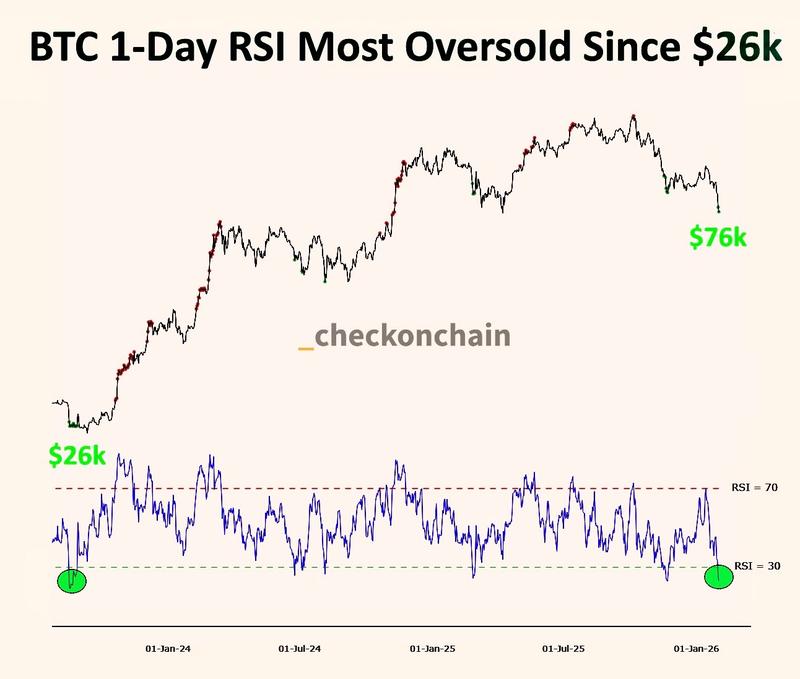
"At $76k, the BTC 1-day RSI is the most oversold it's been since $26k," the analytics account named after famous economist Frank Fetter continued about lower time frames alongside data from onchain analytics resource Checkonchain.
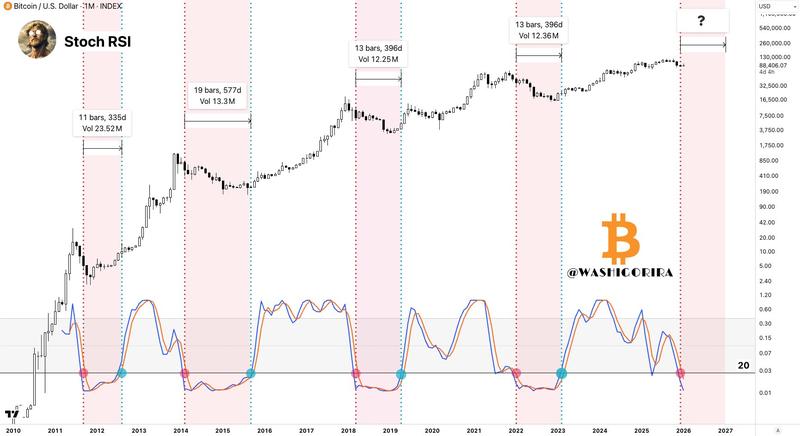
Examining the stochastic RSI on monthly charts during the previous week, however, trader and analyst Titan of Crypto suggested that Bitcoin's macro bottoming phase would require considerable time.
"Historically, when the monthly stochastic RSI settles below 20, it tends to confirm the start of a bear market. Price usually needs time to build a proper bottom," he explained.
"In past cycles, meaningful reversals only occurred after the stochastic RSI moved back above 20, signaling that the bottoming process had already played out. This is why I remain cautious with claims that 'the bottom is already in.' We may be witnessing confirmation, not completion."
Bitcoin issues "warning" regarding macro liquidity crunch
The corporate earnings season for United States companies is "in full swing" during this week, with both Amazon and Google scheduled to publish their reports.
The stakes carry particular significance for these technology sector giants following the previous week's negative performance from both Intel and Microsoft, notwithstanding both companies surpassing earnings projections.
The widespread sell-off across assets currently underway creates an added challenge for cryptocurrency market participants, with trading resource The Kobeissi Letter characterizing uncertainty as presently "elevated."
Taking into account Bitcoin's significant decline, analytics providers are becoming increasingly outspoken regarding crypto as a forward-looking indicator for approaching difficulties.
Mosaic indicated that BTC/USD is currently in the process of establishing a bearish head and shoulders reversal formation.
"The continued breakdown in Bitcoin could be sending a warning on financial market liquidity later in the year," it stressed.
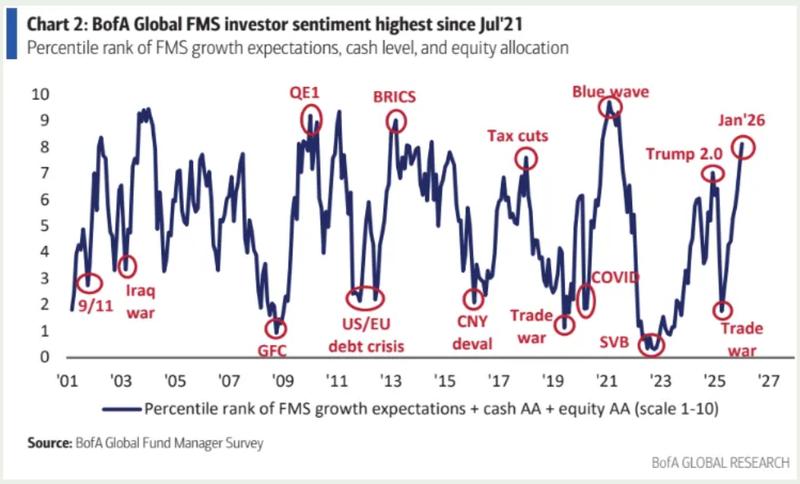
Previously, Cointelegraph published coverage on apprehensions that inflation in the United States could experience a resurgence later during 2026. The previous week saw the December reading of the Producer Price Index (PPI) exceed forecasts.
"The index for final demand less foods, energy, and trade services moved up 0.4 percent in December, the eighth consecutive increase," an official statement from the Bureau of Labor Statistics (BLS) reported.
During the current week, unemployment figures will constitute the primary macroeconomic data publication, while numerous Federal Reserve officials are scheduled to deliver public addresses at various engagements.
Jeff Mei, chief operations officer at the BTSE exchange, told Cointelegraph on Monday that turbulence surrounding the new Fed Chair, Kevin Warsh, is playing a role in cryptocurrency weakness.
Gold experiences unprecedented rout not witnessed in 40 years
Outside the cryptocurrency space, unprecedented volatility in precious metals markets persists.
During Monday's Asian trading hours, gold descended to $4,400 per ounce, representing its weakest performance in close to one month.
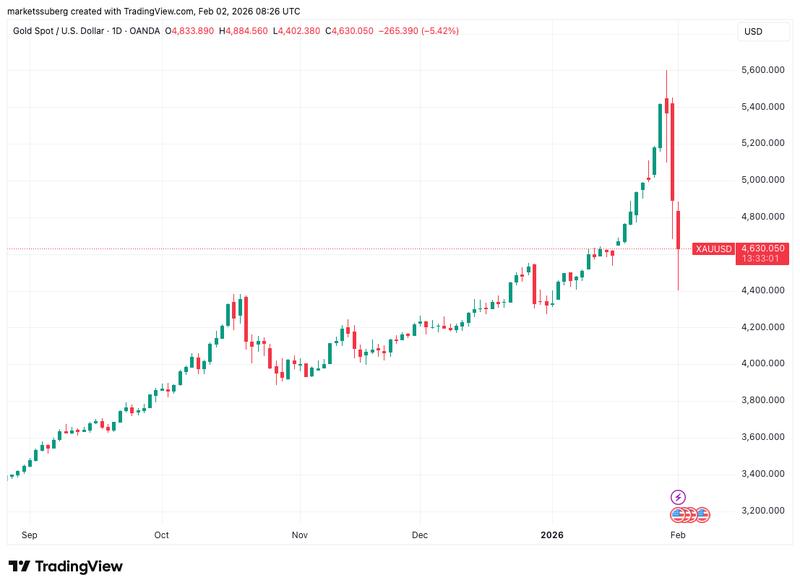
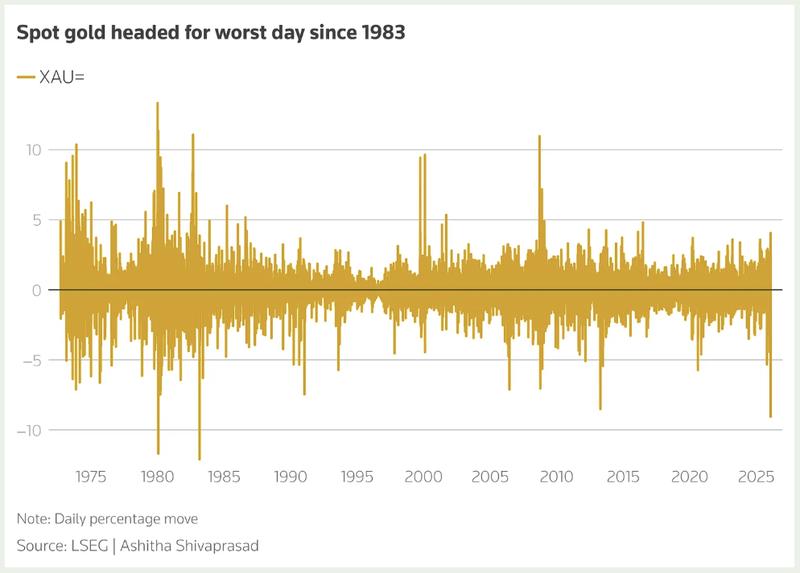
Within merely three daily candles, XAU/USD has eliminated greater than 20% when measured against its $5,600 all-time peak. The combined market capitalization of gold and silver experienced a massive $4 trillion evaporation.
Mosaic connected the announcement of Warsh as Federal Reserve chair directly to the market reversal, noting markets demonstrate high sensitivity to unfavorable news following their unprecedented bull run.
"Concerns over a hawkish Fed chair who is less accommodative to the capital markets sparked a reversal higher in the U.S. dollar off a key level and contributed to a massive decline in precious metals," it summarized.
"Following news of the Warsh nomination, gold prices fell nearly 10% while silver plunged by over 30%. Those were the worst single-day declines since the early 1980s."
Futures contracts for United States equities amplified the pessimistic outlook as the week commenced, while strength in the US dollar attempted to solidify a recovery from multiyear lows.
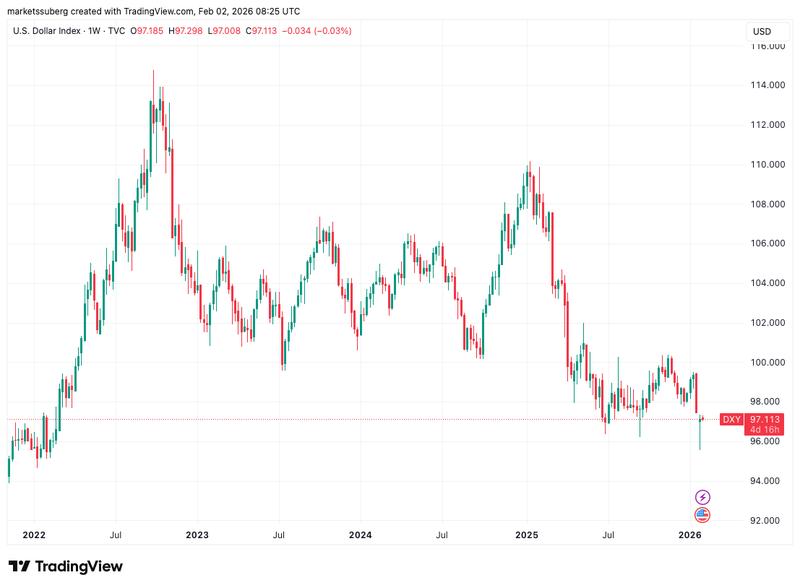
The US dollar index (DXY) fell to 95.50 on Jan. 30, a price level last encountered in 2022.
"While a declining dollar has been a big driver behind gain in precious metals, the failed breakdown last week was likely a key catalyst in the sharp pullback in gold and silver," Mosaic acknowledged.
Conventionally, a robust dollar suggests weakness for risk-on asset classes such as cryptocurrency, with a more hawkish Federal Reserve stance potentially guaranteeing a DXY rebound.
Offering commentary, analyst and author Joey Keasberry conveyed astonishment about the dollar potentially delivering a "significant bottom."
"That could mean an old-fashioned risk-off environment is about to turn heads," he told X followers.
Coinbase Premium indicator reveals US demand "vacuum"
Notwithstanding its decline to the weakest levels witnessed in almost twelve months, Bitcoin has not yet motivated investors to establish long positions once more.
Within some of its most recent analysis, onchain analytics platform CryptoQuant characterized a "structural vacuum" in spot demand from the United States.
Examining the Coinbase Premium — representing the price differential between Coinbase's BTC/USD and Binance's BTC/USDT trading pairs — CryptoQuant indicated that conditions had worsened compared to the prior year.
"In Feb - Apr 2025, Coinbase Premium was negative, but it came in bursts. Discounts showed up, got worked off, and didn't stick. That's more consistent with tactical selling than a market with no bid," contributor TeddyVision wrote in a Quicktake blog post.
"Now it's different. The negative prints are deeper and they stick. Premium stays below zero for long stretches, with only brief, shallow relief. That's not just selling - it's U.S. spot demand staying on the sidelines."
A Coinbase Premium reading in negative territory suggests that demand originating from Asia is surpassing that emanating from the United States, rendering Wall Street trading sessions a source of downward BTC price pressure.
The premium indicator has maintained negative territory since the middle of December, experiencing two unsuccessful attempts to escape from negative readings during the intervening period. On Jan. 30, it descended to -0.177, marking its weakest levels in excess of one year.
"Short dips can happen for many reasons. But when the discount persists even after price has already adjusted, it usually means buyers aren't stepping in," CryptoQuant added.