Federal Reserve's Crypto Policy Pivot: Kraken Secures Master Account as Trump's Bitcoin-Friendly Nominee Advances
In a significant shift toward digital assets, the Federal Reserve has granted cryptocurrency exchange Kraken a limited-use master account, signaling major policy changes.
Emerging developments at the United States Federal Reserve indicate a growing embrace of cryptocurrency at the uppermost tiers of America's financial infrastructure.
In a historic move, Kraken has become the inaugural cryptocurrency exchange to obtain a master account with the Federal Reserve.
Additionally, the Fed may soon welcome new leadership sympathetic to digital currencies. On Wednesday, US President Donald Trump formally forwarded a Bitcoin-supportive nominee to the Senate for approval.
The combination of these occurrences marks a meaningful pivot in the Fed's potential approach to the cryptocurrency sector. However, opposition voices have emerged.
What makes Fed master accounts critical for crypto companies?
Kraken revealed on Wednesday that Kraken Financial, its bank chartered in Wyoming, had secured a Fed master account. This achievement positioned it as "the first digital asset bank in US history to gain direct access to the Federal Reserve's payment infrastructure."
According to Kraken co-CEO Arjun Sethi, "With a Federal Reserve master account, we can operate not as a peripheral participant in the US banking system, but as a directly connected financial institution."
Obtaining a master account equates to accessing the most desirable money format available to financial entities: US dollars maintained directly inside the Federal Reserve infrastructure.
Financial professionals view these dollars as essentially risk-free. According to Aaron Brogan from Brogan Law, a legal practice focused on digital assets, they "are the intrinsic architecture of the United States monetary system, which can always just make more of them."
Given that United States dollars continue to be the dominant global reserve currency, the highest quality form of USD represents the pinnacle of value. Alternative instruments including physical cash, FDIC-protected bank deposits and Treasury Bills offer strong security, but Fed dollars remain superior.
For a cryptocurrency trading platform like Kraken, "it improves reliability and efficiency for moving fiat deposits in and out of digital-asset markets," Sethi explained.
Yet not all financial organizations receive this privilege, particularly not the innovative challengers from the digital currency space, at least not before this moment.
Understanding Federal Reserve master accounts
The Federal Reserve infrastructure operates through 12 separate regional banks. Although these institutions coordinate on critical policy matters, each maintains a measure of independent authority.
Seeking greater integration across the Fed network, Congress enacted the Monetary Control Act of 1980. This legislation provided all depository institutions with Federal Reserve account access. This marked the inception of the master account system.
Julie Andersen Hill, serving as dean at the University of Wyoming's College of Law, noted that Congress "intended that all depository institutions would be able to use the Federal Reserve's payment systems. The legislative history of the Monetary Control Act is littered with references to 'open access' to 'all depository institutions.'"
Nevertheless, with evolution in the banking sector, the Fed started showing selectivity regarding access recipients and extent. Brogan described how three distinct tiers emerged:
- Tier 1: Federally chartered banks with deposit insurance
- Tier 2: Federally chartered banks without deposit insurance
- Tier 3: State-chartered banks
"Perhaps unsurprisingly, the Federal Reserve Board thinks banks in Tier 1 should get master account access, while Tier 3 banks are subject to heightened scrutiny, and Tier 2 somewhere in the middle," he wrote.
Cryptocurrency businesses have historically struggled to identify traditional banks prepared to provide services. Those willing to partner were frequently state-chartered institutions, which already faced challenges accessing federal infrastructure.
The Fed recognizes the importance of avoiding excessive exclusivity with master accounts. Thomas Kingsley, who directs financial services policy at the American Action Forum, explained, "During periods of stress, access to central bank settlement accounts can materially affect a firm's ability to meet redemption demands. In that sense, master account access can reduce run risk relative to structures reliant on commercial bank deposits."
Simultaneously, the Fed must exercise caution about distributing access indiscriminately. Kingsley noted, "If a large nonbank with a master account were to experience operational failure or disorderly unwinding, the disruption would occur closer to core financial infrastructure."
This challenge led to the skinny account concept. During October 2025, Fed Governor Christopher J. Waller introduced a novel account category that would grant access to Fed payment infrastructure while managing specific risks through various limitations. These restrictions include:
- Limits on account size
- No interest on balances
- Balance caps
- No daylight overdraft privileges
- Not eligible for discount window borrowing
This represents the account type Kraken received. Despite its restrictions compared to full accounts, it remains a substantial win for cryptocurrency's integration into mainstream finance. Pro-cryptocurrency Senator Cynthia Lummis described it as a "watershed milestone in the history of digital assets."
Traditional banking organizations object to the account approval
The decision hasn't met universal approval. Rebeca Romero Rainey, CEO of the Independent Community Bankers of America (ICBA), stated, "Granting nonbank entities and crypto institutions access to master accounts poses risks to the banking system."
She emphasized that "significant risks to expanding direct Fed account access to institutions that operate outside the traditional banking regulatory framework" exist.
Paige Pidano Paridon, who serves as co-head of regulatory affairs at the Banking Policy Institute, expressed that the BPI was "deeply concerned" about the Fed's approval of the "'limited purpose' master account—which appears to be a 'skinny' account—before the Federal Reserve Board has finalized its policy framework for those accounts."
She argued the decision disregarded public feedback the Fed requested regarding skinny accounts and occurred "with no transparency into the process for approval or the risk mitigants that have been imposed to address the very significant risks it raises."
Cryptocurrency-supportive economist may assume Fed leadership
Beyond the central bank extending accounts to digital currency platforms, the institution itself may soon operate under crypto-friendly leadership. Wednesday saw Trump transmit the nomination of Kevin Warsh, a Shepard Family Distinguished Visiting Fellow in Economics at Stanford University's Hoover Institution, to the Senate.
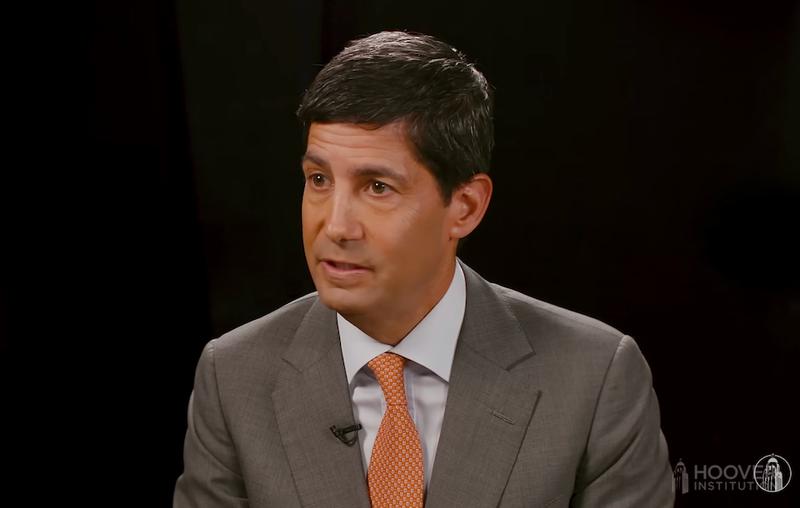
The administration aims to install Warsh as chairman for a four-year term and as a Fed board governor for 14 years.
Warsh, whose tenure as Fed governor spanned from 2006 to 2011 under former Presidents George W. Bush and Barack Obama, has articulated pro-cryptocurrency positions recently.
"Bitcoin does not make me nervous," he stated during a May 2025 interview. He recalled that billionaire technology investor Marc Andreessen, "showed me the white paper [...] I wish I had understood as clearly as he did how transformative Bitcoin and this new technology would be. Bitcoin doesn't trouble me. I think of it as an important asset that can help inform policymakers when they're doing things right and wrong."
Warsh's path to confirmation may encounter obstacles. Both Democratic legislators and experts in central banking policy have voiced apprehension regarding the Trump administration's ongoing attempts to influence Fed operations.
For several months, Trump has advocated for interest rate reductions, but the Fed, presently led by Jerome Powell, has declined to accommodate his preferences.
During January, Trump's Department of Justice issued grand jury subpoenas to the Federal Reserve and threatened Powell with criminal prosecution concerning alleged improper use of resources for office building construction. Powell maintained that the underlying dispute centered on the Fed's refusal to accept directives from the White House.
The United States central bank shows increasing receptiveness toward cryptocurrency, a trajectory expected to accelerate through emerging pro-crypto policies and sympathetic leadership appointments.