Chinese Financial Regulators Push Banks Toward Blockchain Integration for Credit Services
Top regulatory bodies overseeing taxation and financial services in China are calling on banking institutions to adopt blockchain solutions to strengthen lending operations and enhance transparency in data management.

On Monday, China's regulatory authorities responsible for taxation and financial oversight called upon banking institutions and regional governments to leverage blockchain technology alongside privacy computing solutions to modernize the "bank-tax interaction" framework and broaden access to financing for small and medium-sized enterprises.
In a collaborative policy announcement, the State Administration of Taxation and National Financial Regulatory Administration emphasized the need for banks and taxpaying entities to establish standardized protocols for data sharing while minimizing information gaps that exist between tax collection agencies, financial institutions and business enterprises.
The policy statement further encouraged banking institutions to refine their credit assessment frameworks, streamline the efficiency of credit authorization processes and boost the availability of financing options to "honest, tax-paying enterprises."
This guidance is consistent with China's larger strategic initiative to incorporate blockchain technology into its data management framework, coming after the National Development and Reform Commission unveiled a comprehensive roadmap in January 2025 with goals for complete national deployment by 2029.
During a press conference held in January 2025, Shen Zhulin, who serves as the deputy director of the National Data Administration, stated that China anticipates blockchain-powered data infrastructure systems to generate approximately 400 billion yuan (roughly $58 billion) in annual investment activity.

Chinese regulators outline data infrastructure push with 400 billion yuan target
Although China has implemented stringent regulations concerning cryptocurrencies and speculative activities involving digital assets, the nation has simultaneously advanced efforts to promote blockchain technology adoption across finance and data infrastructure sectors.
During October 2019, Chinese President Xi Jinping emphasized the significance of the technology as a critical "breakthrough" for achieving independent innovation in core technological capabilities, calling for accelerated development of blockchain-powered applications and their incorporation into real-world economic activities.
In April 2021, the Shenzhen Tax Bureau scaled up the country's inaugural blockchain-based electronic invoice platform.
Yet, in September of that identical year, China implemented a comprehensive nationwide prohibition on cryptocurrency transactions and mining operations as a component of an extensive regulatory crackdown coordinated among multiple government departments.
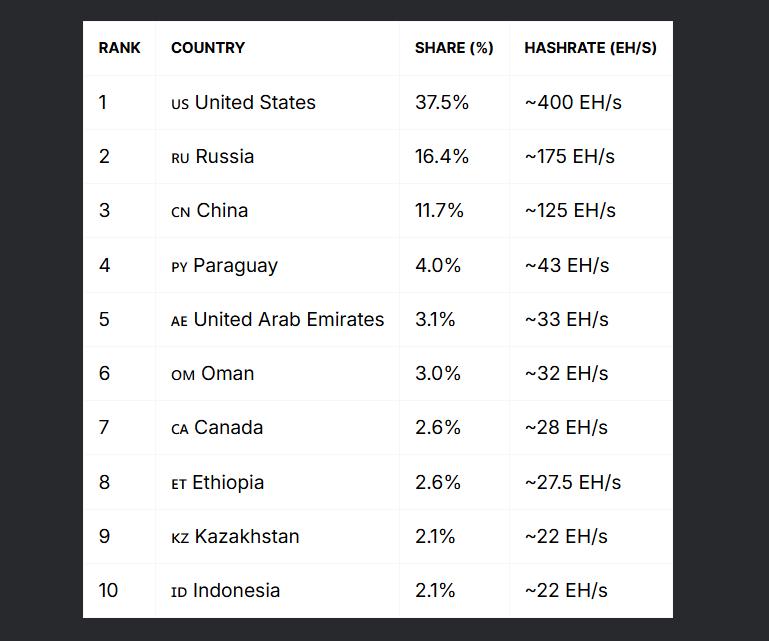
Notwithstanding the prohibition, China continues to be identified as the third-largest Bitcoin (BTC) mining nation globally. During January 2026, the country represented 11.7% of the worldwide hashrate, based on information from Compass Mining.