Britain's Central Bank Relaxes Stablecoin Regulations, Sets £40B Cap on Issuance
Britain's central bank has released proposed stablecoin regulations that reduce reserve requirements and substitute individual holding restrictions with a cap, as the country gears up for implementation in 2027.

On Monday, the Bank of England (BoE) released a comprehensive policy statement alongside draft regulations for systemic stablecoins, detailing the operational framework for regulated stablecoins backed by the British pound within the United Kingdom.
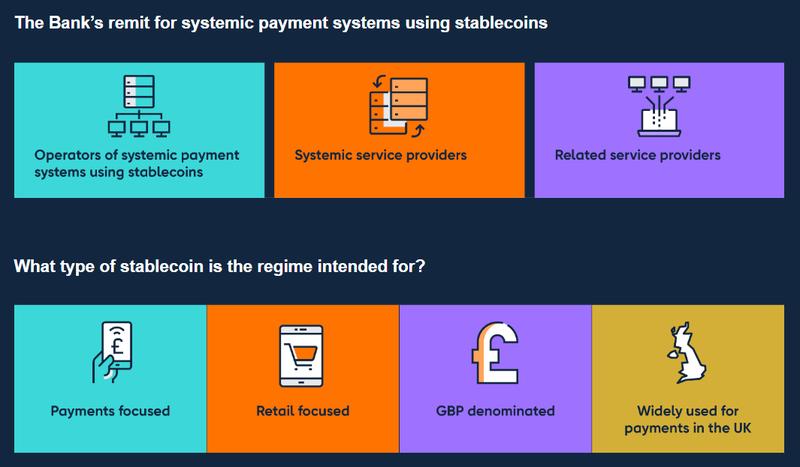
According to the BoE's definition, systemic stablecoins are characterized as those experiencing widespread adoption in payment systems and potentially presenting threats to the financial stability of the UK. The responsibility for designating whether a stablecoin qualifies for the systemic regime lies with HM Treasury.
According to the policy statement, issuers of systemic stablecoins will have permission to maintain as much as 70% of their reserves in government debt that bears interest, representing an increase from the 60% threshold outlined in the earlier proposal. The previously suggested holding restrictions have been substituted with a temporary cap of 40 billion pounds ($52.8 billion) on total issuance.
"This guardrail will be reviewed regularly and removed once risks to credit provision have been addressed," the central bank said in an announcement published on Monday.
According to Katie Harries, Coinbase's head of policy, Europe, this proposal establishes the UK as the sole nation implementing issuance caps on stablecoins denominated in its own currency.
"Two questions remain if the UK is to fully capitalize on the benefits stablecoins can bring: what 'temporary' means for the per-coin issuance cap and whether stablecoins can be used for settlement in core wholesale markets, without which the UK's tokenization ambitions will not be delivered," she said in a statement shared with Cointelegraph.
Aiming for 2027 rulebook rollout
Nevertheless, this development brings the UK one step closer to implementing a specialized regulatory framework for stablecoins, with the BoE targeting completion of its rulebook by the conclusion of 2026 in preparation for the scheduled 2027 implementation.
"The Bank of England has clearly listened on holding limits, moving away from a complex and restrictive approach towards a more proportionate framework. That is a positive step," said ClearBank CEO Mark Fairless in a statement shared with Cointelegraph. "But further progress is needed to ensure the regime does not constrain sustainable business models, particularly through the backing asset requirements."
Bank shifts approach after industry feedback
The implementation of the issuance guardrail serves as a replacement for the holding restrictions that were proposed in the BoE's consultation document from November 2025, which would have imposed limitations of 20,000 pounds per stablecoin for individuals and 10 million pounds per stablecoin for business entities.
During that period, the Bank maintained that such limitations were essential to prevent massive transfers of deposits away from the traditional banking system, which had the potential to diminish credit availability for both households and businesses. Those who responded to the consultation expressed concerns that such restrictions might constrain the practical usability of stablecoins and generate operational difficulties for those issuing them.
According to the Bank, the revised approach seeks to accomplish the identical policy goal while permitting unrestricted utilization by both households and business entities.
"The endgame should be a truly risk-based framework rather than a one-size-fits-all approach, otherwise the UK is in danger of leaving sterling stablecoins at the starting line while other markets move ahead," ClearBank's Fairless said.
The regulatory regime will be applicable exclusively to stablecoins classified as systemic, whereas non-systemic stablecoins utilized predominantly for cryptocurrency trading will continue to fall under the supervisory authority of the Financial Conduct Authority.
During May, Sarah Breeden, Deputy Governor of the BoE, indicated that the central bank was reassessing its suggested holding restrictions and reserve requirements in response to input from digital asset firms, which contended that such constraints could impede widespread adoption and diminish the competitive position of UK-issued stablecoins relative to those backed by US dollars.