Bipartisan crypto legislation requires both sectors to accept compromise, says Senator
Democratic Senator Angela Alsobrooks is developing a compromise framework to advance critical cryptocurrency legislation, requiring concessions from both the digital asset industry and traditional banking sector.

A Democratic member of the United States Senate has indicated that both cryptocurrency industry representatives and traditional banking lobbyists must be prepared to make concessions as part of a fresh initiative to advance legislation governing digital asset market structure.
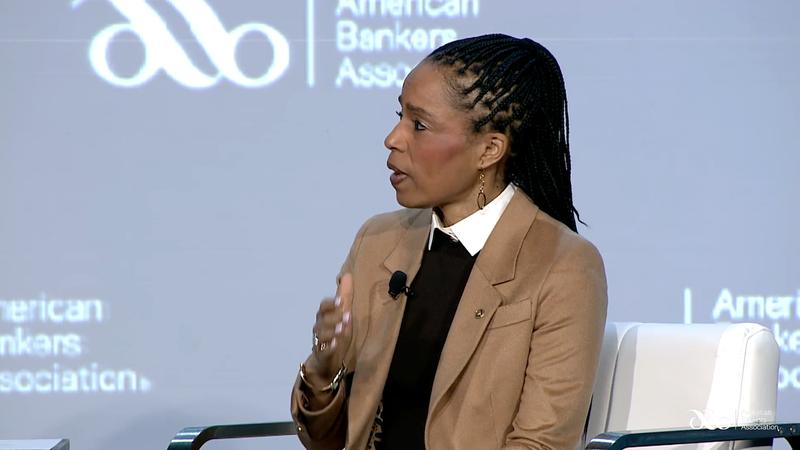
During remarks delivered at an American Bankers Association gathering on Tuesday, Senator Angela Alsobrooks, who serves as an influential Democrat on the Senate Banking Committee, revealed that she is collaborating with Republican Senator Thom Tillis on a compromise framework, emphasizing that neither the cryptocurrency sector nor banking interests should allow perfectionism to obstruct progress.
"All of us will probably walk away just a little bit unhappy," she said. "What we don't want is to have an unregulated system — to have crypto not regulated at all — and not to have the guardrails to allow a situation where we will have deposit flight."
Traditional banking organizations, with the American Bankers Association among them, have been advocating for the Senate to incorporate provisions prohibiting third-party stablecoin yield payments within the cryptocurrency market structure legislation currently under consideration in the Senate.
These banking organizations contend that such yield payments present a deposit flight threat to traditional bank accounts that has the potential to destabilize the financial system, and assert that implementing a prohibition would eliminate what they view as a loophole in the GENIUS Act, which already prohibited stablecoin issuers from providing yield on their digital tokens.
Offering yield payments on stablecoins has become a widely-adopted strategy for cryptocurrency exchanges seeking to attract and retain customers, and advocacy groups representing the crypto industry have vigorously opposed the proposed prohibition.
This contentious debate has created an impasse preventing the cryptocurrency bill from advancing, legislation that would establish the framework for how market regulators would oversee and supervise the crypto sector.
During her remarks, Senator Alsobrooks acknowledged that during the negotiation process for the GENIUS Act, policymakers were aware they would need to "revisit the issue around interest and yield," emphasizing that any legislation addressing crypto market structure must tackle the question of stablecoin yields to prevent them from undermining the stability of the traditional banking sector.
"If it quacks like a duck and looks like a duck, it is a duck," she said. "Making sure that we are not allowing bank-like products without bank-like protections — this is what we know is really important."
Americans want stablecoin yield limits if banks at risk
The Senator's statements arrive at a time when the American Bankers Association has released survey data indicating that 42% of those polled supported the idea that Congress should implement a ban on stablecoin yields in scenarios where such products could potentially decrease the volume of funds available to traditional banking institutions.
The polling research, which was carried out by Morning Consult on behalf of the banking lobby organization and surveyed a representative national sample of 4,456 adults, additionally revealed that 84% of respondents expressed agreement that any business entity offering bank-like services, such as a savings product, should be "held to the same standards for consumer protection that banks are."