Yuan-Backed Stablecoin Presents Massive Potential Despite Beijing's Restrictions, Says Circle CEO
Despite China's prohibition of private yuan-pegged tokens and its push for a CBDC aimed at rivaling dollar stablecoins, Circle's Jeremy Allaire identifies "tremendous" potential for a yuan stablecoin.

Jeremy Allaire, the chief executive of Circle, believes a stablecoin backed by the yuan represents a "tremendous opportunity," even as Chinese authorities have implemented formal restrictions on most private stablecoins pegged to the renminbi while championing their native digital yuan initiative.
During an interview with Reuters conducted in Hong Kong on Thursday, Allaire characterized stablecoins as a mechanism through which China could "export" its national currency by facilitating smoother global payments, particularly as digital currencies become increasingly integrated into international trade and financial systems, and suggested China might introduce a yuan-backed stablecoin within a three to five year timeframe.
The geopolitical competition over monetary systems is progressively being fought through digital code as much as through traditional central bank policies, and Allaire's observations highlight a fundamental question: can nations that suppress private digital currencies maintain their competitive edge internationally if they continue to reject them?
The restrictive approach taken by China stands in stark contrast to the rising demand for stablecoins as instruments for cross-border payments, prompting questions regarding the yuan's trajectory within an increasingly tokenized global financial ecosystem.
During February, the People's Bank of China alongside seven other governmental agencies declared that any unauthorized offshore creation of yuan-pegged stablecoins would be classified as illegal financial operations and announced that the tokenization of domestic real-world assets would be subject to more rigorous scrutiny and approval processes.
Government officials characterized the action as essential for preserving financial stability, preventing capital outflows and protecting monetary sovereignty while Beijing advances its central bank digital currency, known as the e-CNY. This decision effectively closes the door on the majority of offshore RMB stablecoins mere months after indications emerged that China had been examining yuan-backed tokens as a potential avenue for expanding the international use of its currency.
Digital dollars still dominate stablecoins
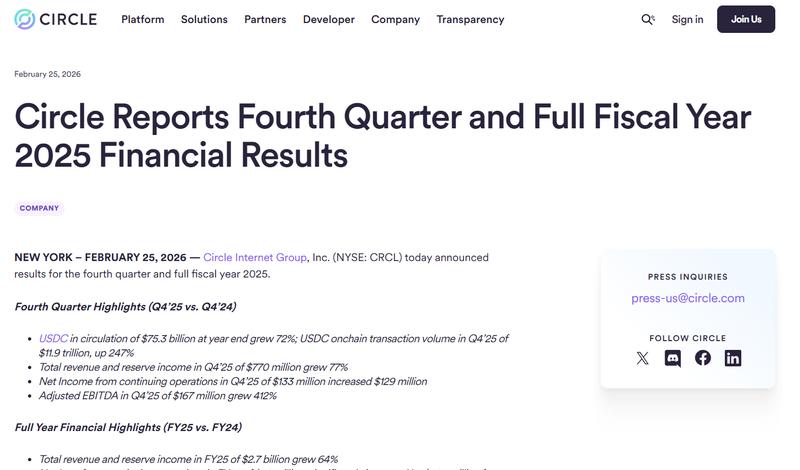
Allaire's statements arrive at a time when stablecoins are becoming increasingly entangled in geopolitical dynamics. Circle's USDC, which is backed by US dollars, experienced a 72% year-on-year increase in circulation, reaching $75.3 billion by the conclusion of 2025. Allaire informed Reuters that "several billion dollars" worth of supplementary USDC transactions occurred following the commencement of the US-Iran war as individuals pursued portable digital dollars during the crisis.
According to a 2025 market report published by Outlier Ventures, stablecoins backed by US dollars represented 99.8% of all fiat-denominated stablecoins, highlighting the extent to which the marketplace continues to depend on digital dollars instead of tokens pegged to other national currencies.
China, in contrast, is following a CBDC-first approach. Government authorities have consistently reaffirmed their 2021 prohibition on cryptocurrency trading and mining activities. In November 2025, the central bank issued a warning that it would strengthen its crackdown on stablecoins, which culminated in February's announcement banning the issuance of RMB-linked stablecoins and prohibiting most RWA tokenization without obtaining prior approval, as Beijing continues to promote the e-CNY as its chosen framework for digital yuan implementation.