Vitalik Buterin Proposes DAO-Based System and Prediction Markets for Content Creator Compensation
Ethereum's co-founder Vitalik Buterin has outlined a reformed approach to creator tokens that would emphasize content quality rather than quantity-focused production.

Vitalik Buterin, the co-founder of Ethereum, has put forward an innovative creator token framework that merges decentralized autonomous organizations (DAOs) together with prediction market mechanisms to promote the creation of superior quality content.
Content coins, also known as creator tokens, represent blockchain-powered digital assets that can provide supporters with partial ownership stakes, exclusive access privileges, or royalty shares from a creator's output, encompassing various formats such as written posts, photographs, musical works, or video productions.
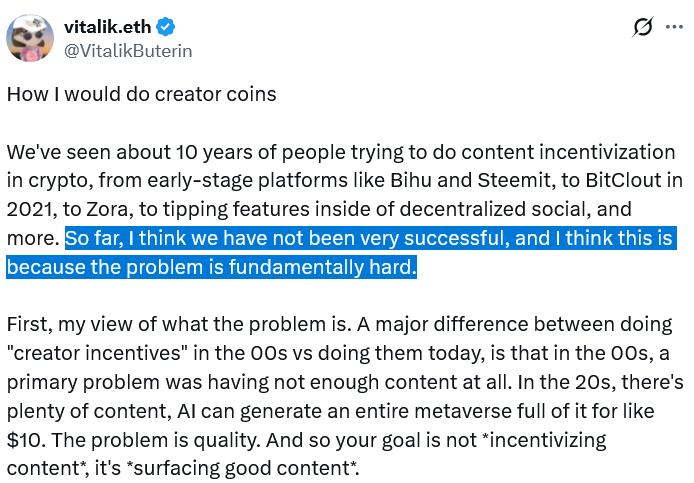
Yet, in a Sunday post shared on the X platform, Buterin expressed concern that current creator token platforms predominantly favor volume-based content production rather than emphasizing quality, a problem that's being further intensified by the proliferation of AI-generated material.
To address this challenge, Buterin suggested one potential solution would involve content creators issuing tokens and submitting applications to curated creator DAOs, where DAO members would determine which content merits acceptance, while market speculators could generate profits by forecasting which creators or which pieces of content will gain admission.
Content creators who receive acceptance could subsequently experience appreciation in their coin values as the DAO implements token burns, thereby decreasing the overall supply and enhancing the asset's scarcity.
Buterin observed that numerous leading creator coins on current platforms such as BitClout and Zora tend to be dominated by celebrity figures or individuals with "very high social status," which creates significant obstacles for creators attempting to achieve success based solely on the quality of their work.
An additional illustration, which Buterin did not reference, is Friend.tech — a SocialFi application built on Base, Ethereum's layer-2 network, that enabled creators to distribute content within private chatrooms that users could access through tradable keys.
Nevertheless, the platform faced criticism from some users because the pricing of these keys was predominantly influenced by speculative trading activity.
Friend.tech ceased operations in September 2024 following a substantial decline in user activity and after the platform's native token experienced a 95% crash from its peak value.
Focus on niches to win specific audiences, Buterin suggests
Buterin further advised that DAOs should refrain from attempting to dominate the entire marketplace and should instead concentrate on particular content formats, such as short-form video content or long-form written pieces, and the material should be tailored to appeal to specific national or political demographics, as examples.
Buterin added:
"The goal is to have a group that is larger than one creator and can accumulate a public brand and collectively bargain to seek revenue opportunities, but at the same time small enough that internal governance is tractable."
The market speculators participating in the system would simultaneously be providing valuable assistance to the DAO by contributing to the identification and elevation of high-quality content that deserves recognition and rewards.
"Individual speculators can stay in the game and thrive to the extent that they do a good job of predicting the creator DAOs' actions," Buterin said.