Tax regulations, not technology limitations, prevent Bitcoin adoption for payments: Industry executive
Under existing United States regulations, cryptocurrency transactions face taxation, though legislators have put forward proposals to exempt smaller purchases from tax obligations.

Tax policy represents the primary barrier preventing Bitcoin (BTC) from functioning effectively as a payment mechanism, rather than technological scaling solutions that aim to minimize transaction settlement periods and associated fees, according to Pierre Rochard, who serves on the board of directors for Bitcoin treasury firm Strive.
"Here's a metaphor: the best athlete can win against the worst athlete 100% of the time, if the best athlete plays. It drops to 0% if he doesn't play and lets the weak athlete win," Rochard said about BTC's current lack of use as a method of payment.

During December 2025, the Bitcoin Policy Institute, an organization dedicated to non-profit policy advocacy, raised concerns regarding the absence of a de minimis tax exemption applicable to smaller-scale Bitcoin transactions.
The absence of such a de minimis tax exemption results in taxation being applied each time BTC gets transferred to another individual or entity as a form of payment, creating significant obstacles to its adoption as a viable medium of exchange.
Legislators in the United States are deliberating whether to restrict the de minimis tax exemption specifically to overcollateralized stablecoins pegged to the dollar, which represent tokenized versions of US dollars, maintained with 1:1 backing through fiat currency deposits or short-duration government securities, a proposal that has generated considerable opposition from Bitcoin supporters.
The Bitcoin community reacts to the lack of de minimis exemptions for BTC
During July 2025, Cynthia Lummis, a Wyoming Senator recognized as a supporter of the cryptocurrency sector, put forward legislation that proposed implementing a de minimis tax exemption for digital asset transactions valued at $300 or below.
The proposed legislation established an annual ceiling of $5,000 for such exemptions and additionally incorporated provisions designed to exempt cryptocurrencies when utilized for charitable contribution purposes.
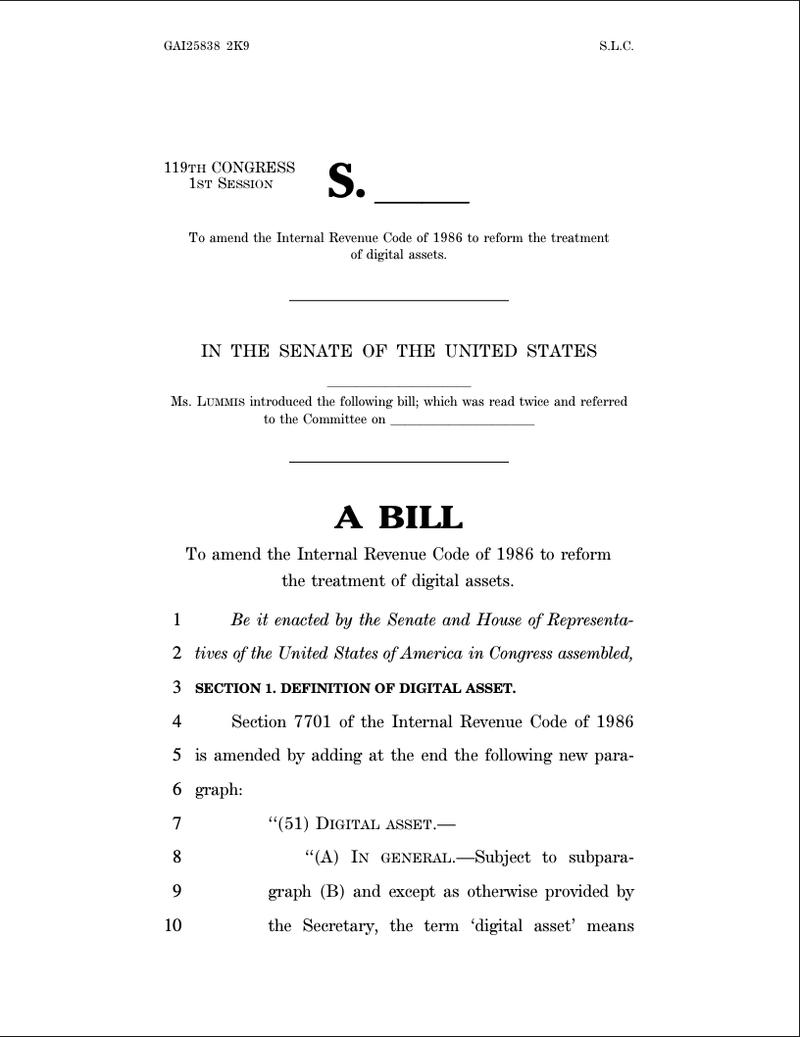
The bill introduced by Lummis recommended postponing income recognition from staking cryptocurrency to provide security for proof-of-stake blockchain networks or revenue generated from mining proof-of-work cryptocurrencies until the point when those digital assets were actually sold.
Jack Dorsey, who founded the payments company Square, a firm that incorporated Bitcoin payment capabilities into its point-of-sale infrastructure in October, advocated for implementing a tax exemption on smaller BTC transactions.
"We want BTC to be everyday money ASAP," Dorsey said. Meanwhile, others like Bitcoin advocate and co-founder of the Truth for the Commoner (TFTC) media outlet, Marty Bent, said the proposed tax exemption for stablecoins is "nonsensical."