Is self-custody technology too complex for cryptocurrency newcomers?
The discussion surrounding whether beginners should use self-custody solutions has intensified following recent hardware wallet vulnerabilities, with alternatives like multisig and seedless architectures presenting unique challenges.

Leaders in the cryptocurrency industry remain at odds regarding whether self-custody solutions were originally intended for novice users, as alternative methods including multisignature configurations and seedless backup systems present distinct complications related to both security and ease of use.
"We don't expect every driver to be a mechanic, and we shouldn't expect everyone who wants to own their assets to become a security expert," Safe Labs CEO Rahul Rumalla told Cointelegraph.
Simplifying self-custody interfaces may prove essential for Bitcoin's mainstream acceptance, given that the capacity to function as one's own financial institution continues to represent a core characteristic of the cryptocurrency.
Security breaches affecting Ledger and Coldcard products have recently highlighted vulnerabilities present in hardware wallet devices, which experts frequently recommend as among the most secure methods for storing cryptocurrency due to their offline private key storage.
Malicious implants discovered within certain Ledger hardware units were designed to extract recovery phrases, whereas a firmware vulnerability in Coldcard enabled malicious actors to reconstruct private keys and drain wallets.
Michael Tanguma, CEO of Bitcoin custody provider Onramp, drew a parallel between Bitcoin custody solutions and personal computing during the 1970s era, a time when users required substantial technical expertise to build and run their machines.
"Self-custody was never designed with newcomers in mind," he told Cointelegraph.
Tanguma noted that streamlined product designs enabled personal computers to achieve mass market penetration, and Bitcoin custody technology now confronts a comparable obstacle.
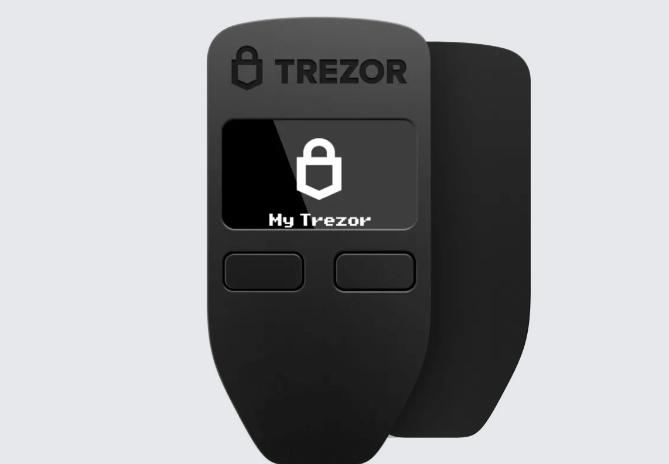
Rumalla offered a contrasting perspective, arguing that self-custody was "always meant for everyone" and emphasizing that "being able to own and control your assets is the whole point of crypto."
He further clarified that self-custody "does not mean doing everything yourself."
Multisig improves security, but not without a cost
Wallets utilizing multisignature, or multisig, technology necessitate several keys for transaction authorization, though the management of these systems often proves challenging for inexperienced users.
"Traditional multisig implementations can introduce additional complexity involving signer coordination, key backups, recovery procedures, and transaction approvals," Justin Hutzler, chief technology officer of Synergy Network, said.
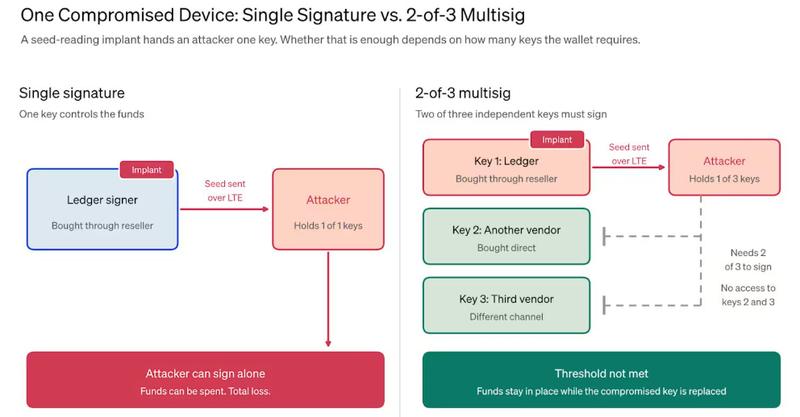
Requiring multiple authorization signatures does not guarantee protection against all forms of attack.
Safe Labs' Rumalla explained that multiple signatories might still approve a fraudulent transaction if a compromised user interface successfully deceives all parties involved.
Seedless wallets remove one risk, introduce others
According to Tangem, its seedless architecture streamlines the self-custody experience by eliminating the requirement to maintain a recovery phrase. Instead, users bear responsibility for protecting the physical hardware devices that grant access to their cryptocurrency holdings.
The system generates a private key on a single card, with duplicate copies maintained on as many as two supplementary devices. Tangem confirmed to Cointelegraph that the permanent loss of every device would result in irreversible lockout from user funds.
The organization stated it has not received any documented cases of customers losing their entire set of cards.
Physical security of the cards alone does not safeguard users against the risk of approving fraudulent transactions. Zach Herbert, CEO of rival hardware wallet maker Foundation, acknowledged that seedless backup solutions can maintain self-custody principles, but expressed criticism toward Tangem's omission of an integrated display screen, a design choice that forces users to depend on their mobile devices for transaction detail verification.
"An attacker does not need to extract your private key if they can trick you into authorizing a transaction that empties your wallet," he said.