How Stablecoins Enable Rapid Capital Flight from Traditional Banking Systems
While stablecoins dramatically improve the efficiency of international money transfers, this same velocity presents risks by enabling swift capital movement away from traditional banking institutions and national currencies, potentially triggering unforeseen economic consequences.

Those who have experienced sending money internationally through traditional banking channels understand the frustration of dealing with business hour restrictions, multiple correspondent banking institutions, and extended settlement periods.
For many transactions, it would actually prove more expedient, cost-effective and practical to attach physical currency to a carrier pigeon or simply mail it through an express courier service like DHL.
Digital stablecoins enable the transfer of capital internationally at any hour, eliminating the need to wait for outdated legacy financial infrastructure to become operational.
These digital assets facilitate transactions around the clock, eliminate multiple layers of middlemen, and provide individuals with digital dollar access even without holding traditional banking relationships.
This raises important questions: Are traditional banks still necessary? And what consequences emerge from stablecoins providing a more rapid, economical and accessible method of transferring funds?
Understanding the dual timelines
According to Anthony Vassallo, director of crypto at Silicon Valley Bank, which collapsed in March 2023 and currently functions as part of First Citizens Bank, the competitive threat posed by stablecoins manifests across two distinct timelines:
Two clocks matter. One is slow: currency substitution, deposit erosion, and weakening policy transmission building over months or years. One is fast: a depeg, issuer shock, or banking event that can move capital at software speed within hours.
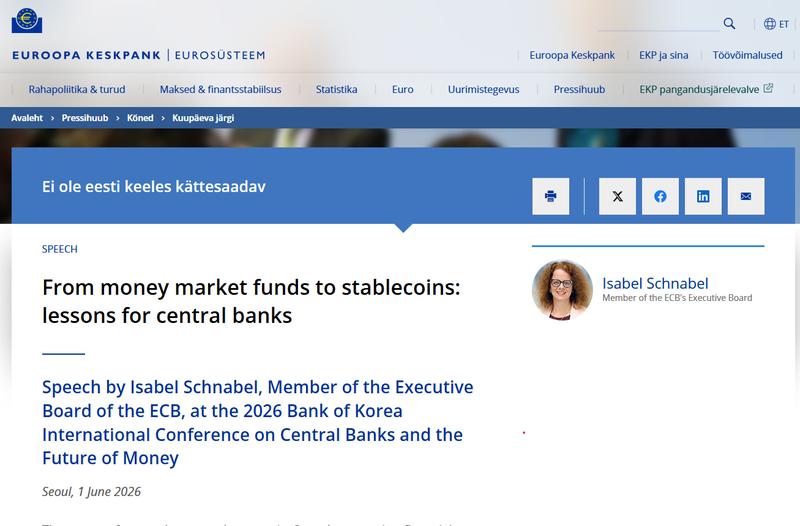
The European Central Bank has voiced worries regarding these implications, suggesting that substantial volumes of stablecoin reserves deposited in banking institutions might precipitate a chain reaction of withdrawals during periods of heightened redemption activity.
The institution highlights a "liquidity mismatch" between digital currency and its supporting banking infrastructure, noting that reserve holdings remain bound by conventional settlement schedules, even as stablecoins process transactions continuously.
This dynamic became evident in March 2023 when USD Coin experienced a depeg from the dollar following Circle's revelation that $3.3 billion of its backing reserves were deposited at the collapsed Silicon Valley Bank. This event transformed a single bank failure into a widespread stablecoin emergency in mere hours, necessitating regulatory intervention to secure deposits.
While bank runs represent extreme scenarios, the gradual timeline Vassallo references operates more like a slow leak. This process can occur absent any crisis situation, and may prove more difficult to detect as it progresses.
Gradual dollarization dynamics
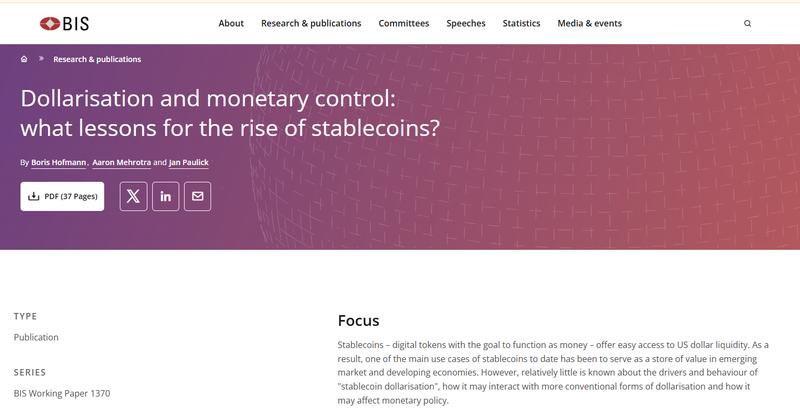
During July 2026, the Bank for International Settlements examined stablecoin transaction flows alongside traditional foreign currency deposit patterns across 130 different economies.
The research discovered that both categories typically experience growth during periods of monetary stress and throughout banking or sovereign debt crises, with stablecoin transactions proving less susceptible to capital control measures.
Therefore, when individuals attempt to exit a weakening domestic currency, stablecoins offer a dollar-denominated option that proves more challenging for national authorities to restrict.
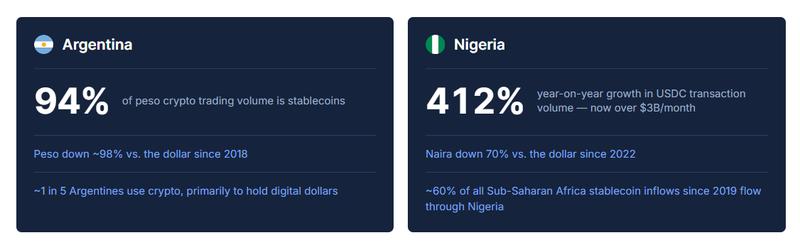
Research published in September by Sphere Labs and SVB identifies Argentina, Nigeria and Turkey as jurisdictions where stablecoin adoption has demonstrated strong correlation with demand for dollar denomination.
Within Argentina, the research indicates that 94% of cryptocurrency purchased using pesos involved stablecoins, whereas in Turkey, approximately $38 billion in lira was converted into stablecoins throughout a twelve-month period.
Most of these economies are going to keep moving toward dollars [...] What I spend my time on is the manner of it, because a country that manages the shift and one that gets overtaken by it end up in very different places.
Accelerated timeline scenarios
An additional BIS investigation released in March discovered that surging demand for dollar-pegged stablecoins can create ripple effects within conventional foreign exchange markets.
This research analyzed four prominent USD-backed stablecoins across 27 fiat currencies spanning 2021 through 2025, concluding that heightened stablecoin demand could exert downward force on domestic currencies while increasing the cost of acquiring dollars via FX swap mechanisms, with amplified effects when financial intermediaries face existing pressure.
According to Lee, "When citizens in high-inflation economies move from local currency into digital dollars, monetary transmission weakens, deposit bases erode, and pressure builds faster than central banks can respond."
The Sphere research details how, throughout a January 2025 conflict between the US and Colombia, Colombian citizens redirected capital into digital dollar assets. Traditional banks and foreign exchange services had shuttered for the weekend, yet the cryptocurrency marketplace never closes.
This scenario amplifies the significance of the ECB's cautionary message.
According to existing Markets in Crypto Assets (MiCA) regulations, stablecoin providers must maintain a minimum of 30% of reserves in banking deposits, escalating to 60% for significant asset-referenced tokens (ARTs).
The European System of Central Banks recommended departing from these fixed percentage mandates earlier this month, instead favoring requirements determined by how rapidly reserve holdings can be liquidated.
This approach would prevent catastrophic situations where massive redemption requests drain commercial banking institutions overnight; a concern Tether chief executive Paolo Ardoino highlighted in 2024, when he characterized MiCA as "very dangerous when it comes to stablecoins."
Consequently, the identical system generates pressure bidirectionally: capital can exit a banking institution and transfer into stablecoins when users seek digital dollars, then reverse through banks upon stablecoin redemption.
The underlying technology doesn't dictate the direction of capital flows, though it fundamentally influences the speed at which these movements occur.
Identifying what actually faces disruption
Nevertheless, stablecoins haven't achieved global dominance yet. Frequently they function merely as an intermediary currency that transfers more efficiently, ultimately settling as traditional dollars in banking accounts.
Pankaj Bengani, former executive at Block and co-founder of stablecoin payments company MELD, informs Cointelegraph that approximately half of the company's business-to-business stablecoin offramp transaction volume originates in North America.
According to Bengani, the enterprises utilizing these services encompass importers, exporters, technology firms, e-commerce marketplaces, payment companies and fintechs.
"The vast majority of corporates in our data convert back to fiat immediately after the transaction settles. They are not taking a crypto position. They are using MELD as a settlement rail instead of SWIFT," Bengani says.
According to Bengani, the largest transaction volumes involve cross-border commercial payments, especially where companies generate or maintain dollars while suppliers and staff require local currency.
Vendor payments comprise nearly one-third of enterprise usage, with invoice settlement representing roughly one-quarter of transactions.
This presents a contrasting narrative to individuals converting to digital dollars as an inflation hedge or withdrawing significant funds from traditional currency systems during periods of instability.
This also prompts another compelling consideration: if capital isn't remaining within cryptocurrency, which component of the traditional financial system faces actual displacement? According to Bengani:
Stablecoins won't replace SWIFT overnight. The realistic change is a thinner correspondent layer, with a common settlement rail replacing intermediary steps that exist only because banks historically needed each other to cross borders.
Within a financial landscape where capital transfers occur instantaneously, this doesn't necessarily signal the elimination of banking institutions.
According to Bengani, reserves continue residing in bank deposits and Treasury securities, enterprises continue requiring fiat currencies, and banks maintain essential roles in "custody, compliance, liquidity, and local settlement."
The transformation occurs within the underlying infrastructure — stablecoins may not be extracting banks from the financial ecosystem so much as relocating where inefficiencies exist.