Euro Stablecoins Meeting MiCA Standards Surged 128% Ahead of Regulatory Deadline, Decta Reveals
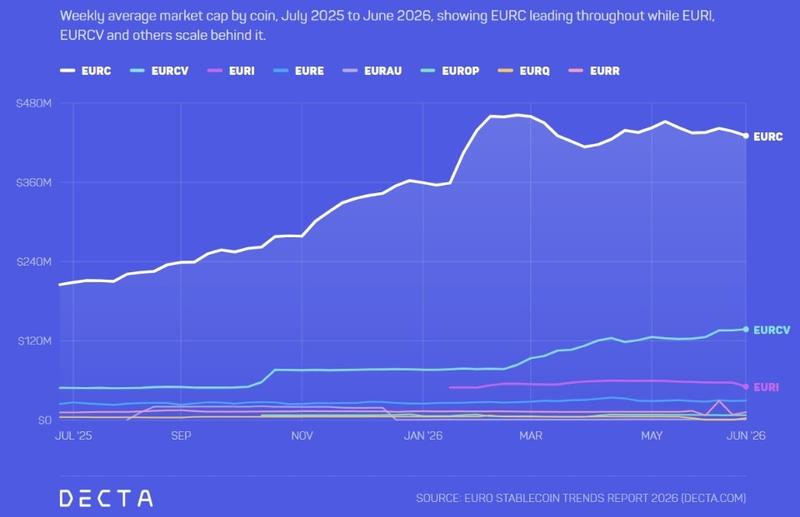
According to Decta's latest analysis, eight euro-denominated stablecoins compliant with MiCA regulations saw their combined market capitalization climb to $673.9 million during the 12 months prior to the conclusion of Europe's CASP transition window.

Compliant euro-backed stablecoins experienced a 128% surge in market capitalization throughout the year preceding the conclusion of the Markets in Crypto-Assets Regulation (MiCA) transition phase, as revealed by payments infrastructure company Decta.
In a report released on Sunday, Decta disclosed that the aggregate market capitalization of eight euro stablecoins adhering to MiCA requirements climbed to $673.9 million by June 28, 2026, up from $295.6 million recorded on June 30, 2025. Meanwhile, trading volume experienced a 43.1% increase, reaching $67.3 million compared to $47 million previously. The count of MiCA-compliant euro stablecoins monitored in the analysis also expanded from five to eight during this timeframe.
The payment firm's analysis focused on eight euro-denominated stablecoins that were actively minting tokens and demonstrated measurable market capitalization along with trading volume throughout the research period. In comparison, the European Securities and Markets Authority interim MiCA register encompasses a wider range of tokens, including those that may not satisfy Decta's specific activity thresholds.
Decta's findings indicate that euro-pegged stablecoins are experiencing expansion under MiCA regulations, though starting from a relatively modest baseline within a marketplace that remains predominantly controlled by dollar-pegged alternatives. Data from CoinGecko indicates that US dollar-backed stablecoins command approximately $300 billion in market capitalization. When measured against this figure, the total market capitalization of the eight actively exchanged, MiCA-compliant euro stablecoins tracked by Decta represented just 0.22% of the dollar stablecoin sector.
Starting July 1, companies providing crypto-asset services within the European Union were generally required to obtain MiCA authorization. The data collection period used by Decta concludes just days prior to the final deadline of MiCA's crypto-asset service provider (CASP) transition window.
Euro stablecoin growth amid MiCA competitiveness debate
The findings from Decta's analysis contribute to an ongoing discussion among regulatory authorities and industry organizations regarding whether MiCA's more stringent stablecoin regulations are fostering growth within the euro ecosystem or restricting its ability to compete against dollar-denominated alternatives.
On April 27, an analysis published by Blockchain for Europe contended that MiCA had enhanced the safety profile of euro stablecoins while simultaneously diminishing their commercial viability. According to the assessment, MiCA's reserve mandates and prohibition on interest-bearing features placed euro-backed tokens at a competitive disadvantage.
The discussion gained momentum during May following the publication of a policy analysis from Bruegel, a Brussels-based research institution, which advocated for relaxing liquidity mandates imposed on stablecoin issuers and possibly granting them access to European Central Bank credit facilities. The analysis suggested that more flexible regulatory standards could enhance the euro stablecoin sector's competitiveness relative to dollar-backed alternatives.
Nevertheless, the European Central Bank (ECB) offered a counterargument. On May 23, the ECB cautioned EU finance ministers that expanded issuance of euro-denominated stablecoins might undermine bank lending capacity and introduce complications to monetary policy implementation. The ECB also rejected the notion that more rigorous EU regulatory frameworks would hasten digital dollarization trends.