Digital Chamber Pushes Back Against Warren's Accusations Regarding Crypto Banking Charters
Following allegations by Senator Elizabeth Warren of Massachusetts that banking law violations may have occurred when the Comptroller approved charter applications from cryptocurrency firms, advocacy organization The Digital Chamber has called on the regulator to stand by its decisions.

Update (May 26 at 9:30 pm UTC): Additional statements from The Digital Chamber have been incorporated into this article.
The Digital Chamber, an advocacy organization for the cryptocurrency industry that has actively participated in discussions with United States legislators regarding digital asset regulation, has raised questions about Senator Elizabeth Warren's grasp of banking law as it pertains to cryptocurrency businesses. Warren, representing Massachusetts for her third term, has been a vocal critic of crypto-related regulatory decisions.
Through a letter dated Tuesday and addressed to Jonathan Gould, the US Comptroller of the Currency (OCC), The Digital Chamber's Chief Executive Officer Cody Carbone disputed numerous assertions made in the Senator's May 18 correspondence. Warren's letter stated that the OCC potentially breached the National Bank Act when it granted approval for national trust charters to nine cryptocurrency firms "that intend to engage in activities that appear to go far beyond the narrow set of activities permitted by law."
The claim that these firms seek to 'evade' regulations [...] or pose risks to the safety and soundness of the banking system is contradicted by their own conduct. These companies voluntarily sought federal oversight: each applied for a national trust bank charter, submitted to OCC examination authority, and accepted the compliance obligations that come with federal supervision.
Cody Carbone, Digital Chamber CEO
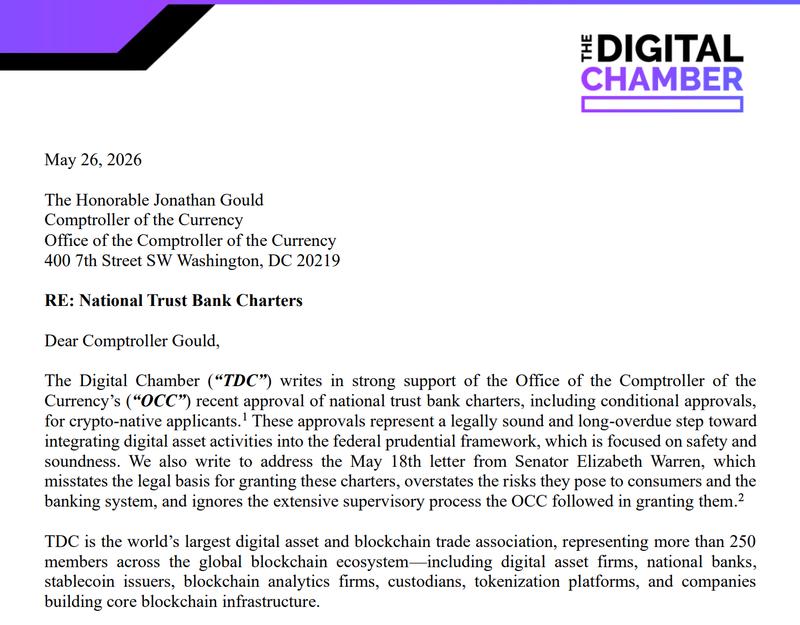
The Massachusetts Senator's apprehensions arose following the OCC's decision to approve or conditionally approve charter applications submitted by Coinbase, the parent company of Crypto.com, Ripple, Stripe, BitGo, Circle, Fidelity Digital Assets, Protego Holdings and Paxos. According to Warren, these firms "want to evade the fundamental safeguards and obligations that come with being a bank" and she raised questions about the rationale behind the approvals, suggesting potential influence from the White House.
Serving in her capacity as the ranking member of the US Senate Banking Committee, Warren has consistently voiced criticism toward lawmakers and regulatory bodies for endorsing policies that may present potential conflicts of interest connected to US President Donald Trump's involvement in the cryptocurrency sector. Cointelegraph attempted to obtain a statement from Warren's office but had not received a response at the time of publication.
If Senator Warren believes the OCC exceeded its authority, the appropriate response is to identify where the statute draws the line she says was crossed. We'd welcome that debate. But 'this seems wrong' from a member of the Banking Committee isn't a legal argument. And the OCC shouldn't retreat from a legally sound decision because of political pressure, regardless of who's applying it.
Cody Carbone, in response to Cointelegraph
Additional crypto firm applications await OCC decision
The Senator's expressions of concern regarding the OCC's charter approvals emerged at a time when the banking regulatory authority is evaluating applications from World Liberty Financial, a cryptocurrency venture backed by the Trump family, as well as from Payward, which operates as the parent entity of the Kraken cryptocurrency exchange.
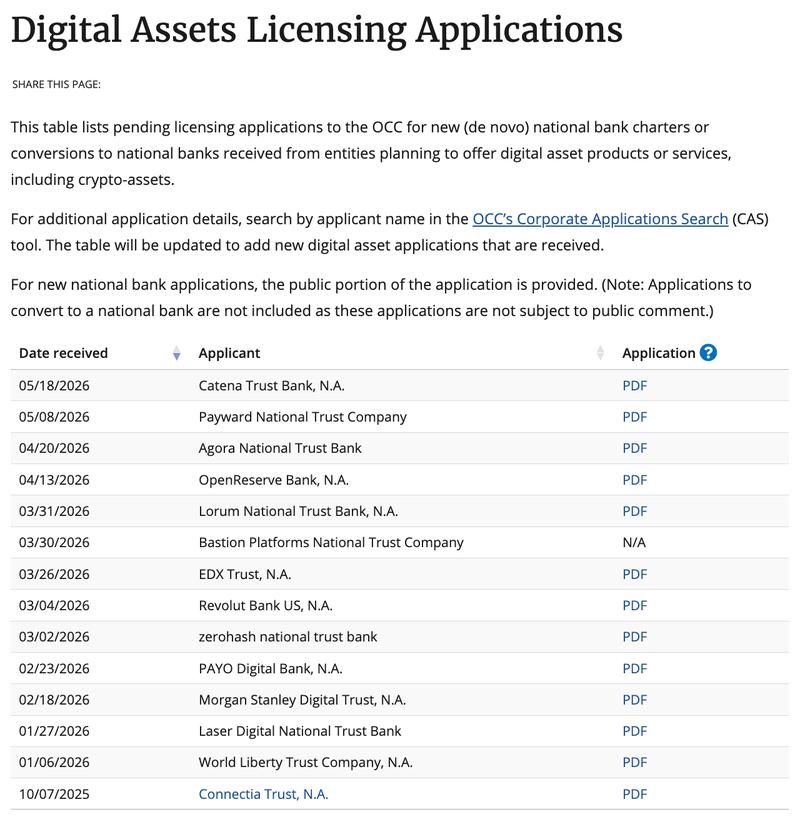
According to Payward's application, the company plans to "provide fiduciary custody and other services primarily for digital assets" should it receive approval. During January, Warren made a public call for Gould to postpone any consideration of the application submitted by World Liberty until such time as Trump had fully divested from the platform, pointing to financial conflicts of interest as the basis for her request.
According to Tuesday's records, the OCC maintained a list showing 14 companies in the digital asset space that had filed licensing applications.