BTC Rebounds While DeFi Sector Grapples With Aave Governance Crisis: Finance Redefined
This week saw Bitcoin's price rebound amid rising stablecoin inflows, while the DeFi sector confronted mounting challenges including Aave's governance conflict, security breaches and platform protection measures.

The leading digital assets, including Bitcoin, experienced a notable price recovery during this week's trading sessions after experiencing initial turbulence triggered by the escalation of tensions between the United States and Israel against Iran.
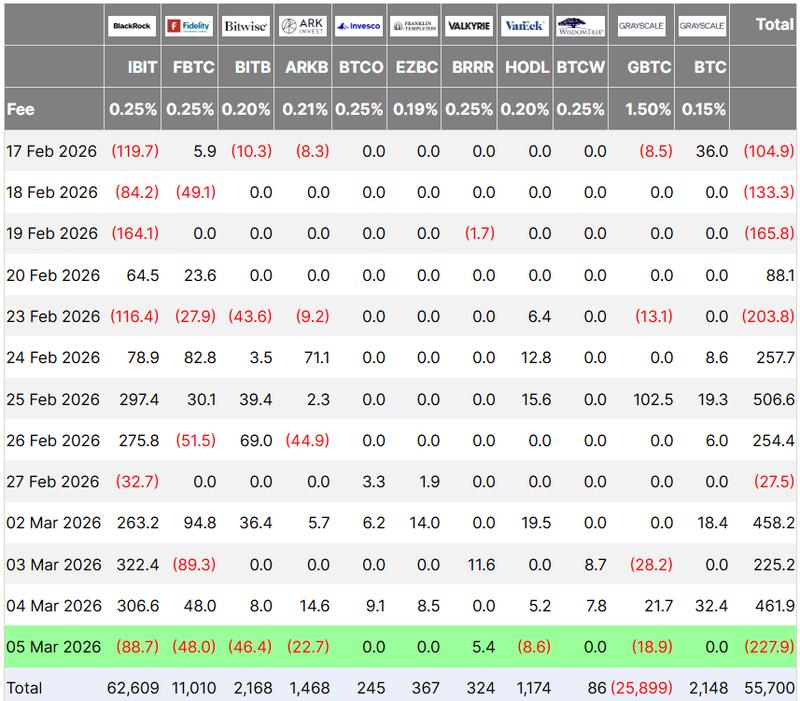
The price of Bitcoin (BTC) dropped initially to a low of $63,245 on Sunday before mounting a short-term rally that pushed the cryptocurrency to $73,000 by Thursday, buoyed by fresh capital flows from spot Bitcoin exchange-traded funds (ETFs) listed in the United States, which recorded cumulative net weekly inflows totaling $1.1 billion through Thursday.
Meanwhile, within the wider decentralized finance ecosystem, the ongoing governance conflict at Aave escalated further, with the Aave Chan Initiative (ACI) announcing its intention to discontinue its involvement with the Aave DAO and initiate a four-month wind-down process for its operations.
Aave Chan Initiative announces departure from Aave DAO following governance funding dispute
The ACI, which serves as a prominent governance delegate and service provider operating within the Aave ecosystem, announced that it would not be renewing its ongoing engagement with the Aave DAO and intends to execute a wind-down of its activities over a four-month period.
Through a public statement released on Tuesday, ACI's founder Marc Zeller revealed that the organization would maintain its governance participation and fulfill all existing obligations before handing over its infrastructure and operational responsibilities to either the DAO itself or designated successor service providers.
"The Aave Chan Initiative was built for Aave. Without a future in the Aave ecosystem, the name no longer applies. ACI will wrap up as our obligations conclude,"
Marc Zeller
According to ACI's statement, the decision to withdraw from the ecosystem stemmed from apprehensions regarding governance standards and the voting dynamics that emerged throughout the proposal process, signaling a major transformation in Aave's governance structure as the funding plan progresses to its subsequent phase.
Strive analyst projects AI-driven deflation could propel Bitcoin to $11 million by 2036
A wave of technological deflation fueled by advances in artificial intelligence has the potential to drive Bitcoin prices beyond the $10 million threshold within the next ten years by forcing central banking institutions to maintain expansionary monetary policies, according to analysis published by Strive strategist Joe Burnett.
In a report issued on Monday, Burnett, who holds the position of vice president of Bitcoin strategy at Strive, argued that accelerated productivity improvements stemming from AI development will drive downward pressure on prices throughout goods and services sectors, compressing profit margins and compelling policymakers to implement sustained monetary expansion. His "base case" scenario projects Bitcoin (BTC) reaching $11 million during the first quarter of 2036, according to his analysis.
"My base case for Q1 2036 is $11 million per Bitcoin."
This projection relies upon a series of bold assumptions, including the premise that Bitcoin would expand to represent approximately 12% of global financial assets' total value and that worldwide wealth would experience compound growth at an annual rate of 7% extending through 2036. Given that Bitcoin presently represents roughly 0.2% of total financial assets globally, achieving this target would necessitate a greater than 176-fold expansion in Bitcoin's market capitalization throughout the coming decade to achieve $230 trillion.
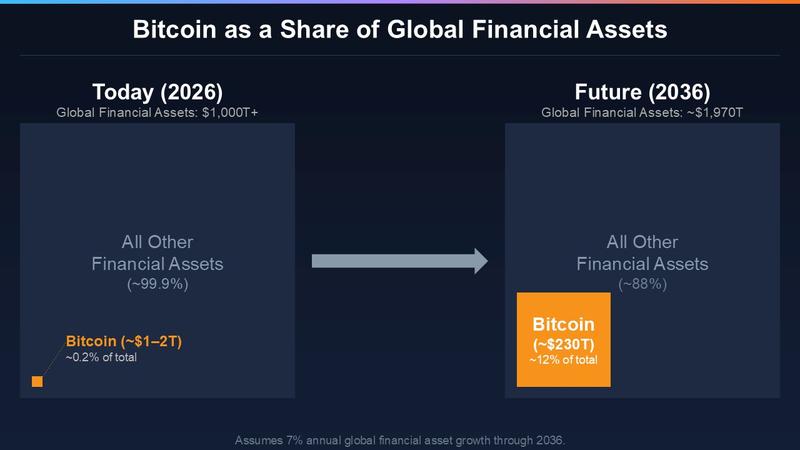
This price forecast would suggest that Bitcoin is positioned to emerge as the preeminent global reserve asset alongside structurally accommodative monetary policy throughout the next ten years, according to Nic Puckrin, co-founder and lead market analyst at educational platform Coin Bureau, in comments provided to Cointelegraph.
"The forecast implies Bitcoin would become around 10 times as large as the current US M2 money supply, nearly four times as large as the US equity market today, and nearly double current global GDP."
This prediction would additionally suggest a compound annual growth rate (CAGR) approximating 53% annually, which represents a historically achievable level when considering Bitcoin's mean 60% CAGR recorded between 2015 and 2024, though a deceleration might be anticipated given its expanding market capitalization, Puckrin noted.
Shawn Young, who serves as chief analyst at MEXC Research, expressed concurrence, cautioning that such a prediction would represent a "huge" 16,318% appreciation for Bitcoin over the upcoming decade, which appears improbable given Bitcoin's diminishing volatility patterns.
"The more liquidity flows into the asset from both institutional and retail investors, the less likely sharp price spikes will be recorded," the analyst told Cointelegraph, adding that the "realistic price range is at most $1 million."
Stablecoin capital inflows surge to $1.7 billion while Washington debates yield payment regulations
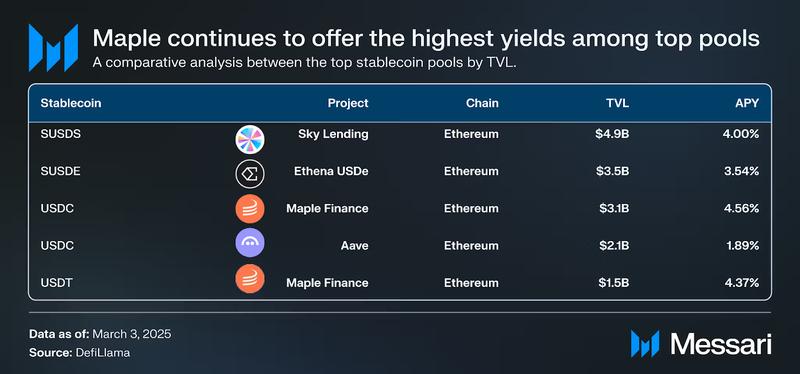
Net weekly inflows of stablecoins experienced a significant rebound during the previous week as onchain transaction activity increased even as United States policymakers and banking industry groups engaged in disputes regarding whether third-party entities should receive authorization to pay yield on stablecoins, based on fresh analysis from Messari.
Net weekly stablecoin inflows climbed to $1.7 billion, representing a week-over-week surge of 414.5%, based on the report that was published on Wednesday.
This recovery reversed the 30-day average to register positive daily inflows of $162.5 million. Transaction volumes experienced a 6.3% increase, while the average size per transaction continued its downward trend, indicating revitalized demand for stablecoin issuance and "strengthened" onchain activity among retail market participants, according to the report's findings.
Stablecoin inflows measure net new stablecoins that enter active circulation after factoring in redemption activity.
The spike follows a period of reduced activity earlier during the year. Data from Messari indicated $249 million in weekly inflows recorded two weeks prior and $4.4 billion in net capital outflows throughout the 30-day period concluding on Feb. 18.
Solv Protocol extends 10% bounty offer following $2.7 million vault security breach
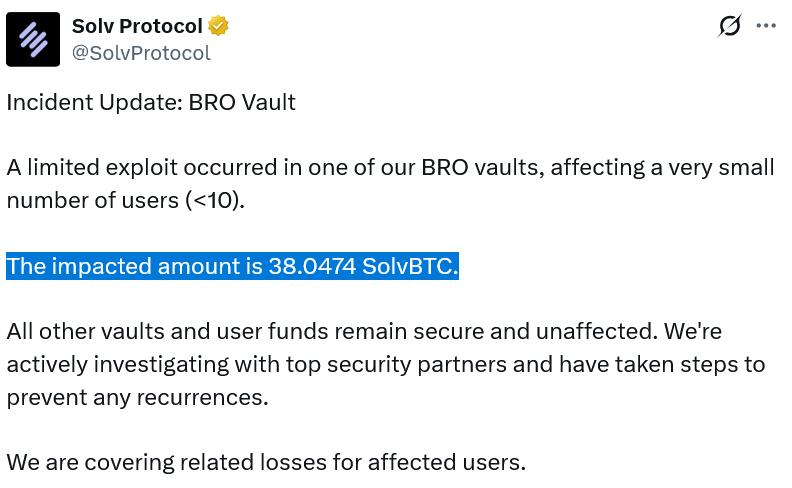
Solv Protocol, a decentralized finance platform built on Bitcoin infrastructure, disclosed that one of its token vaults suffered a security exploit resulting in $2.7 million in losses and has extended a 10% bounty offer to the attacker in return for restitution of the misappropriated funds.
In a statement posted on X on Thursday, Solv revealed that the incident affected fewer than 10 platform users, while emphasizing that it would assume responsibility for covering the loss of 38.05 Solv Protocol BTC (SolvBTC), a digital token designed to maintain parity with Bitcoin (BTC).
The platform further stated that it had deployed protective measures to prevent similar attacks from occurring in the future and was conducting an investigation into the exploit alongside cryptocurrency security firms Hypernative, SlowMist and CertiK.
Solv enables users to deposit Bitcoin in exchange for Solv Protocol BTC, which they can subsequently utilize for lending, borrowing or staking activities across alternative blockchains. The platform currently holds 24,226 Bitcoin valued at over $1.7 billion and asserts that it maintains the largest onchain Bitcoin reserve.
While Solv has not provided confirmation regarding the exploit's technical mechanics, two cryptocurrency security researchers indicated that it originated from a smart contract vulnerability within Solv's infrastructure that enabled the attacker to generate excessive quantities of a token utilized on the protocol.
The malicious actor leveraged the vulnerability across 22 separate instances before exchanging hundreds of millions of tokens for slightly more than 38 SolvBTC, based on findings from CD Security co-founder Chris Dior.
Bybit reports new fraud detection system prevented $300 million in suspicious withdrawals during Q4 2025
Bybit announced that it successfully blocked or disrupted over $300 million in suspected fraudulent withdrawal attempts during the fourth quarter of 2025 following the implementation of an AI-enhanced risk monitoring infrastructure designed to identify malicious transactions prior to funds departing the exchange.
Through a corporate blog post, Bybit disclosed that its system identified approximately $500 million in withdrawal requests throughout the quarter and that over 4,000 users received "protection" after the platform issued real-time risk notifications or executed outright transaction blocks.
David Zong, Bybit's head of group risk control, explained to Cointelegraph that a significant portion of the $300 million figure represents withdrawals that users chose to cancel voluntarily following warning notifications, indicating that the funds stayed within their accounts rather than necessitating recovery procedures or reimbursement processes.
"Because the withdrawals were stopped prior to completion, the funds did not require recovery or reimbursement. They remained in users' accounts at all times."
According to Bybit, the system additionally detected 350 high-risk investment fraud addresses that protected 8,000 users from potential withdrawal losses throughout the preceding quarter. The platform also successfully prevented over 3 million credential stuffing attacks launched by hackers during the entirety of 2025.

Security breaches targeting cryptocurrency platforms generated $3.4 billion in total losses throughout 2025, as malicious actors shifted their attention toward major crypto entities.
DeFi market overview
Based on market data provided by Cointelegraph Markets Pro and TradingView, the majority of the 100 largest digital currencies ranked by market capitalization concluded the week with positive price performance.
The River (RIVER) token experienced a 94% price increase, emerging as the week's strongest performer, with the Humanity Protocol (H) token following closely behind with a 39% gain throughout the past week.