BitMEX introduces 'quantum canary fund' as replacement for Bitcoin coin freeze proposal
A quantum canary fund concept has been introduced by BitMEX Research for Bitcoin, designed to activate coin freezing mechanisms exclusively when quantum computing dangers are confirmed.
Rather than implementing an immediate freeze on dormant Bitcoins vulnerable to quantum attacks, BitMEX Research has put forward an alternative strategy that employs a "canary fund" combined with a quantum bounty, favoring a cautious wait-and-see methodology.
On Thursday, BitMEX Research unveiled a soft fork proposal that would trigger a comprehensive freeze of at-risk coins exclusively when there is "proven that a quantum computer capable of stealing Bitcoins actually exists."
The framework implements a "canary approach," establishing a dedicated Bitcoin (BTC) address through the use of a "Nothing-Up-My-Sleeve Number" (NUMS). This represents a cryptographic verification method where the private key remains unknown, yet the address is valid and could potentially be accessed by a sufficiently advanced quantum computer.
Community members can contribute BTC to this designated address as a bounty reward, creating financial motivation for any entity possessing quantum computing capabilities to "ring the alarm" through spending from the address. The freeze mechanism would only engage automatically when funds are withdrawn from this canary address, demonstrating that the quantum danger is genuine and present.
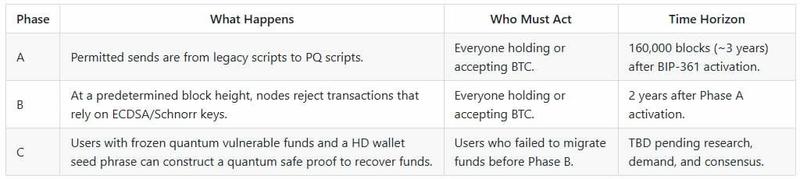
This approach offers a different pathway compared to the BIP-361 proposal introduced on Tuesday, which recommended implementing a freeze on dormant, quantum-susceptible Bitcoin holdings to protect them from potential theft by malicious parties in coming years.
The BIP-361 proposal encountered substantial resistance from the community, with numerous commenters describing it as "authoritarian" and "confiscatory."
Canary watch state prevents automatic freeze
The "canary watch state" mechanism proposed by BitMEX would continue to permit the spending of older coins, as long as bad actors wielding quantum computers refrain from attempting theft from the "canary fund."
Those who choose to participate in the canary fund have the flexibility to employ multisignatures and can withdraw their BTC whenever they wish, according to the explanation provided.
Additionally, there exists a protective window during which quantum-vulnerable transactions would still be permitted beyond the five-year threshold suggested in BIP-361, though with outputs subject to a temporary lock period.
"While this approach adds complexity and risk, given how controversial any coin freeze is, mitigating the impact of the freeze using this type of system may be worth consideration."
BIP-361 is a rough idea for a contingency plan
In the meantime, Jameson Lopp, who co-authored BIP-361, has clarified that his Bitcoin improvement proposal represented more of a "rough idea for a contingency plan" rather than a fully developed proposal ready for implementation and activation.
"I know folks don't like it. I don't like it myself. I wrote it because I like the alternative even less," he wrote on X on Wednesday.
In his communication with Cointelegraph, he characterized it as a "rough sketch" designed to address the challenge of a "looming circulating supply shock" that could emerge if quantum computing technology progresses to a level where a post-quantum signature scheme gains consensus approval for integration into Bitcoin.