Bitcoin's Quantum-Resistant Evolution Could Expose Satoshi Nakamoto's True Holdings, Says Adam Back
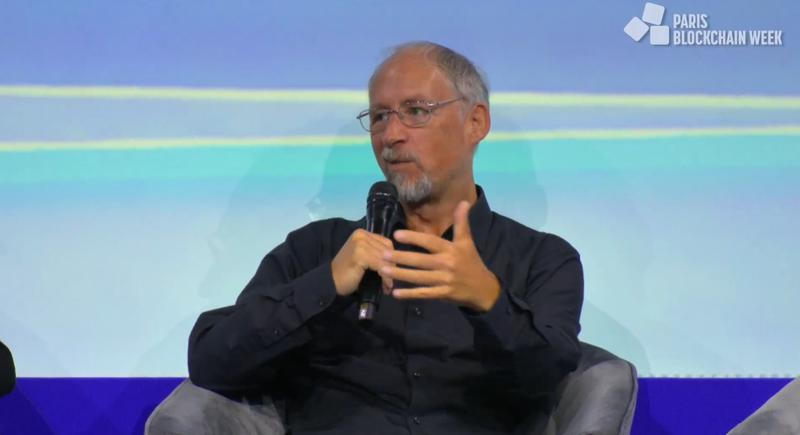
During Paris Blockchain Week, Back suggested that the implementation of quantum-resistant security measures in Bitcoin could unveil the actual size of Satoshi Nakamoto's holdings, believed to be somewhere between 500,000 and 1 million BTC.

Adam Back, chief executive of Blockstream, stated on Thursday that Bitcoin's eventual transition to quantum-resistant cryptography may provide clarity on the precise number of coins associated with Satoshi Nakamoto that are still under active control, since holders seeking to safeguard vulnerable assets would be required to transfer them to an updated address structure.
During his address at Paris Blockchain Week, Back indicated that such a transition would probably afford users sufficient time to relocate their funds and contended that any coins remaining static following this procedure could be reasonably considered permanently lost.
"This migration to post-quantum address format may tell us how many of those coins [Satoshi] still has,"
Back stated, further noting that the anonymous founder is believed to possess approximately 500,000 to 1 million Bitcoin (BTC).
The Bitcoin holdings attributed to Satoshi have sparked intense discussion among Bitcoin investors who are worried about the threat posed by quantum computing technology. Just a day earlier on Wednesday, Jameson Lopp alongside five co-authors released a Bitcoin Improvement Proposal designed to limit future transfers of coins stored in address formats susceptible to quantum attacks, including legacy coins that have previously exposed their public keys.
According to blockchain analytics platform Arkham, wallets connected to Nakamoto contain 1.09 million Bitcoin, which represents a present-day value of $81.6 billion.
Back sees long runway on quantum
Back emphasized that Bitcoin's development community and coin holders maintain a significant time window for preparation, suggesting that a quantum computing advancement powerful enough to compromise Bitcoin's signature schemes remains at minimum 20 years in the future.
He contended that current quantum computing systems are "less powerful than a $5 calculator" and that certain challenges within these systems grow more acute as they expand in scale, particularly concerning their energy consumption requirements.
Back suggested that this extended timeline should provide both developers and users with adequate opportunity to engineer a post-quantum solution and transition toward a new quantum-proof standard built upon hash-based signature technology.
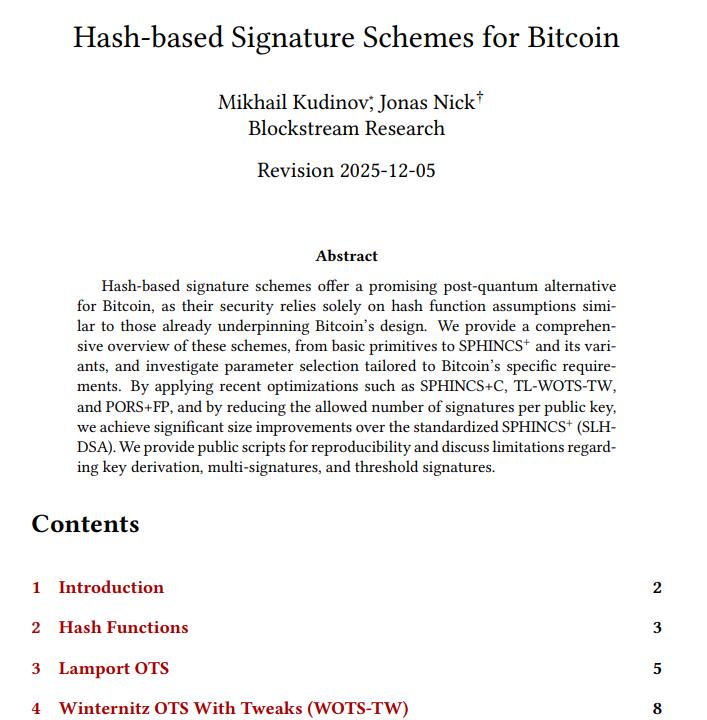
In December 2025, Blockstream Research, led by Back, published a research paper outlining a hash-based signature methodology that presents a "promising path for securing Bitcoin in a post-quantum world," serving as a quantum-safe alternative to both ECDSA and Schnorr signature schemes. According to the proposal, security would depend exclusively on hash function assumptions, which mirror those presently employed in Bitcoin's underlying network architecture.
The Elliptic Curve Digital Signature Algorithm (ECDSA) leverages elliptic-curve cryptography for confirming both the authenticity and integrity of messages. Schnorr signatures represent an alternative signature methodology celebrated for improving privacy protections and minimizing data footprint, thanks to their capability to aggregate multiple signatures into a single unified signature.