Researcher warns complete insider trading prohibition could damage prediction markets
According to Balbinder Singh Gill, "The same insider trade that improves the accuracy of the price today can reduce the participation that makes the price informative tomorrow."

An academic from the Stevens Institute of Technology has published research suggesting that prediction market regulators ought to adopt a balanced strategy for insider trading enforcement rather than implementing a complete prohibition.
Balbinder Singh Gill, who serves as an assistant professor of finance, published a paper on June 2 that presented a formal economic model designed to address how rigorously insider trading should be monitored within prediction markets.
He identified a paradox whereby "the same insider trade that improves the accuracy of the price today can reduce the participation that makes the price informative tomorrow."
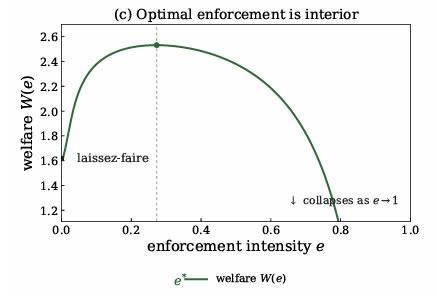
His model demonstrated that accuracy in prediction market pricing exhibits a "hump-shaped" relationship with enforcement intensity, where insufficient enforcement allows insiders to displace regular participants, whereas excessive enforcement eliminates the valuable information contribution that insiders provide.
"Tougher enforcement curbs the insider, raising participation, so accuracy is hump-shaped and optimal enforcement is interior, neither laissez-faire nor a ban," he explained.
The prediction markets space has continuously struggled with insider trading issues, leading regulators to demand stronger crackdowns or completely shutting down platforms.
In April, the CFTC's chief enforcement director issued a warning to prediction market insider traders that enforcement actions would be taken against violators. Subsequently in May, Kalshi and Polymarket became subjects of a probe launched by US House lawmakers concerning insider trading allegations.
Different levels of enforcement needed
According to Singh Gill, the appropriate level of enforcement ought to be determined based on the origin of the insider information.
Information obtained through research, where a trader has invested significant effort to acquire knowledge, should face minimal or zero enforcement, noting that cracking down at this level discourages the production of valuable information.
Information that has been misappropriated, including leaked data or classified intelligence, which qualifies as insider information, merits a higher degree of enforcement.
On the other hand, situations where the insider possesses the ability to influence the outcome, like a political candidate placing bets on their own campaign, warrant the strongest enforcement measures.
"Trading on a genuine, independently researched edge is the activity society should be most reluctant to punish [...] And trading by those who can move the outcome warrants the stiffest enforcement, because their positions invite manipulation."
He concluded that enforcement within prediction markets should be "calibrated rather than maximal."
Kalshi to check user employment details
The research was released as Kalshi began implementing new measures designed to fight insider trading by mandating that users in certain sensitive markets provide employment information.
Those participating in sensitive markets, including those related to company performance or national security matters, must disclose their employer through an online form. Additionally, the platform has created a "specific risk score" that gets assigned to markets presenting elevated insider trading or manipulation risks.
These changes come after an audit committee report that recommended improved data collection practices and amid mounting pressure from lawmakers and regulatory authorities.
Singh Gill's paper also made reference to two recent high-profile insider trading incidents involving Polymarket, a competing platform, which were previously flagged.
In May, a Google employee faced charges for utilizing insider information regarding the company's search trends to generate $1.2 million on Polymarket, while in April, a US soldier was charged for trading based on classified knowledge concerning a military operation.