Gnosis and Zisk teams unveil 'economic zone' framework to address Ethereum L2 fragmentation
A new framework from Gnosis and Zisk developers aims to bridge fragmented rollups as Ethereum faces mounting concerns about scaling approaches and cross-chain interoperability.
Teams from Gnosis and Zisk, supported by the Ethereum Foundation, have introduced a new framework designed to consolidate Ethereum's scattered layer-2 landscape by facilitating seamless rollup interactions with one another and the mainnet within a single transaction.
Based on an announcement provided to Cointelegraph, the framework called "Ethereum Economic Zone" (EEZ) would enable smart contracts deployed on various rollups to operate synchronously across different networks without requiring bridges.
The effort addresses a fundamental challenge in Ethereum's approach to scaling, whereby numerous layer-2 solutions have enhanced transaction capacity but simultaneously fragmented liquidity, infrastructure resources and user engagement across isolated environments.
When deployed, the framework would permit applications to utilize shared infrastructure spanning multiple rollups while maintaining settlement on Ethereum, thereby minimizing redundancy and eliminating the necessity for cross-chain asset transfers.
Development of the project involves collaboration with Ethereum researchers and industry stakeholders, with initial participants comprising infrastructure service providers and decentralized finance protocols investigating a unified standard for interoperable rollup solutions.
Comprehensive technical specifications and performance metrics are anticipated in the upcoming weeks as the team commences defining the implementation pathway and adoption strategy throughout the wider Ethereum ecosystem.
The initiative further establishes an "EEZ Alliance," comprising ecosystem stakeholders working to align standards and facilitate adoption as Ethereum's scaling infrastructure undergoes continuous transformation.
Gnosis represents an established Ethereum infrastructure development team. Zisk operates as a zero-knowledge proving initiative spearheaded by Jordi Baylina, the creator of Polygon zkEVM.
Ethereum's rollup model sparks debate over fragmentation and scaling
The framework introduction arrives during an active discussion within the Ethereum community regarding the compromises inherent in its rollup-focused roadmap. Although layer-2 solutions have broadened the ecosystem's transaction processing capability, they have simultaneously dispersed liquidity and user engagement across disconnected environments.
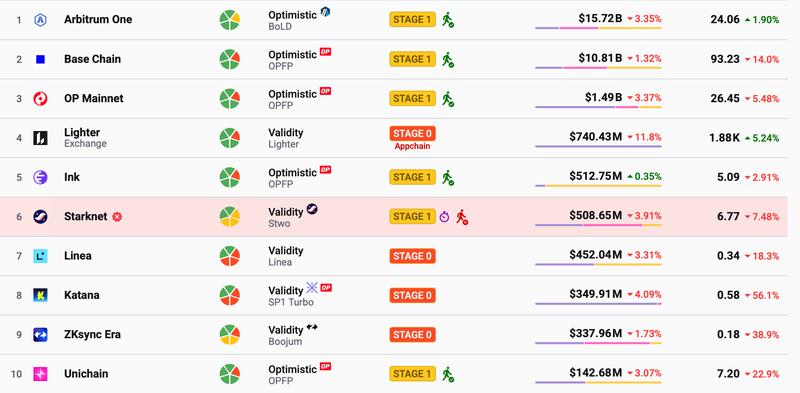
Information from L2BEAT indicates over 20 operational layer-2 networks safeguarding approximately $40 billion in aggregate value, with liquidity spread across platforms including Arbitrum, Base and Optimism. Instead of centralizing activity, Ethereum's scaling approach has generated a landscape characterized by parallel execution environments.
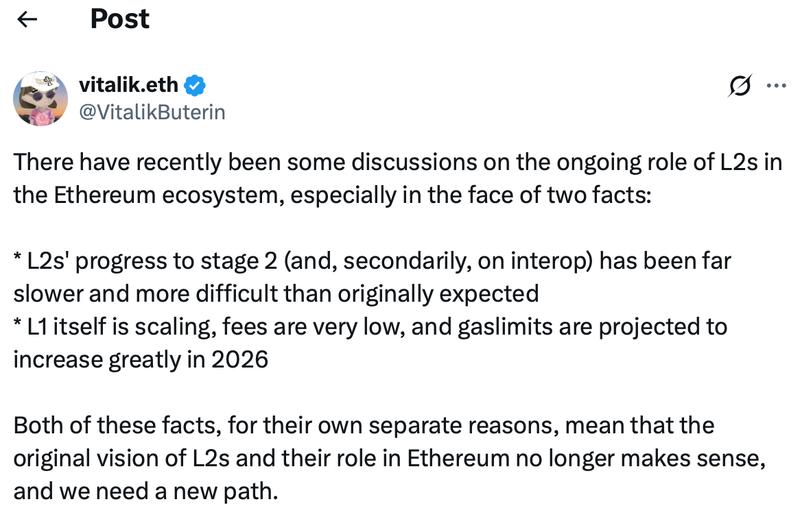
Vitalik Buterin, co-founder of Ethereum, has articulated concerns regarding the architecture of certain layer-2 solutions, identifying centralized sequencers and trusted bridging infrastructure as possible vulnerabilities.
The original vision of L2s and their role in Ethereum no longer makes sense, and we need a new path
Buterin stated in a Feb. 3 X post, suggesting the ecosystem may require a fundamental reassessment of how rollups contribute to Ethereum's scaling model.
Buterin's statements elicited varied responses from layer-2 developers, exposing a division regarding the future purpose of rollups.
Optimism co-founder Karl Floersch conceded that L2s must advance beyond simple scaling, referencing persistent technical constraints, whereas Steven Goldfeder, co-founder of Offchain Labs, the team developing Arbitrum, contended that scaling persists as a primary function as rollups consistently process greater transaction volume than Ethereum itself.