Ethereum Faces Growing Risk of Losing Second Place—But Not to Bitcoin
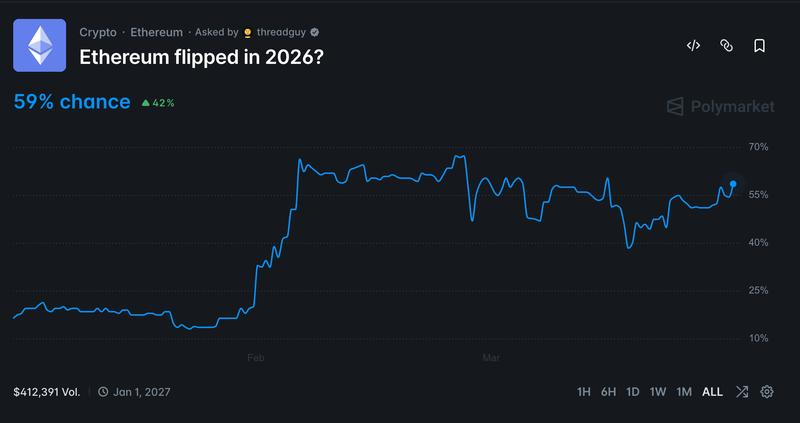
Prediction market participants on Polymarket have dramatically increased their bets on ETH dropping from its second-place cryptocurrency position in 2026, with probability surging from 17% to more than 59% throughout the year.

The second-place position that Ether (ETH) has maintained in the cryptocurrency market hierarchy is showing signs of vulnerability, though not due to any advancement toward surpassing Bitcoin (BTC). Instead, the threat emerges from the rapidly expanding stablecoin sector.
Key takeaways:
- Tether's rapid expansion threatens Ether's position as the second-largest cryptocurrency.
- Over a five-year period, ETH has shown weaker growth compared to leading stablecoins USDT and USDC.
The Second-Place Position of Ethereum Under Threat in 2026
Over the last five years, Ether's performance has significantly trailed behind its main rivals competing for the number two position, with Tether's USDT (USDT) stablecoin leading the pack.
When measured on a five-year rolling timeframe, ETH's market capitalization expanded by approximately 11.75%, bringing its total valuation to roughly $240 billion.
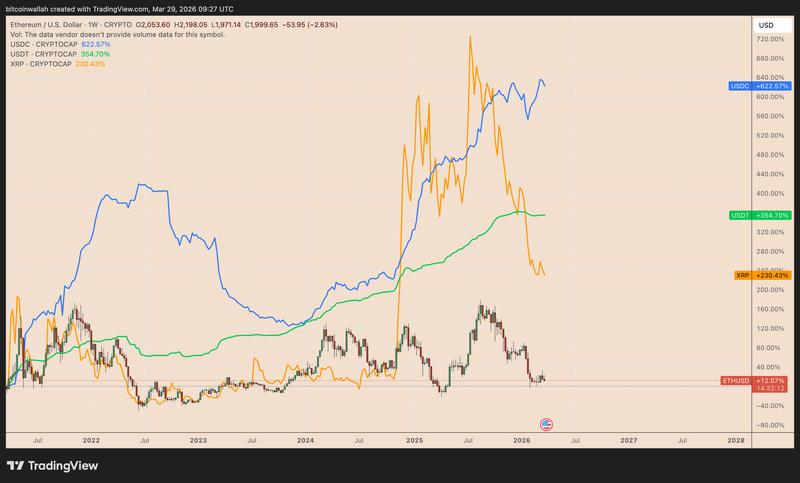
By contrast, USDT, which currently holds the third position among cryptocurrencies, experienced growth of 622.50% during this identical timeframe, achieving a market capitalization exceeding $184 billion. Even cryptocurrencies like XRP (XRP) and USD Coin (USDC) have demonstrated superior growth rates when compared to Ether.
Consequently, an increasing number of market participants are placing wagers on a potential Ethereum flippening scenario during 2026.
Taking Polymarket's betting platform as an example, more than 59% of participants have placed their bets supporting the scenario where Ether surrenders its second-place ranking in 2026. At the start of the year, these odds stood at merely 17%.
What Explains Ethereum's Underperformance Relative to Tether?
The growth trajectories of Ethereum and Tether diverge fundamentally because one represents cryptocurrency while the other functions as a fiat-pegged asset.
The market capitalization of Ethereum is predominantly tied to increases in ETH's price, which has proven challenging to maintain throughout 2026 as cryptocurrency markets face headwinds from macroeconomic factors including US tariffs, the military conflict between the US and Israel versus Iran, and diminishing prospects for Federal Reserve interest rate reductions.
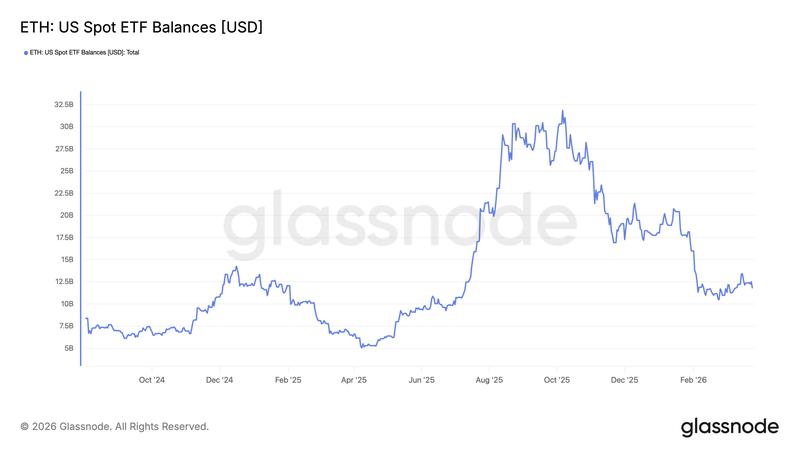
This underlying weakness has manifested in institutional investment patterns as well. Assets under management for US spot Ethereum ETFs declined by approximately 65%, falling to $11.76 billion in March from $31.86 billion recorded in October of the previous year, highlighting the reduced investor appetite for ETH during recent months.
Conversely, Tether experiences growth when capital migrates into stablecoins as investors acquire "crypto dollars." This phenomenon typically occurs when market participants prioritize safety, liquidity, or operational flexibility over exposure to price-volatile assets such as ETH.
The aggregate stablecoin market has reached a valuation of $310 billion, a dramatic increase from approximately $5 billion in 2020, with Tether commanding a 58% market share.
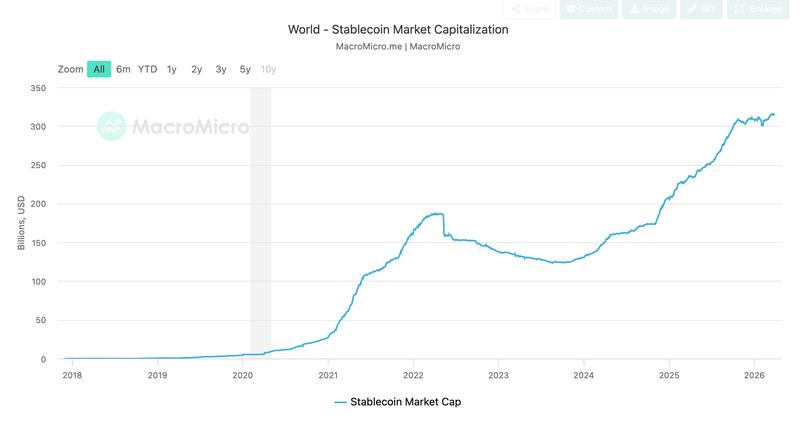
The demand for this variety of "dry powder," representing capital positioned in dollar-pegged assets while investors await more favorable cryptocurrency entry opportunities, typically maintains strength during periods characterized by risk aversion.
For Ethereum to succeed, stronger risk appetite is required to elevate ETH's price, whereas Tether gains advantages when investors adopt defensive postures. This dynamic provides clarity on why ETH market capitalization growth has fallen behind USDT despite Ethereum's continued status as a fundamental infrastructure asset within the crypto ecosystem.
Could ETH Price Experience Additional Declines in 2026?
When examined from a technical analysis standpoint, Ether confronts the possibility of additional price deterioration throughout 2026.
As of Sunday, the cryptocurrency was consolidating within what technical analysts identify as a "bear flag" formation, which elevates the probability of a downside resolution should the price break convincingly beneath the pattern's lower support trendline.
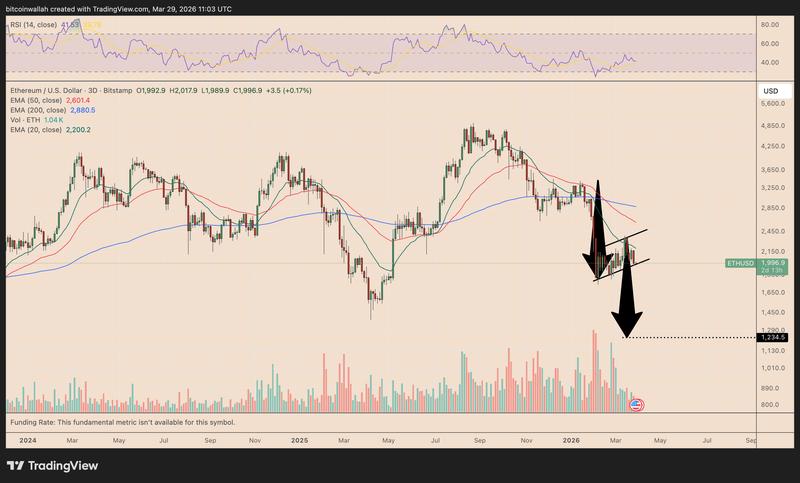
The price of ETH faces potential decline toward the bear flag's calculated downside objective near $1,250 by June should the breakdown beneath the lower trend line continue to hold.