Cryptocurrency ranks last among voter priorities, affecting just 4% of ballot decisions: Survey
A recent POLITICO survey reveals that American voters show significant skepticism toward cryptocurrency and rank it as the lowest priority policy matter when determining their electoral choices.
A mere 4% of American adults surveyed indicated that a political candidate's position on cryptocurrency policy would influence their voting decisions.
The survey, which polled 2,035 adults across the United States and was published Wednesday by POLITICO in partnership with polling organization Public First, found that respondents prioritized three key concerns above all others: affordable housing, protection against consumer fraud, and reduced banking fees as the primary issues they want Congressional leaders to address.
When it came to establishing regulatory frameworks for cryptocurrency markets, only 18% of those surveyed deemed it a congressional priority worth pursuing, placing it merely one percentage point above the regulation of major banking institutions.
These findings highlight a significant gap between what matters most to everyday American voters and the agenda being promoted by cryptocurrency industry advocacy groups, which have been aggressively lobbying congressional members to enact crypto-related legislation before the upcoming midterm elections.
The cryptocurrency lobbying sector invested upwards of $130 million in the 2024 election cycle, surpassing every other industry in political spending, and has already allocated $320 million toward influencing the November midterm contests, based on information gathered by researcher Molly White.
Industry lobbyists representing cryptocurrency interests have been explicit about their willingness to deploy substantial financial resources against candidates who fail to back their agenda, as evidenced by the more than $5.5 million spent this year opposing certain candidates in Illinois congressional competitions.
Less than a third oppose making crypto mainstream
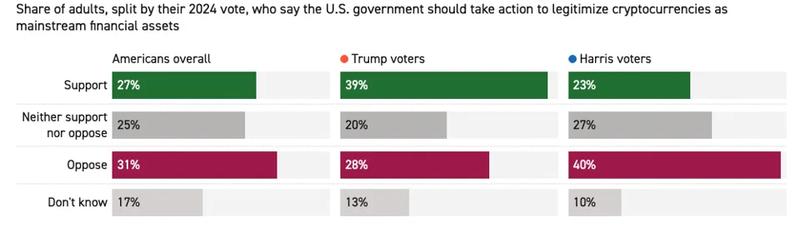
The polling data revealed that only 27% of respondents indicated support or strong support for government initiatives aimed at establishing cryptocurrency as a legitimate mainstream financial instrument, whereas 31% expressed opposition or strong opposition to such measures.
Most voters don't care about digital assets. But those who do care a lot. It is a high-intensity issue. And I think it's going a little bit more mainstream. The number of people who ask me about it is still very small, but I would say growing.
Republican Representative Dusty Johnson told POLITICO
Over half of all survey participants stated they had never traded cryptocurrency and had no plans to do so in the future, while 19% reported having engaged in crypto trading. Among active cryptocurrency traders, 7% acknowledged that a candidate's cryptocurrency policy stance would factor into their voting choice.
Additionally, the survey discovered that 45% of participants regarded cryptocurrency investment as an unacceptable risk regardless of potential high returns, in contrast to 25% who believed the potential rewards justified the risks involved.
These latest survey results stand in stark contrast to a separate poll of 2,008 registered voters that HarrisX released on Friday, which indicated that 47% of respondents would be at least somewhat inclined to vote for a candidate from outside their usual party affiliation if that candidate endorsed passing a highly anticipated cryptocurrency regulation bill that would establish clear oversight guidelines for the sector.
On Thursday, the Senate Banking Committee is scheduled to vote on whether to move forward with such legislation, which has received input from the White House as efforts continue to broker an agreement between cryptocurrency advocates and banking industry lobbyists. The House of Representatives approved its own version of this legislation in June under the name CLARITY Act.