BTC Resilience at $67K Amid Oil Crisis Signals Potential Market Bottom, Analysts Say
Despite oil prices skyrocketing to $119 amid Middle Eastern tensions and rising inflation concerns, Bitcoin maintained its position above $67,000, prompting analysts to identify indicators of a possible price bottom formation.

On Monday, Bitcoin (BTC) demonstrated notable resilience by maintaining trading levels above $67,000, following its first positive weekly close in a span of seven weeks. At the same time, crude oil markets experienced dramatic price increases as ongoing Middle Eastern hostilities fueled concerns about significant supply constraints.
Key takeaways:
- Bitcoin maintains stable position above $67,000 while oil prices climb to levels not seen since 2022.
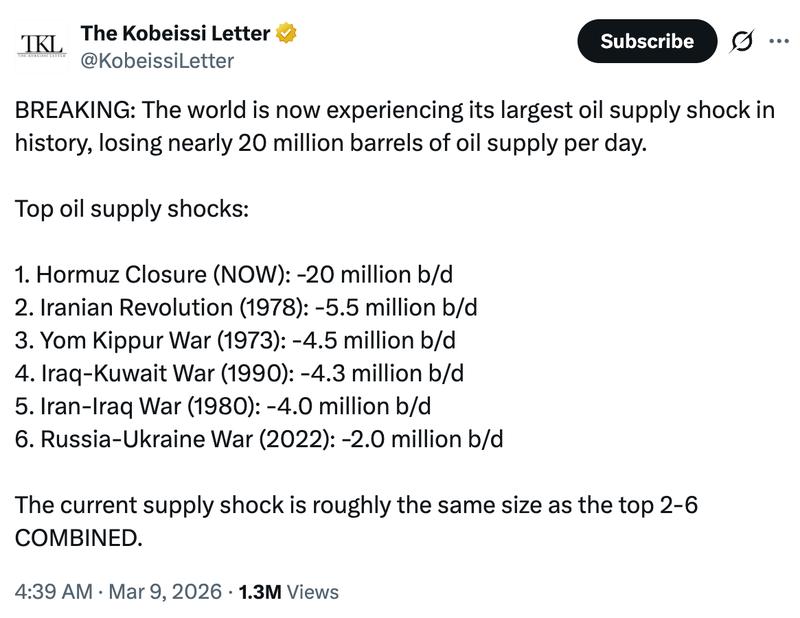
- Historic oil supply disruption creates widespread concerns about global inflation.
- Weekly chart formation of a bullish inverted hammer pattern indicates possible BTC bottom establishment.
International oil supply disruption fuels inflation concerns
According to TradingView data, oil futures climbed to $119 during the early hours of Asian market trading on Monday, driven by intensifying Middle Eastern conflicts that heightened concerns regarding potential supply chain disruptions.
The price level represents the highest point oil has achieved since the 2022 Russian invasion of Ukraine.
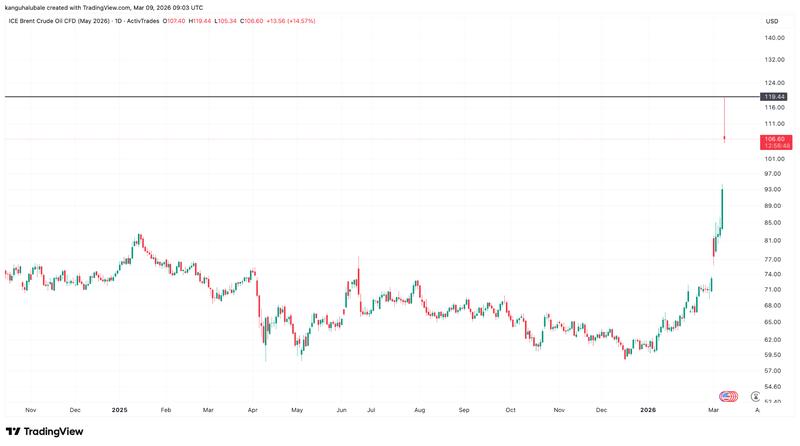
The recent spike in crude oil valuations occurred after Iraqi officials issued warnings that approximately 3 million barrels per day of oil production face potential disruption stemming from Iranian threats targeting tankers navigating through the Strait of Hormuz.
According to The Kobeissi Letter, a prominent capital markets commentary source, global markets are currently confronting the "largest oil supply shock in history," with daily losses approaching nearly 20 million barrels of available oil supply.
Even amid surging oil valuations, US President Donald Trump characterized the situation as a "small price" worth paying to achieve peace.
"Short-term oil prices, which will drop rapidly when the destruction of the Iran nuclear threat is over, is a very small price to pay for U.S.A., and world, safety and peace."
At the same time, the dramatic increase in oil valuations combined with the approaching supply shock have reignited worldwide inflation worries, with financial markets anticipating minimal likelihood of interest rate reductions throughout 2026.
On Polymarket, bettors are assigning approximately 99% probability that the Federal Reserve will maintain current rates at its upcoming March 18 meeting, while only around 27% believe a 25-basis-point reduction will occur at any point during 2026.
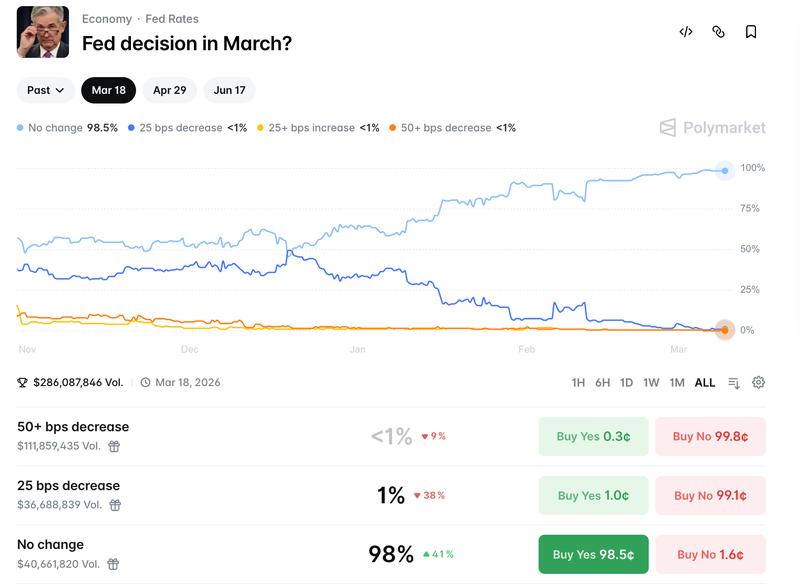
When rates remain unchanged, financial conditions become tighter, the dollar strengthens, and Bitcoin faces downward pressure, as the cryptocurrency frequently experiences short-term price swings when investors shift capital toward traditional safe-haven assets such as gold.
Has the Bitcoin price already established its bottom?
As of publication time, Bitcoin was trading near the $67,000 level with minimal evidence of fear-driven selling, indicating that market participants viewed the oil price surge as a sector-specific disruption rather than a comprehensive risk-off market event.
"Bitcoin's refusal to go down when the rest of the market is burning is one of the strongest indications I've seen yet that the bottom could be in," analyst Brian Brookshire said in an X post on Monday, adding:
"If there were even the slightest hint of froth in Bitcoin, it would have panic-sold off 10% into the futures open."
Although facing rejection at the $74,000 resistance threshold, the BTC/USD trading pair still managed to produce the "first positive weekly candle in 7 weeks," according to Nic, founder and CEO at CoinBureau, who commented on Monday.
The market movement has additionally created an "inverted hammer, which could indicate a potential bullish reversal," Nic further noted.
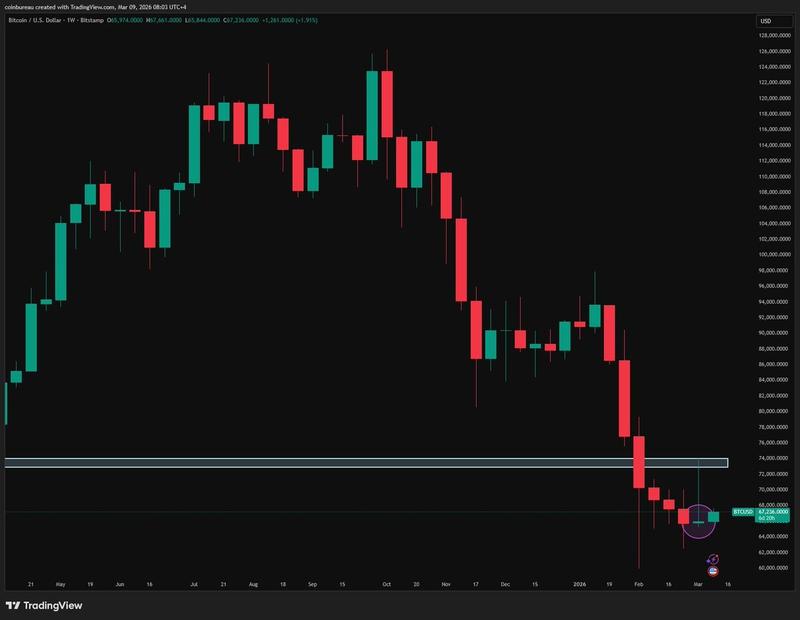
The inverted hammer formation on a weekly candle represents a bullish reversal pattern that emerges at the conclusion of a downward trend. The pattern is characterized by a compact body positioned at the lower portion, minimal or absent lower wick, and an extended upper wick measuring at least double the body's size. This formation indicates that purchasing pressure is mounting against selling pressure, with the potential to reverse the prevailing trend.
Consequently, Bitcoin may experience upward price movement if the pattern receives confirmation through a robust bullish continuation candle during the current week, accompanied by elevated trading volume sufficient to penetrate overhead resistance levels.
According to previous Cointelegraph reporting, oil price increases that occur immediately following geopolitical conflicts typically prove temporary in nature, with Bitcoin demonstrating superior performance across extended timeframes.
This article does not contain investment advice or recommendations. Every investment and trading move involves risk, and readers should conduct their own research when making a decision. While we strive to provide accurate and timely information, Cointelegraph does not guarantee the accuracy, completeness, or reliability of any information in this article. This article may contain forward-looking statements that are subject to risks and uncertainties. Cointelegraph will not be liable for any loss or damage arising from your reliance on this information.