Zonda CEO reveals 4,500 BTC in inaccessible cold wallet during withdrawal problems
The head of embattled cryptocurrency exchange Zonda has revealed the existence of a Bitcoin cold wallet containing approximately 4,500 BTC, while explaining that private keys were not provided during the management transition.
Digital asset trading platform Zonda has acknowledged that a cold storage wallet containing approximately 4,500 Bitcoin remains inaccessible while the company grapples with mounting concerns regarding withdrawal processing delays.
In a video message released on Thursday, Zonda's chief executive Przemysław Kral made public the exchange's wallet address, revealing that the private keys necessary to access the wallet were never provided to the current management team.
Within his statement, Kral refuted allegations that he had misused customer funds, explaining that the private keys should have been transferred by Sylwester Suszek, the exchange's founder and previous chief executive, who has remained unaccounted for since 2022.
So for all those who claim that I had anything to do with Sylwester's disappearance, this is the prime argument that I care the most about Sylwester being found.
Przemysław Kral, Zonda CEO
The revelation comes after several weeks of turmoil surrounding the platform following domestic media reports indicating that Polish regulatory authorities were investigating Zonda, which were then followed by findings from blockchain analytics firm Recoveris suggesting that Zonda might be operating while insolvent based on a significant decline in the exchange's hot wallet holdings.
Last recorded transaction dates to November 2025
The CEO's public announcement of the wallet address represents the initial instance in which Zonda has made the address publicly available throughout the ongoing controversy.
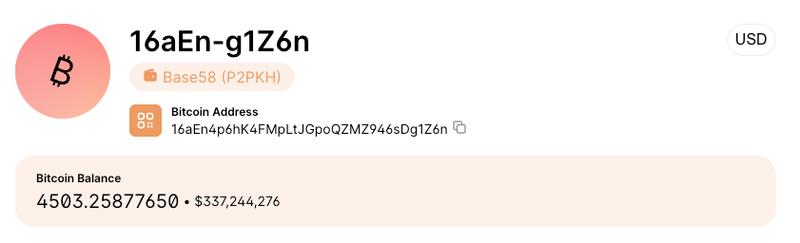
The wallet address referenced by the chief executive contains 4,503 Bitcoin (BTC) presently valued at approximately $334 million, with the most recent transaction on record dating back to November 2025 at the time this article was written.
The chief executive had previously dismissed allegations of insolvency that emerged after Recoveris published its hot wallet analysis on April 6, maintaining that Zonda continued to operate with full solvency and possessed holdings exceeding 4,500 BTC.
CEO plans legal action, says Zonda will meet customer obligations
During the video message, Kral explained that a significant portion of Zonda's recent withdrawal difficulties stemmed from an unusual surge in customer withdrawal demands, which he attributed to unfavorable press coverage.
He noted that Zonda typically handled approximately 100,000 withdrawal requests annually but received upwards of 25,000 requests within a matter of hours and days surrounding April 6.
Kral indicated that the organization intends to pursue legal remedies in response to what he characterized as inaccurate allegations about the exchange and reaffirmed the company's commitment to meeting its obligations to users despite the withdrawal challenges.
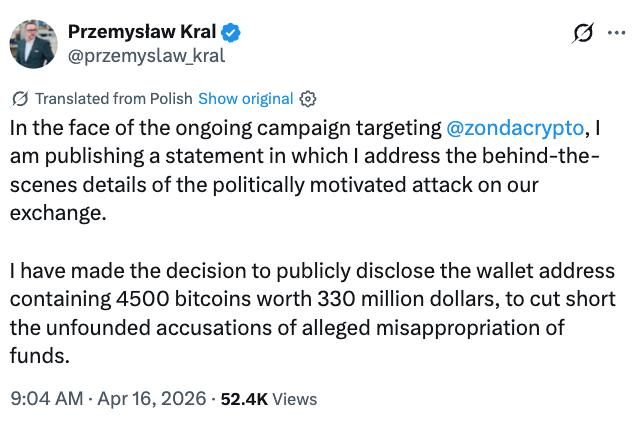
Polish legislator Tomasz Mentzen stated on X that Zonda appears to have lost the ability to access its cold storage wallet after the disappearance of its former chief executive Suszek. While Kral did not state outright that the funds were permanently lost, he confirmed that the private keys required to access the wallet were never handed over during the transition of company leadership.
Suszek has been reported as missing since March 2022, with various reports referencing purported connections to criminal activities involving certain Zonda shareholders, previously known when the platform operated as BitBay.
The trading platform was established in Poland in 2014 and underwent a rebrand to Zonda in 2021. In February, Kral informed Cointelegraph that the firm had completed its registration in Estonia due to regulatory ambiguity in Poland, pointing to postponements in the adoption of the European Union-wide Markets in Crypto-Assets (MiCA) regulation framework.
The matter has pulled the exchange into a wider political conversation, placing additional pressure on regulatory bodies and intensifying examination of Poland's cryptocurrency industry.