Visa expands blockchain infrastructure by launching validator node on Tempo network
The global payments leader is now running a validator node on Tempo blockchain, assuming direct responsibility for transaction validation while building out its infrastructure for stablecoin settlement.

The payments giant Visa has deployed a validator node on Tempo blockchain, assuming a hands-on position in the verification and processing of transactions across a network specifically built for real-time payments using stablecoins.
According to Visa, the node operates internally using the company's proprietary infrastructure and was built through a six-month collaborative process with Tempo's engineering team, establishing the payments company as an "anchor validator" along with other early network participants such as Stripe and Zodia Custody.
This position inserts Visa into the transaction validation layer, where the company contributes to ordering and confirming payments while bolstering network security and performance as the network moves through its initial phase.
Tempo operates as a Layer 1 blockchain built specifically for real-time payments and transactions based on stablecoins, with validators holding responsibility for transaction confirmation and ledger maintenance across the network. Network validators have the opportunity to earn rewards denominated in stablecoins when they are selected to package transactions into blocks, the announcement stated.
This development builds on Visa's current blockchain operations, which include its recently disclosed validator role on the Canton Network, where the company collaborates with financial institutions on privacy-centered onchain payment systems.
Payment companies expand stablecoin infrastructure
With stablecoins gaining momentum in the payments sector, leading payment companies are building out infrastructure that bridges traditional finance with settlement based on blockchain technology.
During October 2024, Stripe completed a $1.1 billion transaction to acquire Bridge, a stablecoin platform. In the year that followed, the company rolled out stablecoin-based accounts for its clients across more than 100 countries, enabling businesses to send, receive and maintain US-dollar stablecoins in a manner comparable to traditional bank balances.
During the previous month, Mastercard entered into an agreement to acquire BVNK, a stablecoin infrastructure company, in a transaction valued at as much as $1.8 billion. BVNK provides businesses with the ability to send and receive payments in stablecoins, exchange between fiat and crypto, and conduct operations across more than 130 countries.
In the meantime, Visa has concentrated on constructing and managing its own systems. During July, the company extended its settlement platform to accommodate tokens such as PayPal USD (PYUSD) and Euro Coin (EURC), along with networks including Stellar (XLM) and Avalanche (AVAX).
During March, the company also broadened its stablecoin card partnership with Bridge to cover 18 countries, with intentions to expand to more than 100 markets before the end of the year.
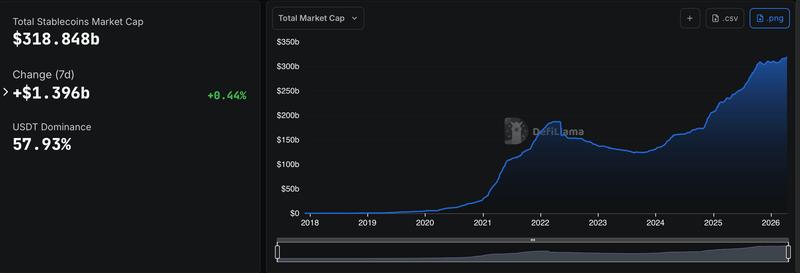
Based on data from DefiLlama, the market capitalization of stablecoins reached nearly $319 billion at the time of writing, representing an increase from approximately $307.5 billion recorded at the beginning of the year.