Visa-Commissioned Study Reveals Euro Stablecoins Command Over 80% of Alternative Currency Market
Research shows euro-based stablecoins control more than 80% of the market beyond US dollar tokens, with Circle's EURC at the forefront as regulatory frameworks and payment systems drive growth.

Stablecoins pegged to the euro represent more than 80% of the stablecoin market outside the US dollar category, a segment that Dune analytics indicates has expanded to approximately $1.2 billion in aggregate supply, based on findings from research funded by Visa.
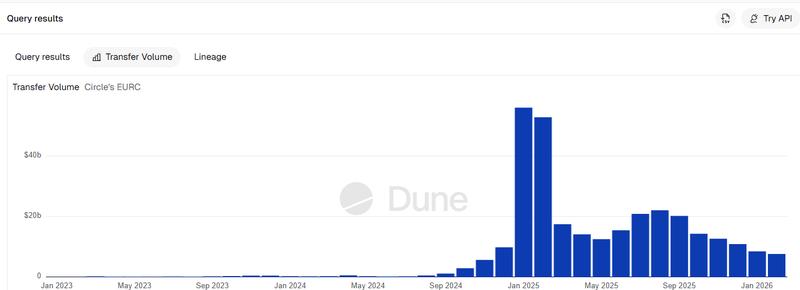
According to Dune's analysis, euro-pegged stablecoins represented 85% of all transaction volume within the non-dollar stablecoin marketplace, with Circle's euro-backed token EURC standing out as the leading euro-denominated asset in this category.
The findings highlighted increasing integration of euro stablecoins throughout payment systems and infrastructure, as both Visa and Mastercard have independently broadened their settlement capabilities for EURC across portions of their respective payment networks.
According to Dune's data, the stablecoin market excluding US dollar tokens now processes approximately $10 billion in transfer volume each month, demonstrating a dramatic surge in adoption throughout the previous three-year period.
Despite this growth, euro-denominated stablecoins constitute only a minuscule fraction of the total stablecoin ecosystem, which currently ranges from about $300 billion to $316 billion in value, even as the euro continues to represent roughly 20% of worldwide foreign exchange reserves, based on information from DefiLlama data.
MiCA helps push euro stablecoins forward
The study's findings indicate that European companies conducting business in euros are increasingly "turning to stablecoins," propelled by clear regulatory frameworks established within the Eurozone, according to Nic Puckrin, CEO and co-founder of educational platform Coin Bureau, in his comments to Cointelegraph.
EURC is a natural choice because it's issued by Circle, an established entity that has already won trust with its USDC product.
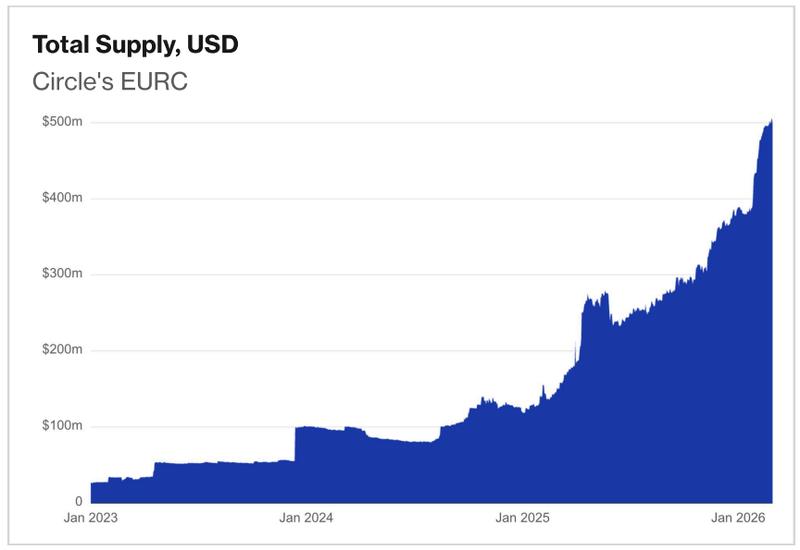
According to the research, EURC's aggregate supply exceeded $506 million on Feb. 27. When EURC is excluded from calculations, approximately 80% of euro-stablecoin transactions were associated with payments, remittances, payroll and treasury flows.
According to Puckrin, the primary catalyst behind expanding stablecoin adoption throughout the European Union is the transparent regulatory environment established by the Markets in Crypto-Assets Regulation (MiCA), which became enforceable for crypto asset service providers on Dec. 30, 2024.
Puckrin further noted that postponements surrounding the development of the digital euro might provide private stablecoin creators with additional opportunities to address portions of Europe's digital payment infrastructure needs.
Meanwhile, Circle has been promoting EURC and USDC as solutions for continuous euro-dollar foreign exchange transactions via its StableFX platform, providing institutional clients with capabilities to transfer between currencies beyond conventional banking operating hours.
Nevertheless, widespread implementation will hinge on whether payment service providers, corporate treasury departments and regulated financial institutions gain access to sufficient compliant infrastructure to deploy euro stablecoins on a large scale, according to Mouloukou Sanoh, co-founder and CEO of cross-border liquidity platform Mansa, in statements to Cointelegraph.
The companies winning are the ones solving for licensed payment operators, not building generic L1s or other platforms, but infrastructure that lets a head of treasury at a payment service provider or electronic money institution move money in real time without prefunding, compliance friction or operational chaos.