Traditional Exchanges ICE and CME Push Regulators to Restrict Hyperliquid's Commodity Markets: Sources
Established conventional financial trading platforms are calling on United States authorities to restrict derivatives trading tied to commodities on the decentralized platform.

The Chicago Mercantile Exchange (CME) and Intercontinental Exchange (ICE), which represent the largest trading venues for commodities linked to energy markets, are urging United States regulatory authorities to impose restrictions on Hyperliquid's decentralized platform as it moves into commodity trading territories.
According to Bloomberg, which referenced unnamed individuals with knowledge of the discussions taking place with United States regulatory bodies, leadership from both trading platforms assert that energy-related onchain derivatives offered by Hyperliquid pose significant threats including insider trading activities and market price manipulation.
Both ICE and CME pointed to Hyperliquid's "unregulated" and "anonymous" characteristics as substantial threats to vital energy commodity markets, including oil and natural gas, which could potentially be exploited by nation-state actors seeking to evade economic sanctions, according to the same report.
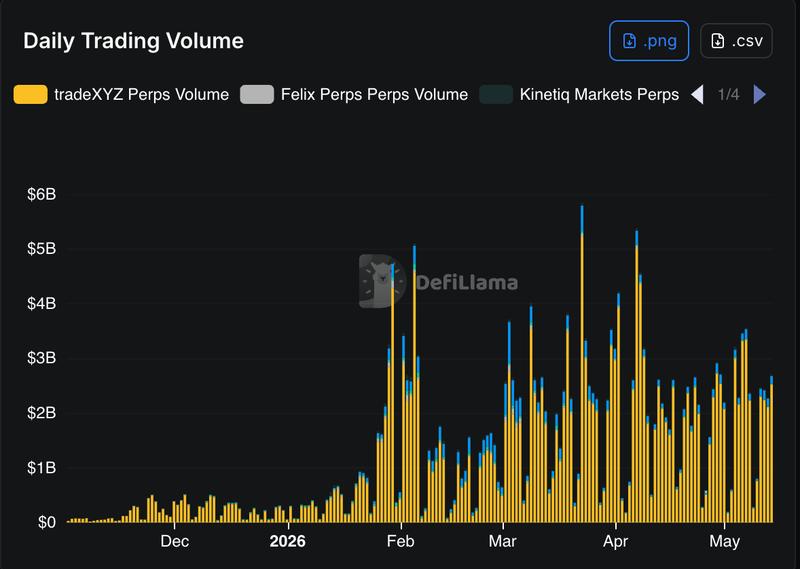
In January 2025, Hyperliquid launched HIP-3, alternatively referred to as "Builder-Deployed Perpetuals," which enables any individual who stakes 500,000 HYPE tokens, which serves as the platform's native cryptocurrency, to create perpetual futures markets for any asset class that is electronically traded.
HIP-3's introduction marks a wider movement of conventional financial markets transitioning onchain, as the distinction between infrastructure built on blockchain technology and traditional market structures continues to blur.
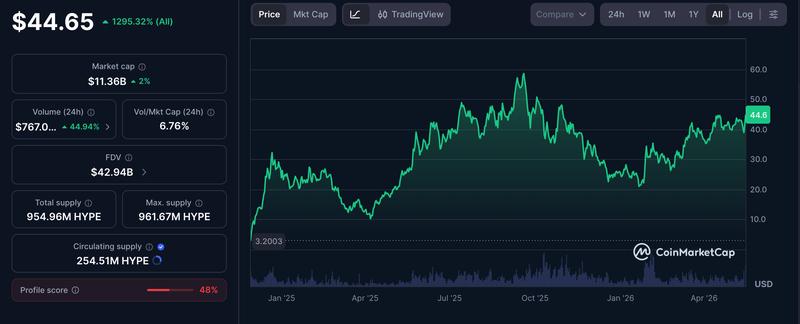
Hyperliquid's token price surges following the introduction of HIP-3
Within just three days after HIP-3's debut, the price of HYPE experienced a surge exceeding 58%. The token climbed from approximately $20 at its low point to more than $38, and at the time of publication is trading around $44.
Arthur Hayes, a market analyst and cryptocurrency investor, predicted in March that HYPE could reach $150 per token by August, propelled by increasing demand for commodities-linked derivatives instruments operating onchain.
"Hyperliquid, the dominant perp DEX, is the largest revenue-generating project that isn't a stablecoin," he said.
According to Hayes, the exchange allocates 97% of its trading fee revenue toward HYPE token buybacks, a mechanism that increases demand and elevates the token's price progressively over time.
"If the market believes that HYPE can continue siphoning volumes away from centralized exchanges and add new features to accelerate revenue growth, then HYPE can pump in absolute terms," he added.
Since their launch, open interest across HIP-3 markets has demonstrated consistent growth, reaching over $2.5 billion in May, based on data sourced from DeFiLlama.