The Token Buyback Surge: A Blessing or Curse for Cryptocurrency Ventures?
Cryptocurrency platforms are pouring hundreds of millions into repurchasing their native tokens. The critical question remains: do these buyback programs deliver genuine value, or merely create an illusion of worth?
The cryptocurrency sector continues to evolve, increasingly adopting strategies from traditional finance as it gains sophistication. Blockchain ventures are now embracing practices commonly seen among publicly traded corporations.
Token buybacks have emerged as the newest phenomenon sweeping through the crypto ecosystem: protocols are using their earnings to repurchase their native tokens from the open market.
Through 2026 thus far, cryptocurrency platforms have allocated approximately $640 million toward these buyback initiatives, representing roughly a 17% increase compared to the equivalent timeframe in the previous year, and dramatically exceeding the mere $366,000 deployed in 2024. Hyperliquid and Pump.fun together represent nearly 90% of total current expenditure on buybacks.
What explains this sudden enthusiasm?
Buyback programs can generate market demand for tokens, while burning mechanisms reduce circulating supply, theoretically increasing the value of remaining tokens. This combination can exert upward momentum on token valuations.
"When projects implement revenue-funded buybacks and burns, they typically have one of two objectives in mind: either to decrease the token supply in circulation or to demonstrate the rationale for investing in protocol revenues."
Gavryliak explains that communicating to stakeholders that a venture has "bought and burned tokens" proves "much more straightforward" than detailing the mechanics of governance structures, fee allocation frameworks, or protocol utilization patterns.
However, there's an inherent tradeoff: each dollar allocated by a protocol toward token repurchases represents capital unavailable for recruiting engineering talent, pursuing business development opportunities, bolstering financial reserves, or enhancing product offerings.
Therefore, as buyback mechanisms become among cryptocurrency's most popular tokenomic strategies, the question emerges: do they genuinely benefit the platforms implementing them?
Why crypto projects are buying themselves
One might question whether protocols purchasing their own tokens defeats the purpose. Traditionally, ventures issue tokens specifically to generate capital for operational requirements.
The answer is nuanced, with a critical distinction. Deploying generated revenue toward token repurchases (subsequently holding or destroying those tokens) establishes a direct relationship between protocol performance and token valuation. This connection has historically proven elusive for cryptocurrency projects. Max Shannon, senior research associate at Bitwise Europe, elaborates:
"Buybacks and burns remain an effective way to accrue value to tokenholders: they create a continuous bid in the open market for the token, directly tethering token success to the platform's adoption."
This represents a fundamental transformation for a sector that has dedicated recent years pursuing trending narratives or operating on greater fool theory speculation — purchasers of Fartcoin or Peanut the Squirrel tokens certainly weren't motivated by robust economic fundamentals.
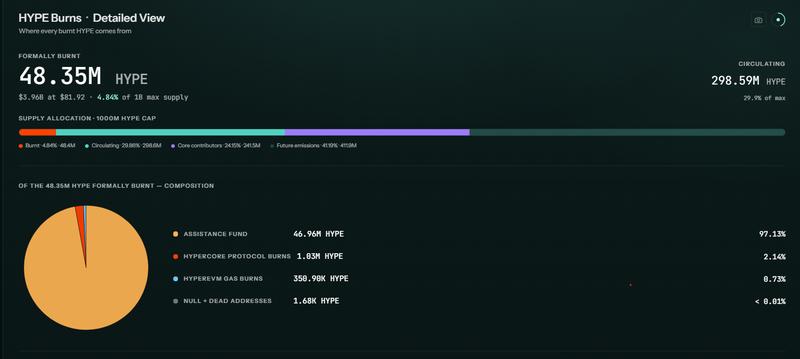
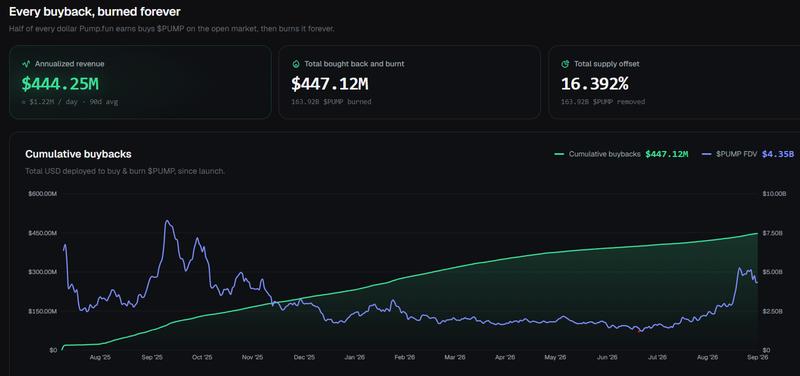
Certain protocols have embraced this concept far more aggressively than their counterparts. Hyperliquid, as an illustration, has dedicated 99% of generated revenue toward repurchasing and burning HYPE, while 50% of Pump.fun's earnings fund its token buyback and burn program, with $446.65 million in PUMP already eliminated from circulation.
Spark, a DeFi infrastructure protocol, implements a somewhat different approach, acquiring more than 143 million SPK through market-based buybacks financed by protocol surplus, as described by co-founder and chief executive Sam MacPherson.
However, these repurchased tokens weren't destroyed, instead residing in Spark's treasury for distribution to long-term ecosystem contributors. MacPherson explains to Magazine that the objective transcends simple supply reduction:
"Tokenholders should participate in the long-term economic success of the protocol, rather than simply receive a distribution every time it generates revenue."
According to him, buybacks enable Spark to achieve this alignment while "retaining flexibility over how and when the acquired SPK is ultimately deployed," positioning the protocol to render its token economically meaningful rather than "a simple dividend mechanism."
Token repurchase programs also represent a highly tax-efficient method of returning value to holders, as participants avoid substantial tax obligations associated with dividend distributions or reward payments.
Is buying the token really the best use of the money?
Despite the apparent logic, the more pressing concern is whether repurchasing native tokens truly represents optimal capital allocation for protocol treasuries?
Almost certainly not universally. MacPherson articulates:
"The question should be: what is the highest-value use of the next dollar of surplus?"
When a protocol can redeploy capital generating attractive returns, he argues, such investments can prove "far more valuable" than simply distributing earnings immediately upon receipt.
Buyback programs can reinforce token economic models without necessarily strengthening the core business proposition.
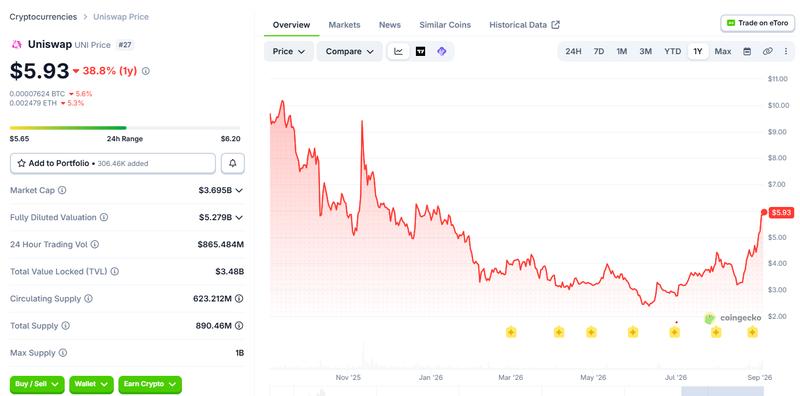
Furthermore, no absolute assurance exists that buybacks will produce elevated token prices. Pump.fun has pursued aggressive PUMP buying and burning since July 2025, yet the token remains approximately 50% beneath its September 2025 all-time peak. UNI has similarly relinquished about half the appreciation gained following Uniswap's UNIfication proposal announcement in November 2025.
Shannon observes that "many factors" influenced these price trajectories, preventing definitive conclusions that buybacks underperformed, however:
"They have prompted investors to debate whether these startup-like projects would be better served by reducing the share of revenue committed to buybacks and burns and reinvesting more in the team and the project itself."
Market participants should carefully distinguish between buyback schemes designed to inflate prices versus genuinely successful business frameworks.
A sustainable platform generating authentic surplus might reasonably determine that token repurchases represent optimal allocation for portions of that capital, but conversely a struggling venture might simply deploy buybacks attempting to manipulate price action. MacPherson observes:
"A buyback doesn't make an unsustainable protocol sustainable."
When a token starts looking like a stock
Although token buyback programs may appear superficially similar to corporate share repurchase initiatives, this similarity doesn't indicate tokens are evolving toward equity-like instruments.
Equity shareholders possess fractional company ownership and may exercise voting privileges, receive dividend payments, or maintain claims against residual assets. Tokenholder rights generally lack these legal protections, and Orest emphasizes this distinction carries substantial importance. "This is a market mechanism, not a legally enforceable entitlement," he states.
MacPherson characterizes SPK as representing "pseudo-equity" for an onchain protocol. Although traditional corporate ownership structures don't formally exist, economically Spark aims "trying to create many of the same characteristics: participation in governance, long-term alignment, and a mechanism through which those most committed to the protocol can benefit from its success."
When buybacks start looking like dividends
However, as cryptocurrency ventures increasingly mirror TradFi buyback practices, potential regulatory challenges loom on the horizon, with authorities examining what these mechanisms actually constitute.
Although the Digital Asset Market Clarity (CLARITY) Act of 2025 remains draft legislation and shouldn't be interpreted as established law, Gavryliak notes its proposed framework emphasizes the fundamental question concerning token value origins:
"If it stems from the functionality of the network itself, then the asset looks like a commodity. But if the value is based on the efforts of the project's team in matters of shipping, marketing, or providing returns to token holders, then it is already a security. In the end, don't put the clothes of a stock on the token and expect it to be a commodity."
Ultimately, cryptocurrency investors demand understanding of what fundamentals support a token — revenue generation, user adoption, sustainable economic models — coupled with credible mechanisms allowing tokens to capture value from these attributes.
Although buybacks may provide one solution, they can equally function as yet another financial engineering technique creating the appearance of greater token value without addressing underlying structural problems, as Gavryliak highlights:
"If the buybacks stopped, would there still be a reason to hold the token? If the answer is no, the problem runs deeper than tokenomics."