The Road to 2028: Bitcoin Miners Navigate Mounting Challenges Before Next Halving
The cryptocurrency mining industry confronts the 2028 halving event amid narrowing profit margins, constrained energy availability, and heightened demands for financial prudence.
The cryptocurrency mining industry faces approximately two years until Bitcoin's fifth halving event, entering this period with significantly reduced room to maneuver compared to 2024, as elevated operational expenses, constrained power availability, and evolving regulatory frameworks transform the landscape.
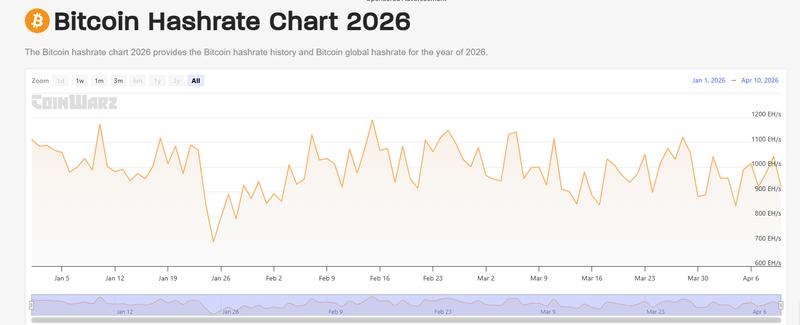
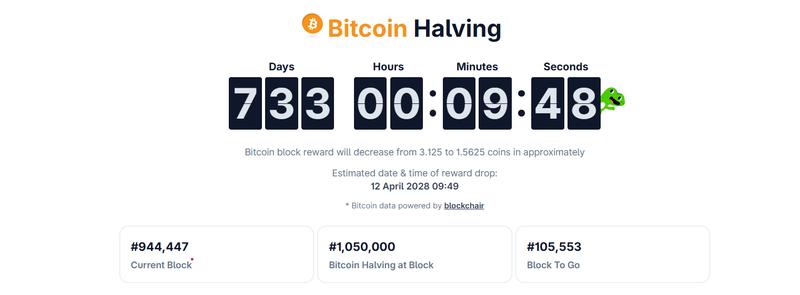
During the previous halving event in April 2024, Bitcoin (BTC) was valued at approximately $63,000 when block rewards decreased from 6.25 BTC to 3.125 BTC per block, data from Coingecko indicates. Come April 2028, during the subsequent halving, mining operations will confront elevated operational expenses for half the quantity of newly minted coins, as block rewards decline to 1.5625 BTC. This scenario appears increasingly challenging in an environment characterized by unprecedented hashrate levels, elevated energy costs, and more discerning capital providers.
The matter of energy security has evolved into a strategic priority following geopolitical disruptions that impacted fuel and electricity markets, even as regulatory authorities from Washington to Europe transition from informal guidance toward established frameworks for custody and regulated institutional trading platforms.
These mounting challenges are compelling mining operations to operate less like simple Bitcoin investment vehicles and more like sophisticated energy and infrastructure enterprises, liquidating holdings, reducing operational expenses, and reconsidering capital deployment strategies in advance of the April 2028 Halving.
This transformation is simultaneously altering investor evaluation criteria for the sector, with investment capital progressively favoring operations capable of securing sustainable power agreements and developing infrastructure with applications extending beyond cryptocurrency mining exclusively.
Balance sheets show tougher pre-halving cycle
Mining companies are implementing adjustments already. MARA Holdings liquidated more than 15,000 Bitcoin in March to reduce leverage, Riot Platforms sold over 3,700 BTC in the first quarter, Cango sold 2,000 BTC to pay down Bitcoin-backed debt, and Bitdeer said its Bitcoin holdings had fallen to zero as of Feb. 20.
Underlying these asset sales represents a more comprehensive recalibration in mining operators' approach to equipment, electricity, and financial resources. The 2028 halving materializes in "an environment that looks almost nothing like 2024," Juliet Ye, head of communications at Cango, told Cointelegraph.
She highlighted an expanding performance differential that is "forcing real decisions around fleet upgrades" and a transition toward extended-term power agreements spanning diverse geographical areas rather than pursuing lower-cost electricity rates.
"There is less room in the middle now. Operators with scale and diversification will be fine. Those without will find the next halving very difficult."
Juliet Ye, Cango
GoMining articulated a comparable perspective. CEO Mark Zalan told Cointelegraph that "capital discipline now matters more than hashrate maximalism" and that new deployments now have to clear tougher return thresholds.
From a mining pool's perspective, some of the underlying dynamics remain familiar even as the pressure grows. "There is actually very little fundamental difference between this mining cycle and previous ones," Alejandro de la Torre, co-founder and CEO of Stratum V2 pool DMND, told Cointelegraph. "The same dynamics repeat."
He expects mining hotspots to reach their peak, then realign, as "no region keeps dominance for long," opening the door for more decentralization as mid-size miners expand into new energy partnerships.
Business models shift beyond pure block rewards
The financial dynamics surrounding the upcoming halving are likewise transitioning away from exclusive reliance on block rewards, which represents a "thinner business than it used to be," Zalan said. He predicted stronger operators will look closer to power and data center businesses, and earn additional revenue through curtailment, grid services and heat reuse.
Cango is already building toward that model. "The facilities that will matter in five years are the ones that can do more than one thing," Ye said, using mining to fill capacity while positioning sites to toggle between AI workloads and hashpower.
Regulatory oversight, previously perceived primarily as a constraining factor, is progressively becoming integral to the investment thesis. Zalan pointed to more specific rules on custody and banking access in the United States, alongside the European Union's Markets in Crypto Assets (MiCA) regime and new exchange-traded funds (ETFs), derivatives and settlement rails out of Hong Kong, arguing "capital moves faster when those rules are clear and usable."
Zalan said that backdrop is shaping both how miners finance themselves and how institutions position for the next issuance cut. He said he does not believe the market has "fully priced the next halving," arguing that scarcity will meet a "much stronger ecosystem around Bitcoin by the time 2028 arrives."
Ye sees investors already re-rating miners that lock in high-performance compute contracts, with those operators trading at "more than double the revenue multiple of pure-play miners," while de la Torre believes supporting large established operators is "no longer the only logical path."
If the 2024 cycle rewarded miners that rode Bitcoin's price strength, the run into 2028 may favor operators that can manage debt, lock in power and build infrastructure that earns beyond block subsidies.