The Real Standards for Proving You're Bitcoin's Creator, Satoshi Nakamoto
How could someone definitively verify they're Satoshi Nakamoto? Discover why cryptographic signatures trump documentation, testimony, and legal declarations.
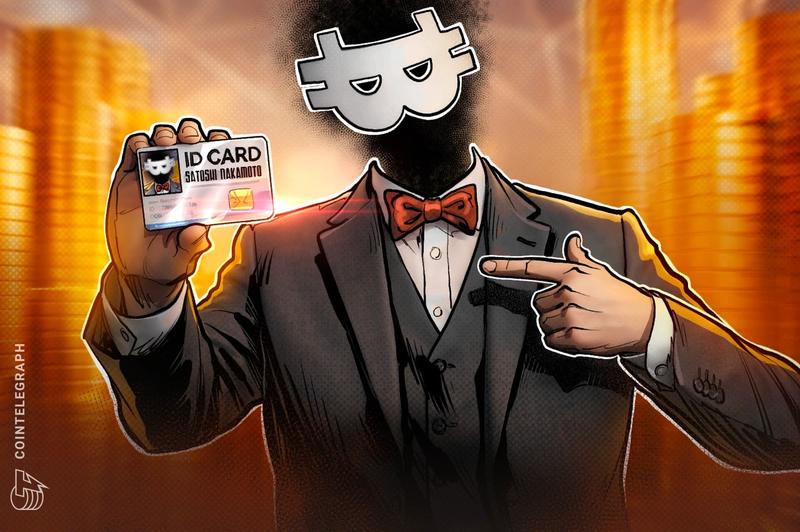
Authenticating Satoshi Nakamoto: Mathematics over marketing
Occasionally, people emerge claiming they are Satoshi Nakamoto, the anonymous architect behind Bitcoin. These declarations create news cycles, ignite contentious discussions and provoke immediate doubt. However, following numerous years of proclamations, legal battles, document leaks and televised appearances, not a single assertion has presented incontrovertible evidence.
The explanation is straightforward. Establishing that someone is Satoshi isn't about narrative construction, academic achievements or legal triumphs. It represents a cryptographic challenge ruled by inflexible principles.
Nakamoto designed Bitcoin (BTC) to operate as a peer-to-peer (P2P) cryptocurrency without demanding trust in individuals. It is broadly believed that Satoshi Nakamoto represents a pseudonym instead of an authentic identity. Consequently, any person claiming to be Satoshi, or identified as such, needs to demonstrate that identity. Such demonstration would presumably require identity documentation, archived communication histories and, most importantly, possession of a private key linked to one of Bitcoin's initial addresses.
Throughout the years, multiple people have been theorized to be Satoshi Nakamoto, though only a handful have openly proclaimed themselves as the inventor of Bitcoin.
The most notable person making this claim is Craig Steven Wright, who persistently declared that he was Satoshi. This assertion crumbled following a UK High Court decision that categorically concluded he was not Satoshi Nakamoto and severely questioned the reliability of his presented evidence.
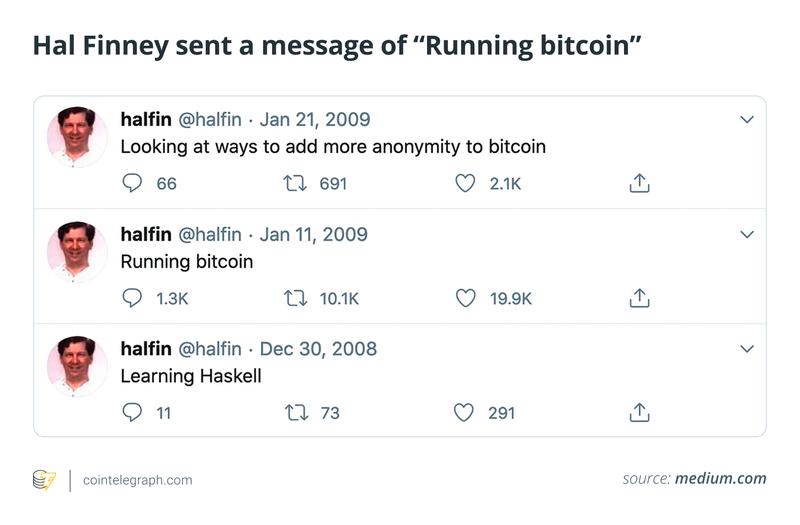
Dorian S. Nakamoto was named by Newsweek in 2014 as Satoshi Nakamoto, though he promptly rejected any association to Bitcoin's inventor. Early Bitcoin pioneer Hal Finney also dismissed conjecture that he was Satoshi Nakamoto prior to his death. Nick Szabo has similarly been theorized to be Satoshi throughout the years and has repeatedly refuted the assertion.
What represents authentic proof of ownership within Bitcoin
In cryptographic frameworks like Bitcoin, identity connects to private key possession. Proving control demands signing a message using that key, a procedure that anyone can publicly authenticate.
This difference is evident:
- Evidence can be disputed, analyzed or contested.
- Cryptographic authentication is binary; it either validates or it fails.
Bitcoin's authentication framework doesn't depend on authority figures, qualifications or specialist agreement. It rests on mathematics, not individuals, organizations or viewpoints.
Did you know? Early Bitcoin forum posts and the white paper used British spellings like "colour" and "favour." This sparked theories about Satoshi's geographic background, though linguists caution that spelling alone can be easily imitated or deliberately altered.
The gold standard: Creating signatures with original keys
The most definitive proof of being Satoshi would be a publicly visible message signed utilizing a private key from one of Bitcoin's earliest blocks, especially those connected with Satoshi's documented mining operations in 2009.
Such a signature would be:
- Verifiable by anyone using standard tools
- Impossible to forge without the actual private key
- Free from dependence on courts, media or trusted third parties.
The instruments needed for such proof are straightforward, available and conclusive, yet nobody has ever delivered it.
Did you know? Satoshi gradually stepped away from public communication in 2010, just as Bitcoin started attracting developers and media attention. Their final known message suggested they had "moved on to other things," fueling speculation about motive and timing.
Transferring original coins: More compelling, yet unlikely
An even more robust proof would be moving Bitcoin from an untouched Satoshi-era wallet. That singular onchain transaction would eliminate nearly all skepticism.
Yet it involves enormous drawbacks:
- Instant worldwide scrutiny
- Severe personal security threats
- Potential tax, legal and regulatory fallout
- Market disruption from anticipated dumps.
The most unassailable proof is simultaneously the most destabilizing. It renders inaction a logical decision, even for the genuine creator.
Did you know? Blockchain researchers estimate that early mining patterns linked to Satoshi may represent roughly 1 million BTC, making those dormant wallets some of the most closely watched in crypto history.
Why documentation, correspondence and programming don't resolve the question
While emails, draft papers, forum posts and code contributions can support a claim, they do not constitute definitive evidence. Such materials can be forged, edited, selectively leaked or misinterpreted.
Code authorship doesn't demonstrate key possession. In Bitcoin, keys establish identity, and all other factors are subordinate. Examination of emails, draft papers and forum posts might provide fascinating connections between a person and Bitcoin, but it lacks absolute certainty. The samples are constrained, and writing styles can converge or be replicated.
In social contexts or traditional legal proceedings, identity can be validated by individual statements or paperwork. However, such proof is meaningless within Bitcoin's decentralized architecture.
Human recollection is imperfect, and motivations can be conflicting. Bitcoin was constructed specifically to eliminate dependence on such elements. Cryptographic proof eliminates any human component from the authentication mechanism.
Why incomplete proof isn't proof
Some individuals claiming to be Satoshi present evidence in private settings. However, material displayed only to chosen people, or signatures generated using subsequent Bitcoin keys, doesn't satisfy the necessary threshold.
To persuade the world, proof must be:
- Public: Visible to anyone
- Reproducible: Independently verifiable
- Direct: Tied to Satoshi-era keys.
Anything short of this creates space for uncertainty, which is intolerable to the Bitcoin community.
For Bitcoin to operate, its inventor doesn't need to be identified or present. In fact, its decentralization story is reinforced by the creator's anonymity. There is no founder to consult, no central power to petition and no identity to challenge or uphold.
While the majority of organizations or initiatives depend on founders or executive teams, Bitcoin operates precisely because identity is unnecessary.