The case for SWIFT and stablecoins working together
Money transfer companies are turning to stablecoins to minimize settlement times and free up locked capital, even as SWIFT continues to dominate international payment infrastructure.

Major remittance companies across the globe are ramping up their adoption of digital asset technologies as they search for quicker settlement solutions beyond conventional banking infrastructure.
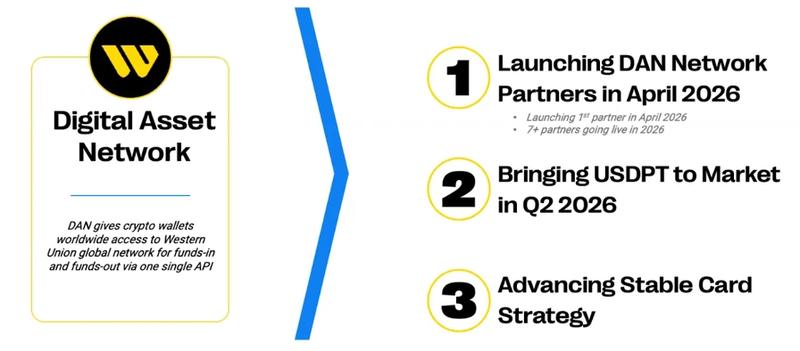
The introduction of Western Union's USDPT stablecoin represents the most recent instance of traditional payment companies integrating crypto technology. On Monday, the money transfer giant unveiled its Solana-powered stablecoin in Bolivia and the Philippines, announcing intentions to roll out the service to more countries during 2026.
During the company's first quarter earnings call, Western Union CEO Devin McGranahan explained that the stablecoin would serve as an alternative settlement mechanism to the SWIFT network, which has been in operation for decades.
According to McGranahan, digital assets enable transfers "to begin moving and settling between us and our agents onchain in real time at much faster speeds and again over weekends and holidays where we have capital tied up because the traditional banking system only settles Monday through Friday," he said.
Western Union isn't alone among remittance companies seeking to shift international settlement operations beyond the legacy banking infrastructure that operates exclusively on weekdays.
Competitor MoneyGram announced on Tuesday a collaboration with Kraken enabling customers to transform cryptocurrency into physical cash for collection, joining a wider movement among money transfer firms to incorporate blockchain-powered payment infrastructure.
SWIFT isn't disappearing anytime soon
Throughout its early history, cryptocurrency was frequently presented as a replacement for centralized financial infrastructure and middlemen.
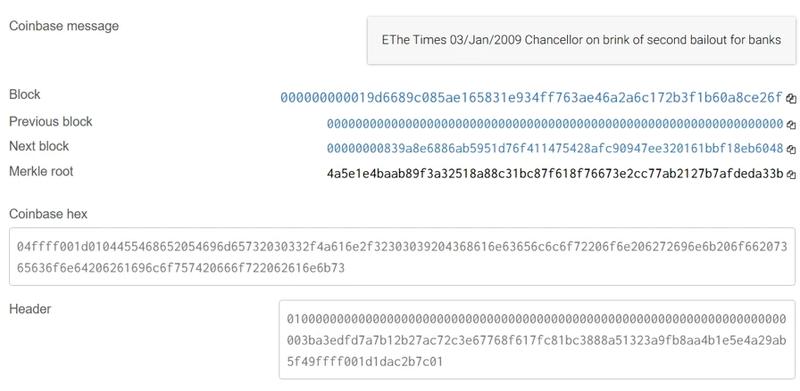
While Satoshi Nakamoto never directly advocated for eliminating banks in Bitcoin's original whitepaper, the network's first block contained the newspaper headline: "Chancellor on brink of second bailout for banks."
Given that Bitcoin emerged following the downfall of financial institutions such as Lehman Brothers, this message has been understood as a political critique of centralized banking and government bailouts.
Yet in the current landscape, numerous traditional financial players are themselves adopting blockchain-powered settlement technologies.
"It is no longer a question of if Western Union will be active in digital assets, it is now how fast can we scale," McGranahan said.
Western Union's investigation of SWIFT alternatives doesn't indicate that cryptocurrency has supplanted the financial messaging system established in 1973. SWIFT remains firmly integrated into the international settlement framework utilized by financial institutions across over 200 countries and territories.
Moreover, SWIFT has been conducting its own blockchain-related experiments. In September of last year, the organization revealed it was developing a shared ledger project with participation from over 30 banking institutions.
"SWIFT isn't going to be replaced by a single announcement or a single stablecoin," Bernardo Bilotta, CEO of stablecoin infrastructure platform Stables, told Cointelegraph.
"It's deeply entrenched, and for many types of institutional transfers, it works well enough that the switching costs outweigh the benefits of moving to something new."
Stablecoins unlock "dead" remittance capital
Accelerated remittance settlement delivers clear advantages for consumers, who are no longer restricted by business day limitations.
From an operational perspective, it releases "dead capital" held by the remittance company and its regional partners.
"A company like Western Union has capital parked across hundreds of correspondent banking relationships globally, pre-funding accounts so that when a transfer hits, the money is already sitting there waiting," Bilotta said.
He added:
"It earns nothing, it does nothing except guarantee that a payment can settle two or three days from now on a banking schedule designed in the 1970s."
Transitioning settlement to blockchain-powered assets like stablecoins reduces the payment timeframe from multiple days to mere minutes.
That said, Bilotta contended that not all of this liquidity will immediately become productive capital, since stablecoins also require locked reserves and involve continuous treasury management. Therefore, in reality, not all the "dead capital" freed by stablecoins is anticipated to be put to work right away.
Sota Watanabe, CEO of Startale Group, is developing the JPYSC stablecoin in Japan. According to him, the additional processing time in conventional systems also establishes protective measures and cushions. Financial institutions group transactions together, calculate net exposure and control liquidity based on banking schedules.
"Stablecoins remove that delay. Powerful, but it means treasury systems must now operate continuously, not only during business hours," Watanabe told Cointelegraph.
Private stablecoins risk creating new silos
Although stablecoins offer the potential for quicker and more streamlined settlement, not every blockchain-powered payment infrastructure is created equal.
Bilotta maintained that proprietary settlement networks like Western Union's USDPT provide organizations with greater control over token issuance, treasury operations and counterparty relationships, but threaten to replicate the identical fragmentation that blockchain technology was initially designed to eliminate.
"Every company that launches its own stablecoin creates another walled garden that the rest of the ecosystem has to bridge to or ignore," he said.
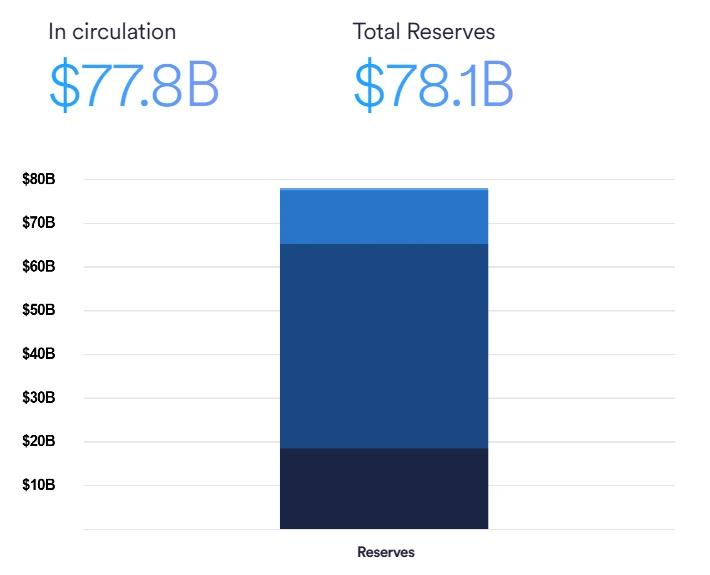
In contrast to private stablecoins functioning within restricted ecosystems, public stablecoins like Tether's USDt (USDT) gain advantages from common liquidity pools and compatibility across trading platforms, digital wallets and payment services.
"A dollar moved through USDT in Thailand is the same dollar that arrives in Australia," Bilotta said. "No bridging, no translation, no bilateral agreements between private networks."
Watanabe expressed comparable apprehensions, cautioning that if every significant payment corporation introduces its own isolated settlement system, the sector could end up simply reconstructing the compartmentalized infrastructure of correspondent banking using blockchain technology.
"Private settlement networks are efficient inside a closed ecosystem," Watanabe said. "Their weakness is interoperability."
According to him, the lasting benefit of public blockchain infrastructure isn't merely accelerated settlement, but common infrastructure enabling liquidity to flow more seamlessly across applications, trading platforms and financial ecosystems.
Despite all the commitments to accelerated settlement and around-the-clock payments, blockchain-powered remittance systems still face the danger of reconstructing the identical fragmented infrastructure they aimed to eliminate.