Tether unveils open-source Bitcoin mining framework to consolidate industry infrastructure
This framework addresses the challenges posed by fragmented mining operations, delivering a unified and open-source alternative for infrastructure management across diverse operations.

Tether has unveiled an open-source development framework designed specifically for Bitcoin mining, providing operators and developers with consolidated control over both hardware and software components throughout their mining operations.
The Monday announcement detailed how the framework integrates a backend SDK alongside user interface tools, replacing disparate, vendor-specific systems. This enables mining operators to monitor equipment, oversee operations, and develop customized applications across multiple sites through a singular control layer.
The framework employs a modular architecture where hardware presents standardized functions, and independent modules can be integrated without modifying the core system. This design facilitates integration across various machines, services, and geographic locations.
According to Tether, the toolkit offers compatibility with Windows, macOS, and Linux deployments. It's engineered to accommodate everything from individual mining setups to expansive industrial operations, incorporating features for automation, monitoring capabilities, and coordinated hardware management.
The framework's design objectives include reducing dependency on proprietary tools and streamlining operations across fragmented mining configurations, where vendor lock-in and interoperability obstacles can drive up costs and restrict operational flexibility.
Tether indicated that this release expands upon the company's previous open-sourcing of its Mining OS, enhancing its mining software stack by adding a development layer that enables the creation of dashboards, workflows, and analytics tools atop existing infrastructure.
This announcement arrives approximately one week following the company's revelation of an 8.2% ownership stake in Antalpha, a Bitcoin-focused lending and equipment financing provider that maintains strong connections with mining hardware supplier Bitmain.
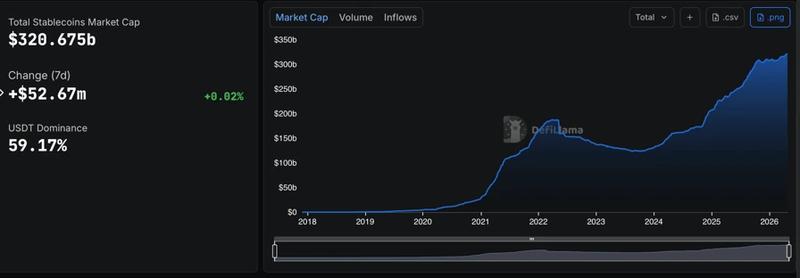
Tether serves as the issuer of USDT (USDT), the world's largest stablecoin by market capitalization, representing approximately $190 billion of the global stablecoin market's total $320.7 billion market cap, based on DefiLlama data.
Miners continue to push into AI infrastructure
While Tether advances deeper into Bitcoin mining infrastructure development, traditional pure-play mining companies throughout the industry are progressively pivoting toward artificial intelligence and high-performance computing workloads as a means of revenue diversification.
Among the earliest companies to execute this pivot was CoreWeave, initially a cryptocurrency mining operation that commenced its transition toward cloud and high-performance computing in 2019 in response to growing demand for AI compute resources.
Following that trend, an expanding roster of publicly traded mining companies, including Riot Platforms, HIVE Digital, MARA Holdings, TeraWulf and Cipher Mining, have adopted comparable strategies, reallocating power capacity and infrastructure resources toward AI and high-performance computing applications.
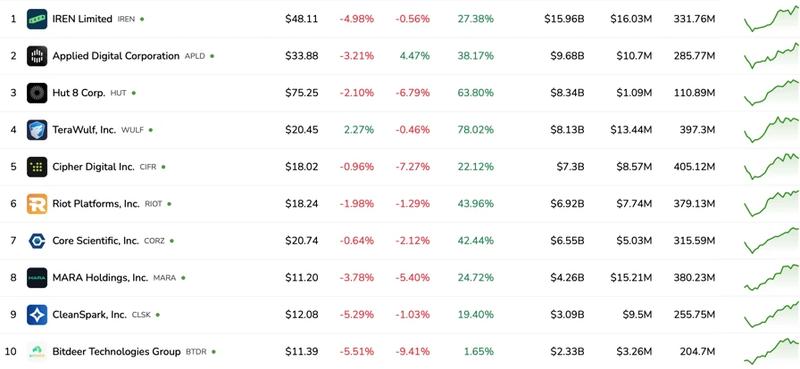
Last week, Core Scientific announced plans to secure $3.3 billion through senior secured notes maturing in 2031, with proceeds earmarked for data center expansion initiatives and refinancing short-term debt obligations.
On Monday, Hut 8 disclosed in a regulatory filing that it is pursuing $3.25 billion in senior secured notes to finance a 245-megawatt AI data center in Louisiana, connected to a 15-year, $7 billion lease agreement with Fluidstack, as reported by The Miner Mag.
Certain miners are advancing even further down this path. Also on Monday, Bernstein analysts indicated that IREN, the largest publicly traded Bitcoin miner measured by market capitalization, will probably wind down its mining operations gradually as it expands its AI cloud business.