Tether Unveils New Self-Custody Wallet Featuring Cloud-Based Backup System
The stablecoin giant Tether introduces tether.wallet, a non-custodial application featuring support for USDT, XAUT, USAT and Bitcoin alongside cloud backup capabilities for private keys.
The issuer of the world's most widely used stablecoin, USDt (USDT), has introduced a non-custodial cryptocurrency wallet named tether.wallet, Tether announced.
The newly released tether.wallet provides support for a trio of digital assets issued by Tether: USDT, XAUt (XAUT) and the domestically-focused USAT (USAT), in addition to Bitcoin (BTC), according to the company's Tuesday announcement.
According to Tether, the wallet enables users to perform transactions without the requirement of holding distinct network or gas tokens, allowing fees to be settled directly using the asset being sent.
The application additionally employs easy-to-read @tether.me usernames, designed to remove the necessity of dealing with lengthy wallet addresses. Given that some observers have pointed out the potentially "centralized" characteristics of such naming systems, questions remain about whether they create any challenges regarding self-custody or security protocols.
This release represents Tether's most significant move to date into direct-to-consumer wallet distribution, bundling stablecoin and Bitcoin payment functionality within a more streamlined interface while evaluating how much user-friendliness customers will embrace within a product promoted as self-custodial. The application expands upon the foundation the company established when it introduced its open-source Wallet Development Kit in late 2024. The WDK was created to allow developers to incorporate non-custodial wallets for USDT and BTC into any application, website or hardware device.
Cointelegraph contacted Tether to request additional information but had not heard back at the time of publication.
Tether emphasizes the app maintains full self-custody architecture
The digital wallet is now ready for download on mobile platforms, with the official website offering users the ability to install either iOS or Android editions at launch.
"The application is fully self-custodial by design," Tether stated in its announcement, emphasizing that every transaction undergoes local signing on the user's device prior to being transmitted to the blockchain network.
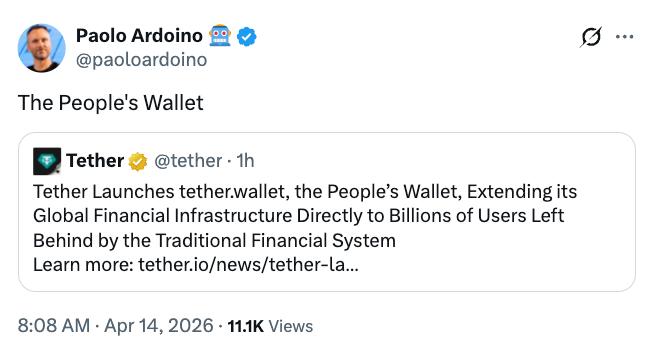
"Private keys and recovery phrases are always in sole control of the user," the company stated, further noting that the wallet's non-custodial architecture reflects Tether's fundamental principle of ensuring financial systems remain "open, neutral, accessible, and in control of the user."
"With more than 570 million people already using Tether's technology, the next step is making that digital infrastructure more accessible and usable for end users,"
Tether CEO Paolo Ardoino
Ardoino went on to say that the goal is to eliminate the wallet-related complications that have hindered wider mainstream adoption.
Users can have private keys "safely backed to cloud"
Upon its initial release, the wallet offers support for USDT and XAUT across Ethereum, Polygon, Plasma and Arbitrum networks, whereas USAT is at first offered solely on Ethereum. Bitcoin functionality is provided both for onchain transactions and through the Lightning Network.
Based on a post shared on X by tether.wallet, the recently unveiled wallet enables users to maintain control over their private keys while having the option to "safely back up" to the cloud.
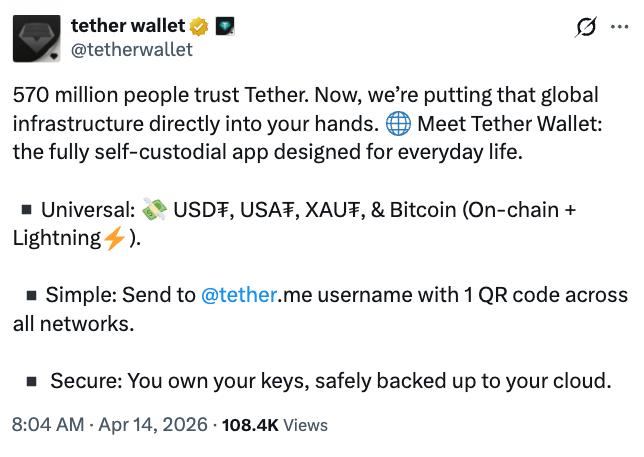
Whether users have the ability to opt out of cloud-based private key backup functionality remains uncertain. Cointelegraph will provide updates to the article once Tether provides a response.
Certain users have previously expressed opposition to comparable cloud-based key recovery mechanisms, including those implemented on hardware wallet devices such as Ledger.