Tether announces Q1 earnings of $1.04B with US Treasury exposure hitting $141B
The leading stablecoin provider maintains substantial US Treasury holdings on its balance sheet while digital dollar usage grows rapidly in developing nations.

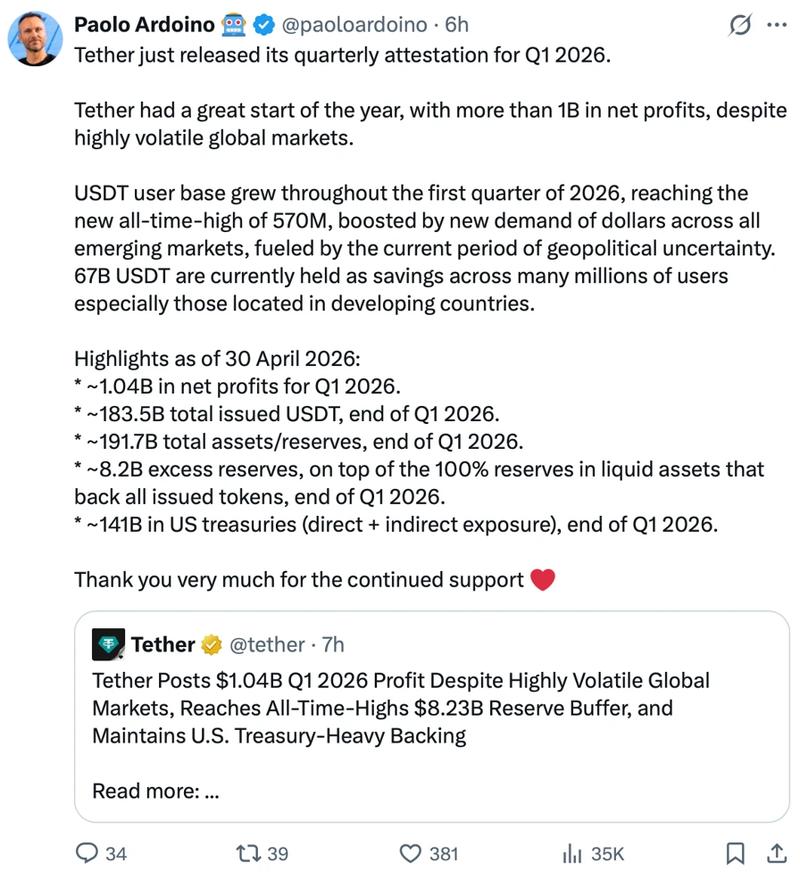
The company behind the USDT stablecoin, Tether, posted net earnings of $1.04 billion during the opening quarter of 2026, while its surplus reserves climbed to an unprecedented $8.23 billion, based on its most recent attestation released on Friday.
According to the firm, its reserve holdings continue to show significant concentration in United States Treasury securities, totaling approximately $141 billion through both direct and indirect positions, with aggregate assets reaching roughly $191.8 billion against liabilities of around $183.5 billion at the close of March 31.
The stablecoin issuer noted that this magnitude of Treasury exposure positions the company as the world's 17th largest sovereign debt holder. In addition to Treasury securities, the reserve portfolio contained approximately $20 billion worth of physical gold bullion and $7 billion in Bitcoin (BTC) holdings.
The circulating supply of USDT showed relative stability at approximately $183 billion by the conclusion of the first quarter. Following the quarter's end, CEO Paolo Ardoino disclosed that supply has grown by over $5 billion through the month of April.
According to Tether, the company's proprietary investment portfolio operates independently from the reserves that back USDT (USDT) tokens and receives funding through surplus capital and earnings.
Accounting firm BDO prepared the attestation report. Tether additionally announced that it has commenced the formal auditing procedure.
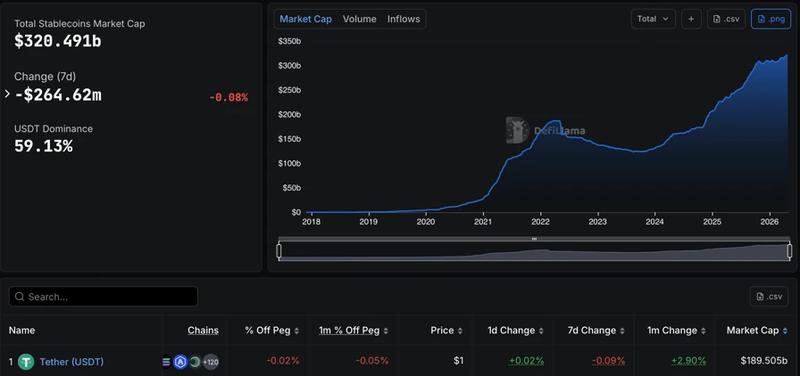
As the entity responsible for issuing USDT (USDT), Tether oversees the most prominent stablecoin measured by total market capitalization. Data from DefiLlama indicates that the entire stablecoin market holds a valuation of approximately $320 billion, with USDT representing around 59% of this segment.
Demand for digital dollars rises in emerging markets
In a Friday statement posted on the social media platform X, Ardoino revealed that USDT's total number of users hit a record peak of approximately 570 million during the initial quarter, attributing this growth to strong dollar demand throughout emerging market regions.
Throughout Latin America, stablecoin transactions represented 40% of all cryptocurrency acquisitions during 2025, exceeding Bitcoin's 18% market share, as documented in a report published by Bitso this week drawing on information from its close to 10 million individual customers. The research characterized this phenomenon as "digital dollarization," reflecting users' preference for stablecoins in both savings accounts and daily payment activities.
Across the African continent, stablecoins are increasingly becoming popular for cross-border remittance transactions. During remarks delivered at the World Economic Forum in January, Vera Songwe, a former official with the United Nations, explained that conventional transfer methods can impose fees of roughly $6 for every $100 transmitted, whereas stablecoins enable funds to transfer more rapidly with reduced expenses.
Songwe further explained that stablecoins offer users a mechanism to maintain purchasing power in economies experiencing elevated inflation, pointing out that inflation rates have surpassed 20% in multiple African nations following the pandemic period.
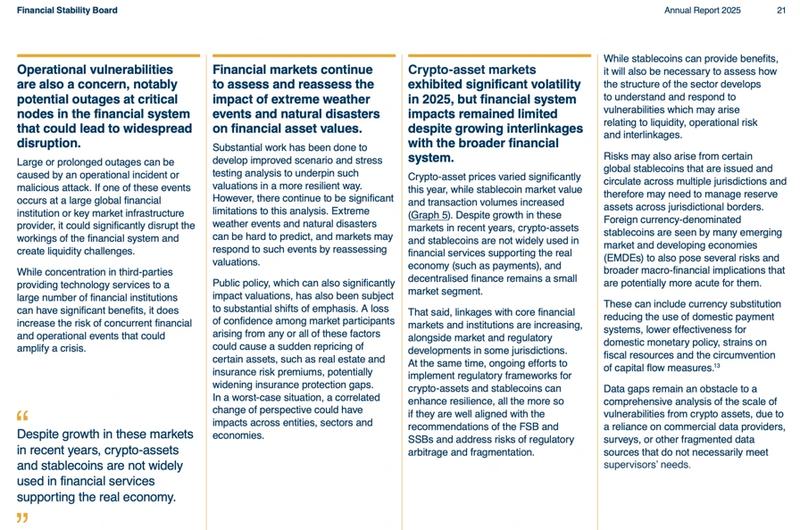
Despite these developments, the expansion of stablecoin usage has attracted attention from regulatory authorities worldwide. In its 2025 annual assessment, the Financial Stability Board cautioned that extensive adoption of stablecoins denominated in US dollars could present challenges to developing economies, including the risk of currency replacement and diminished impact of national monetary strategies.