Spark Transfers $150M in Stablecoins to Uniswap Pools in Shared Liquidity Push
In a major DeFi move, Spark has allocated roughly $150 million to a pair of Uniswap v4 pools on Ethereum, with its Shared Liquidity Layer and DualPool hook set for deployment in upcoming stages.

In a significant move for decentralized finance (DeFi), the Spark protocol has allocated roughly $150 million in stablecoin liquidity to a pair of Uniswap v4 pools operating on Ethereum. This deployment represents a collaborative effort focused on establishing shared liquidity infrastructure and exchange capabilities specifically designed for stablecoin issuers.
According to a Spark spokesperson who communicated with Cointelegraph, the initial liquidity deployment is currently active in two distinct pools that pair USDS with both PayPal USD (PYUSD) and USDT, with USDS functioning as the base asset. The protocol characterized this deployment as among the most substantial automated market maker (AMM) liquidity migrations that DeFi has witnessed to date.
These pools represent the initial deployment of approximately $150 million of liquidity and establish the first phase of the Stablecoin FX Layer. This initial deployment focuses on bootstrapping shared liquidity on Uniswap v4.
Standard Chartered released analysis earlier in June pointing to Uniswap as a likely winner from the migration of tokenized assets into the DeFi ecosystem. The financial institution projected that DeFi could see total assets reach $2.7 trillion by 2030, with Uniswap positioned to serve as a major liquidity destination for this expanding market segment.
Thursday's deployment announcement establishes the foundation for a forthcoming programmable liquidity infrastructure that has the potential to eliminate the requirement for traditional banks, fintech companies and stablecoin issuers to construct independent liquidity networks. The initiative also serves as a test case for whether Uniswap can enhance the efficiency of onchain capital deployment without compromising the depth of available markets.
Spark plans programmable liquidity expansion
According to Spark's roadmap, the protocol intends to roll out its Shared Liquidity Layer alongside the DualPool hook during later phases, leveraging Uniswap v4's programmable infrastructure to orchestrate liquidity distribution throughout stablecoin trading markets.
A liquidity hook functions as a mechanism that enables protocols to integrate smoothly with various platforms, facilitating capital access and enabling the development of yield generation and trading strategies.
According to Spark's explanation, the hook is designed to enable capital that isn't actively required for immediate trading to be allocated into products, liquidity venues and yield-generating strategies that have received governance approval.
The rollout of the DualPool hook will undergo its own independent security review process, followed by testing and production-readiness verification prior to full deployment. This initial phase utilizes standard Uniswap v4 pool configurations instead of the programmable framework that is planned for future implementation.
The planned framework, according to Spark, aims to provide future stablecoin issuers with the ability to tap into shared liquidity pools, eliminating the need for each issuer to independently bootstrap their own pools, engage and coordinate with market makers, and manage inventory distribution across multiple trading venues.
In conversation with Cointelegraph, the spokesperson indicated that Spark is currently engaged with additional partners throughout the stablecoin ecosystem, though the protocol is not prepared to publicly announce those integration partnerships at this time.
Uniswap seen as winner as tokenized assets move onchain
Geoff Kendrick, who serves as Standard Chartered's head of digital assets research, wrote in a June 15 client note that tokenized versions of treasuries, equities, bonds and additional asset classes have the potential to drive increased trading activity and liquidity toward decentralized exchanges as their utilization within DeFi continues to grow.
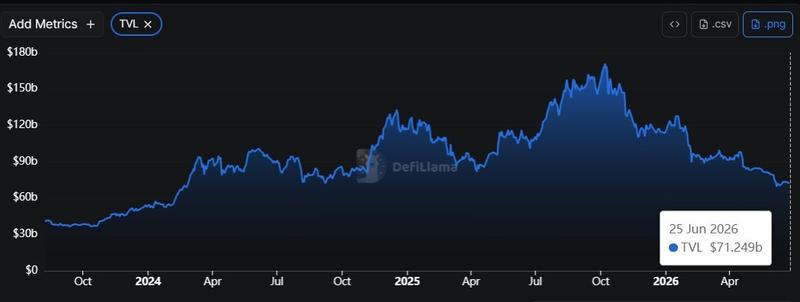
This latest $150 million liquidity migration provides a more tangible and immediate examination of Standard Chartered's infrastructure hypothesis, although it centers on stablecoins instead of tokenized securities.
The migration announcement also comes on the heels of Uniswap's expansion efforts targeting institutional trading of tokenized assets. On Feb. 12, asset management giant BlackRock announced plans to integrate its $2.1 billion tokenized Treasury fund, BUIDL, with Uniswap, enabling qualified institutional investors and market makers to execute trades of the security utilizing decentralized infrastructure.