SpaceX Public Offering: Implications for Technology Equities and Bitcoin Markets
The upcoming SpaceX public offering may transform the Magnificent 7 into eight tech giants, creating a scenario where Tesla and SpaceX account for a quarter of the elite group's cryptocurrency holdings.

The aerospace and satellite venture owned by Elon Musk, SpaceX, is preparing for a $75 billion initial public offering scheduled for June, potentially positioning it as the most significant upcoming public market debut featuring substantial Bitcoin treasury holdings.
Key takeaways:
- A rapid inclusion into the Nasdaq 100 index could broaden cryptocurrency exposure across leading mega-capitalization equities, Tesla among them.
- The public offering might create selling pressure on technology shares as index funds divest current Nasdaq holdings to accommodate SpaceX purchases, potentially creating negative sentiment for Bitcoin.
SpaceX public debut poised to amplify Nasdaq's Bitcoin holdings
According to its latest S-1 regulatory submission, SpaceX revealed ownership of 18,712 BTC, valued at approximately $1.45 billion, establishing it as the most significant confirmed Bitcoin holder among corporations either preparing for or recently filing for public market entry.
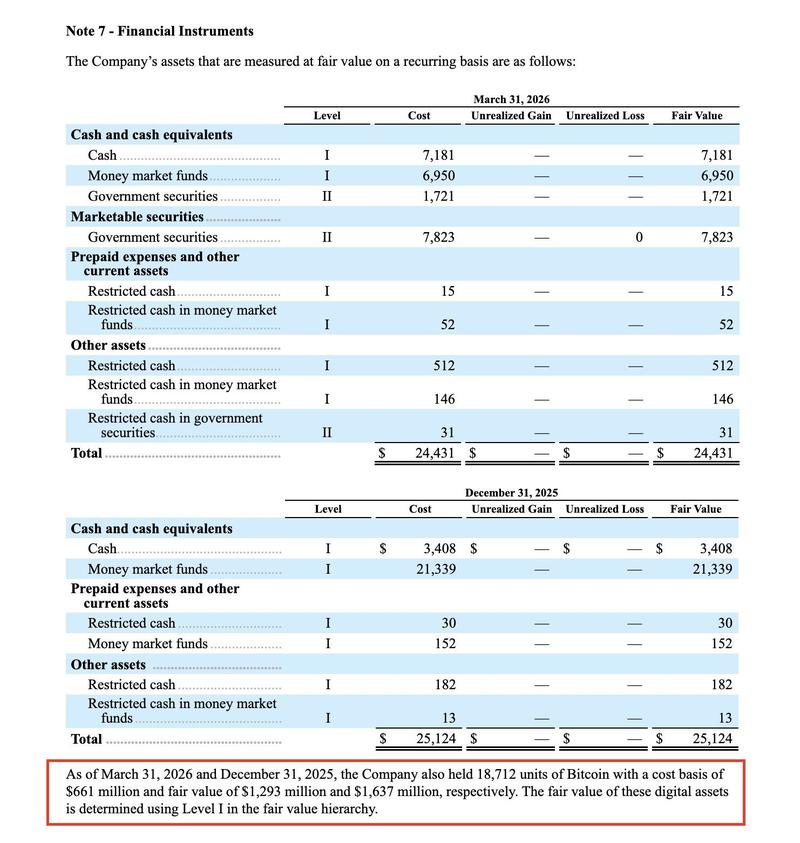
According to Nasdaq's updated "fast entry" provisions, massive initial public offerings can gain admission to the Nasdaq 100 in as little as 15 trading sessions, suggesting SpaceX might rapidly become among the index's most heavily weighted components should its market capitalization settle in the $1.75 trillion to $2 trillion territory following the $75 billion offering.
Consequently, Bitcoin representation within the Nasdaq 100 stands to grow beyond just Tesla's current position.
The manufacturer of electric vehicles currently maintains 11,509 BTC in its corporate reserves. With SpaceX holding 18,712 BTC, the Nasdaq 100 would gain a second Elon Musk-associated mega-capitalization enterprise with direct cryptocurrency balance sheet exposure.
"The SpaceX IPO will transform the Mag 7 into the Mag 8," stated Phong Le, who serves as CEO of Strategy, when discussing the prestigious cohort of mega-cap technology corporations, specifically Apple, Microsoft, Nvidia, Amazon, Alphabet, Meta and Tesla.
He continued:
"25% of the Mag 8 will have Bitcoin on their balance sheet."
Cryptocurrency remains vulnerable to downward pressure
The SpaceX public offering could represent "bad news for tech stocks," per analyst Nic Puckrin's assessment.
"If it's added to the Nasdaq 100 in a 'fast entry', passive funds have to buy it & sell other stock," Puckrin noted in a Friday post, further stating:
"The higher SpaceX goes, the more they buy of it and sell of others. It's going to act like a massive capital vacuum."
Puckrin's analysis draws from JPMorgan calculations indicating that Nvidia might experience passive fund outflows exceeding $20 billion should SpaceX gain Nasdaq 100 membership.
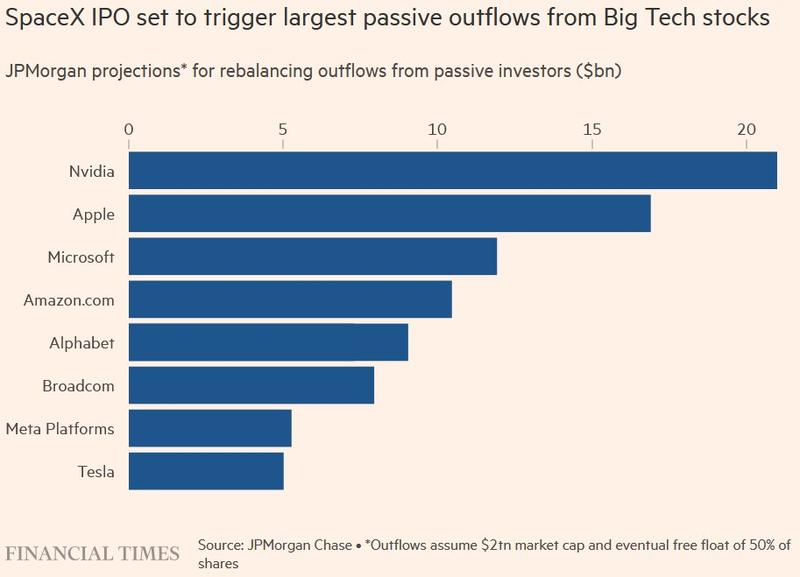
Apple might encounter approximately $16 billion in projected passive fund redemptions, while Microsoft, Amazon, Alphabet, Broadcom, Meta and Tesla would similarly function as capital sources for accommodating the SpaceX index rebalancing.
Throughout the majority of 2026, Bitcoin has maintained tight correlation patterns with mega-capitalization technology stocks.
By Friday's close, BTC's 30-day rolling correlation coefficient with the Roundhill Magnificent Seven ETF (MAGS), an investment vehicle tracking the Mag 7 equities, registered approximately +0.81.
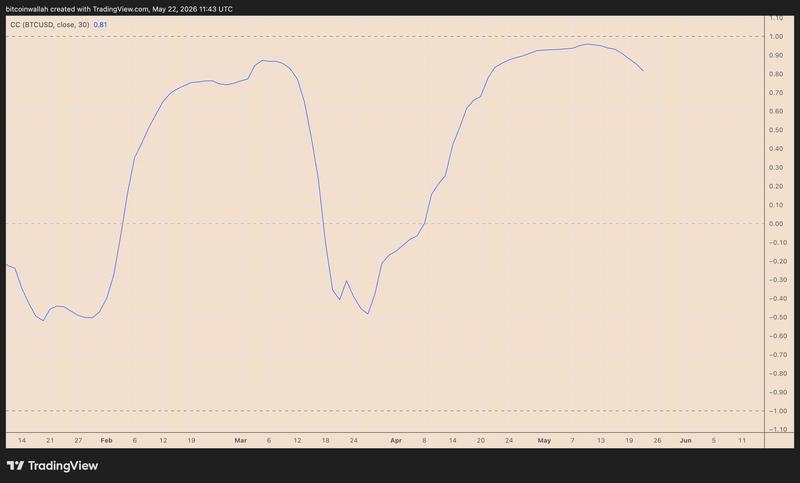
From a trading perspective, this correlation coefficient indicates BTC has predominantly followed the directional movements of major technology equities rather than diverging.
Therefore, should the SpaceX rebalancing event create downward pressure on Nvidia, Apple, Tesla and additional large-cap technology names, Bitcoin could similarly experience near-term bearish momentum as market participants scale back exposure to the wider risk-on investment thesis.
What are Bitcoin's potential downside price targets?
Blockchain analytics reveal Bitcoin's observable demand has declined to four-month lows, potentially signaling an extended consolidation period spanning multiple months.
This deteriorating demand environment also corresponds with BTC's prevailing technical chart formation. Beginning in February, Bitcoin has been trading within an ascending bear flag pattern, a configuration that frequently develops during temporary pauses within longer-term downward trends.
Currently, BTC's near-term support zone lies in the $73,000 to $74,000 vicinity, corresponding with the flag pattern's lower boundary trendline. A price bounce from this support area might propel the cryptocurrency back toward the flag's upper resistance boundary positioned near $85,000.
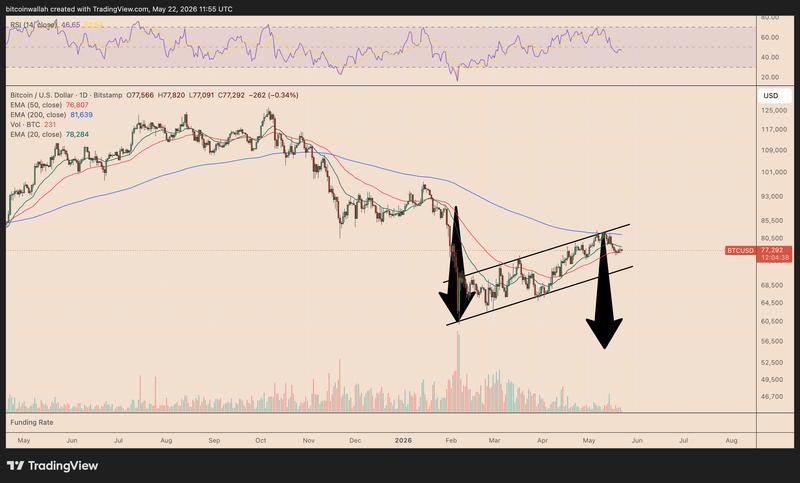
Should BTC register a definitive daily close beneath the lower trendline, the flag pattern structure could trigger a more substantial correction toward $56,000, derived from the pattern's measured downside projection.