South Korean Authorities Plan 20% Ownership Limit for Crypto Exchange Major Shareholders: Reports
Reports indicate South Korea's ruling party and government have reached consensus on limiting major shareholder ownership in cryptocurrency exchanges to 20%, though certain exemptions may apply to newly established platforms.

Reports suggest that South Korea's ruling party and government authorities have reached a consensus regarding a proposal that would restrict major shareholder ownership stakes in the nation's cryptocurrency exchanges to a maximum of 20%.
According to a Wednesday report published by Herald Economy, a local media publication, the Financial Services Commission (FSC) and the Democratic Party of Korea's digital asset task force came to an agreement following discussions to establish a 20% maximum shareholding limit.
That said, regulatory authorities may permit exceptions allowing up to 34% ownership for newly established businesses via an enforcement decree. According to the report, this threshold makes reference to the Commercial Act's 33.3% veto threshold applicable in general shareholders' meetings.
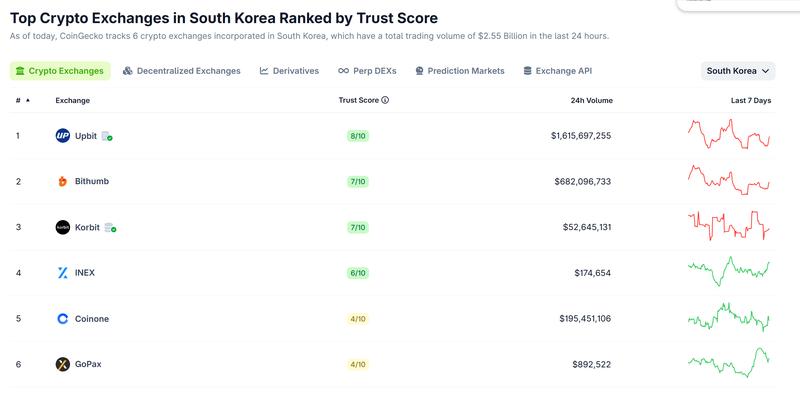
Based on the proposal, cryptocurrency exchanges would reportedly be granted a three-year period from the law's enforcement date to make necessary adjustments to their ownership structures. Exchanges with smaller operations may be granted an additional grace period of three years. Major platforms such as Upbit and Bithumb, which collectively account for approximately 90% of the domestic market, would face requirements to reduce their major shareholder stakes during the initial three-year timeframe.
Leading South Korean exchanges surpass suggested ownership threshold
The existing ownership percentages at South Korea's leading cryptocurrency exchanges surpass the suggested cap. Song Chi-hyung, chairman of Upbit, maintains approximately 25.52% ownership, while Bithumb is approximately 73.56% owned by Bithumb Holdings. Coinone's chairman Cha Myung-hoon maintains control of approximately 53.44%, Mirae Asset Consulting is expected to acquire roughly 92.06% of Korbit upon completion of an acquisition, and GOPAX is approximately 67.45% owned by Binance.
The proposal, which has garnered some support among regulatory authorities, must navigate an extensive legislative process. The bill is anticipated to be introduced by a National Assembly member, although the specific sponsor remains undetermined at this time. Securing passage may present difficulties, given that certain lawmakers, including those from the ruling party, have expressed concerns regarding ownership restrictions in this sector.
An insider from the industry issued a warning that the measure could result in wider implications for market competition.
"This is unprecedented worldwide and has low global consistency. If it is excessively introduced, it could have serious negative effects such as limited competition, slowed innovation, and strengthened barriers to entry,"the source reportedly stated to the outlet.
Crypto licensing regulations tighten in South Korea
Toward the end of January, South Korea's National Assembly gave approval to modifications in the nation's cryptocurrency licensing framework, implementing more stringent entry requirements for virtual asset service providers (VASPs). The revised rules grant authorities the power to examine executives and major shareholders for an expanded range of potential violations, encompassing drug trafficking, tax evasion, fair-trade breaches and serious economic crimes.
In February, Kim Seung-won, a lawmaker from the Democratic Party, made public his intentions to draft amendments to both the Capital Market and Financial Investment Business Act and the Act on the Protection of Virtual Asset Users that would require disclosure from individuals who offer investment advice or promote trading of financial products or virtual assets.