Solana Foundation Launches Enhanced Security Measures Amid Ongoing DeFi Threats
A new security program named STRIDE has been introduced by the Solana Foundation in partnership with Asymmetric Research, accompanied by an incident-response infrastructure operating in real-time.

On Monday, the Solana Foundation revealed a newly developed security auditing framework designed for protocols built on Solana, alongside an incident-response infrastructure, cautioning that "adversaries are rapidly innovating."
The Swiss-based Solana Foundation, which focuses on promoting the adoption and strengthening the security of Solana, partnered with Asymmetric Research, a Web3 security company, to introduce the Solana Trust, Resilience and Infrastructure for DeFi Enterprises (STRIDE). They described it as a "structured program for evaluating, monitoring and escalating security across Solana projects."
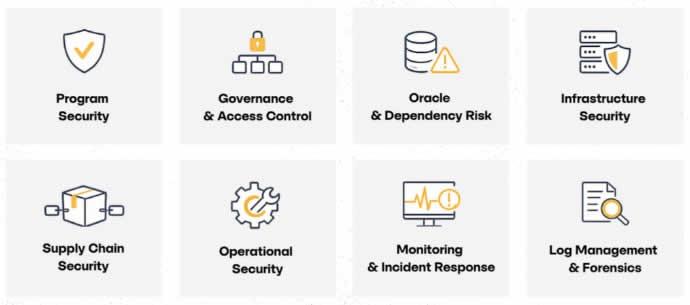
The program is designed to assess protocol security through eight distinct pillars: program security, governance and access control, oracle and dependency risk, infrastructure security, supply chain security, operational security, monitoring and incident response, along with log management and forensics.
According to Asymmetric Research, protocols undergo independent assessment against these established requirements, with the results made available to the public. "This gives users, investors, and the broader ecosystem real transparency into the security posture of the protocols they interact with."
This announcement arrives merely one week following one of 2026's most significant DeFi exploits, where the Drift Protocol suffered losses of approximately $280 million after falling victim to a social engineering attack orchestrated by threat actors with links to North Korea.
Solana Incident Response Network
Additionally, the Solana Foundation unveiled the Solana Incident Response Network (SIRN), which serves as a collaborative network of security companies providing real-time incident response capabilities throughout the Solana ecosystem.
According to the foundation's statement, "Members will share threat intelligence, coordinate responses to active incidents, and contribute to the ongoing evolution of the STRIDE framework."
While the foundation's announcement did not explicitly reference artificial-intelligence agents, the timing coincides with their emergence as a growing threat to cryptocurrency protocols.
Last week, KuCoin reported that $40 million was extracted from Step Finance, a Solana DeFi platform, during a January incident where AI agents exacerbated the damage through autonomous execution of large-scale transfers.
Attackers hit 34 DeFi protocols in Q1
Throughout the first quarter of 2026, malicious actors successfully stole more than $168 million in digital assets from 34 DeFi protocols, based on data compiled by DefiLlama.
Nevertheless, this amount represents a substantial decrease compared to the corresponding period in the previous year, when $1.58 billion was stolen during Q1 of 2025.
For this quarter, the most significant exploit involved the private key compromise affecting Step Finance.