Social Hurdles Outweigh Technical Barriers in Bitcoin's Quantum Defense: Grayscale
While acknowledging Google's quantum computing concerns, Grayscale research indicates Bitcoin's primary obstacles in addressing quantum vulnerabilities lie in social consensus rather than technological limitations.

According to Grayscale's head of research, addressing the quantum computing threat to Bitcoin may prove to be a greater social challenge than a technical one, particularly if the community cannot achieve consensus on various divisive matters.
On March 30, Google published a research paper that sent ripples through the cryptocurrency sector, indicating that quantum computing technology might be capable of breaking Bitcoin's (BTC) cryptographic defenses with significantly fewer computational resources than earlier estimates had projected.
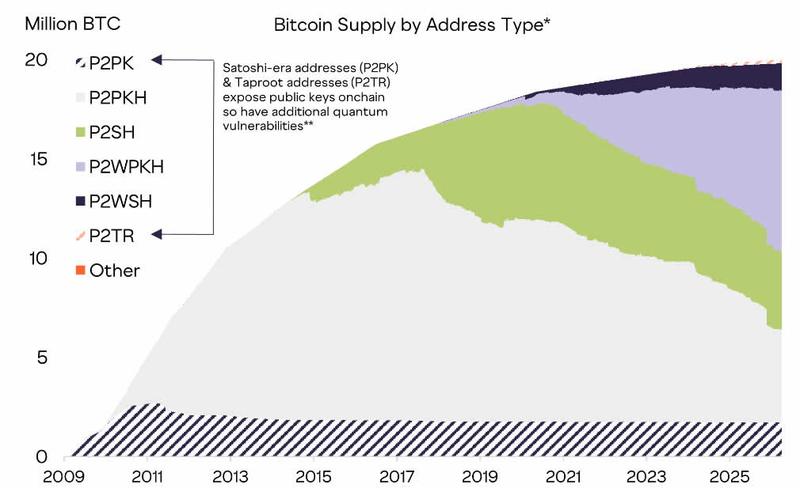
Zach Pandl, Grayscale's head of research, argued that Bitcoin's challenge doesn't stem from technical limitations, noting that "bitcoin has lower risk than other cryptocurrencies" due to its utilization of a UTXO model combined with proof-of-work consensus, its lack of native smart contract functionality, and the fact that specific address formats remain immune to quantum attacks.
Rather, the real obstacle lies in achieving community consensus on how to move forward, according to Pandl's assessment.
Within the Bitcoin community, intense discussions have centered around how to handle old inactive coins, especially the approximately 1.7 million BTC stored in legacy P2PK addresses, which includes Satoshi's presumed holdings of around 1 million BTC, valued at roughly $68 billion at current prices.
The Bitcoin community has three options
According to Pandl, the Bitcoin community must make a determination regarding coins whose private keys have been lost or are otherwise unreachable.
Three primary pathways exist: destroying the coins entirely, implementing a controlled release mechanism that restricts the spending velocity from vulnerable addresses, or maintaining the status quo by taking no action.
"All are conceptually doable, but the challenge is reaching a decision, and the Bitcoin community has a history of contentious debates over protocol changes, including last year's dispute around image data stored in blocks."
This reference from Pandl concerned the major controversy that emerged in 2023 regarding the utilization of block space for Bitcoin Ordinals, a technological innovation that allows for inscribing information including text and images onto a satoshi, which represents the smallest denomination of Bitcoin.
While the debate has become less heated two years on, opposing factions remain entrenched in their respective positions.
No threat now but time to get started
While emphasizing there is no immediate danger, Pandl warned that it was "time to get started" and stressed that blockchain networks must implement post-quantum cryptography, mirroring Google's position on the matter.
According to Pandl's research, both Solana and the XRP Ledger have already begun testing post-quantum cryptographic solutions. Additionally, the Ethereum Foundation published its strategic roadmap for post-quantum security in February.
In his conclusion, Pandl advised that investors "should not fret" at the present moment, though he emphasized the importance of intensifying preparation efforts for an eventual post-quantum computing era.
"In our view, there is no security threat to public blockchains from quantum computers today."