Senator Bill Hagerty Confirms April Target for Cryptocurrency Market Structure Legislation
While recognizing significant work remains ahead, Senator Bill Hagerty announced that congressional efforts on crypto market structure legislation will resume in the coming week.
On Monday, Bill Hagerty, a member of the US Senate Banking Committee, indicated that he anticipates a viable pathway forward for digital asset market structure legislation within the upcoming weeks, following extended congressional delays spanning several months.
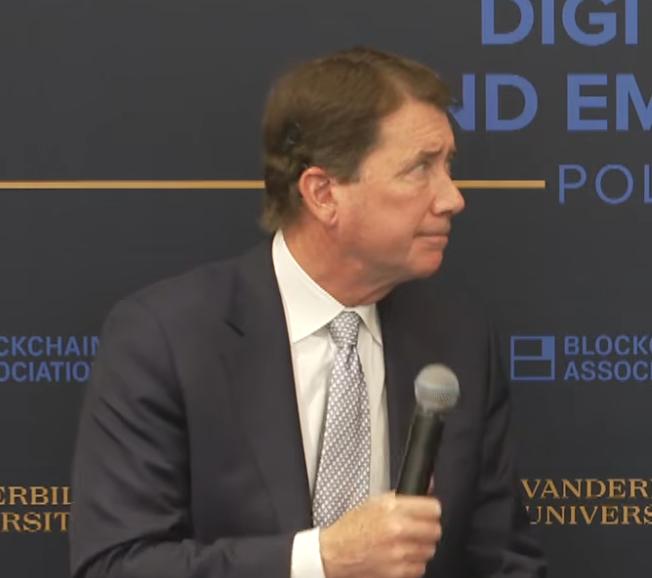
During his address at Vanderbilt University's Digital Assets and Emerging Tech Policy Summit, the senator revealed that Republican colleagues intend to advance the legislation through the banking panel beginning the following week.
"We will be in a position, I hope, to bring all of this together very soon," said Hagerty, referring to work on the bill in the Senate. "On the banking committee side, I think we're very close, and my expectation is that we get it into committee in this next work period that starts on Monday of next week, so that over the next several weeks we should have this into the banking committee."
The senator from Tennessee further stated:
"There're several issues still outstanding, I think none of them are insurmountable and we will get to a point I believe in April that we'll have it out of the banking committee. There's still a lot more work to do."
Initially known as the CLARITY Act upon its passage through the House of Representatives in July, this legislation is viewed by numerous lawmakers and figures within the industry as among the most critical crypto-related bills, though it has encountered multiple setbacks in Congress due to government shutdowns, industry opposition regarding stablecoin yield provisions, and questions surrounding ethics.
The legislation is anticipated to establish a thorough regulatory framework governing cryptocurrencies across the United States, notably transferring primary market oversight responsibilities from the Securities and Exchange Commission (SEC) to the Commodity Futures Trading Commission (CFTC).
Given that both regulatory bodies have jurisdiction, the proposed legislation requires approval from two committees — the Senate Agriculture Committee, which handles commodities matters, and the banking committee, which oversees securities. While the agriculture committee successfully moved forward its iteration of the crypto legislation during a markup session in January, ongoing concerns about tokenized equities, ethical considerations, and stablecoin yield have postponed deliberations within the banking committee, which must conduct its own markup session prior to any potential Senate floor vote.
"We're going into the midterms," said Hagerty. "I think if we get this done in April, we can clearly get this taken care of before the midterms."
Limited window for market structure as crypto potentially influences US elections again
The remarks made by Hagerty mirrored recent statements from Paul Grewal, Coinbase's chief legal officer, who indicated during the previous week that legislators were approaching a resolution on stablecoin yield provisions and additional contentious elements within the market structure legislation.
The advocacy organization Stand With Crypto, which receives support from Coinbase, suggests that the manner in which elected officials cast their votes on this legislation may affect their electoral prospects during the 2026 midterms, potentially positioning cryptocurrency interest groups to play an influential role in yet another significant United States election cycle.
Fairshake, a political action committee (PAC) backed by cryptocurrency interests that documented expenditures exceeding $130 million on media purchases during the 2024 election cycle, revealed in January that it possessed a $193-million war chest in preparation for the November 2026 midterm elections.
This organization represents just one voice among multiple entities supporting cryptocurrency initiatives at the national political level. The Fellowship PAC, which asserted it had accumulated "over $100 million" from anonymous contributors with ties to the cryptocurrency sector, made public the selection of Tether executive Jesse Spiro as its new chair on Wednesday.