Security Vulnerabilities Beyond Withdrawal Restrictions Revealed by Lighter Exploit
Exchange transactions may comply with platform protocols yet still enable unauthorized value transfers from user accounts.

A recent exploit that drained more than $10 million from a decentralized perpetual futures platform demonstrates the limitations of relying solely on withdrawal controls for security measures
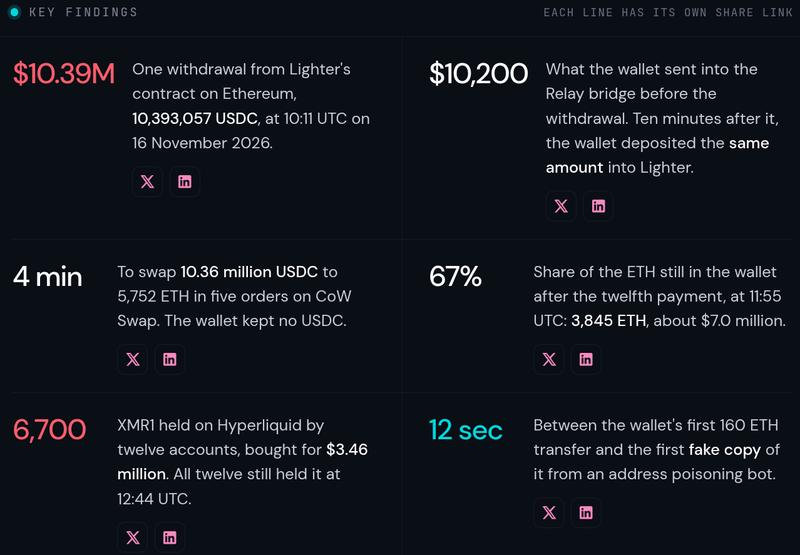
Based on Lighter's incident analysis, the malicious actor exploited stolen API keys to transfer assets into a public liquidity pool before redeeming shares controlled by a separate account. Data from Bitquery identified a 10.39 million USDC extraction. The platform confirmed that neither its underlying protocol nor its smart contracts sustained any damage.
Lighter has implemented mandatory wallet signatures for all public pool transfers and converted API-key signatures to private status. Additional planned measures include IP address allowlists and customizable authorization levels for each individual key.
The platform has since resumed normal deposit and withdrawal functionality and completed the return of approximately $5 million in USDC (USDC) to the impacted user.
This exploit underscores why cybersecurity assessments must extend beyond examining smart contract weaknesses. Equally crucial is addressing the disconnect between authorized permissions within a system and the financial ramifications those permissions enable.
The actual threat posed by any credential is determined by the account balances it can access, the transaction types it can execute and the financial exposures it can generate. The ability to withdraw funds and select destination addresses represents merely two considerations among numerous factors. As Lighter articulated in its incident report:
A key that can trade can still lose you money if someone else holds it.
This understanding requires users to define explicit authorization parameters for every credential. These parameters should detail which accounts are accessible, which markets are available for trading, acceptable order quantities, price deviation thresholds and total exposure limits. Actions such as transferring capital to shared pools or exceeding these boundaries should necessitate independent authorization.
The identical principle extends to multi-signature requirements. Additional signatures provide substantial security enhancement only when their approval workflow includes independent assessment of the transaction's financial implications.