SEC Nominee Johnson Advocates for Structured Rule Development on Tokenized Securities Trading
Kristin Johnson, nominated to the SEC, expressed support for comprehensive rulemaking on tokenized securities, as Steven Levine referenced the commission's exemption-granting powers.
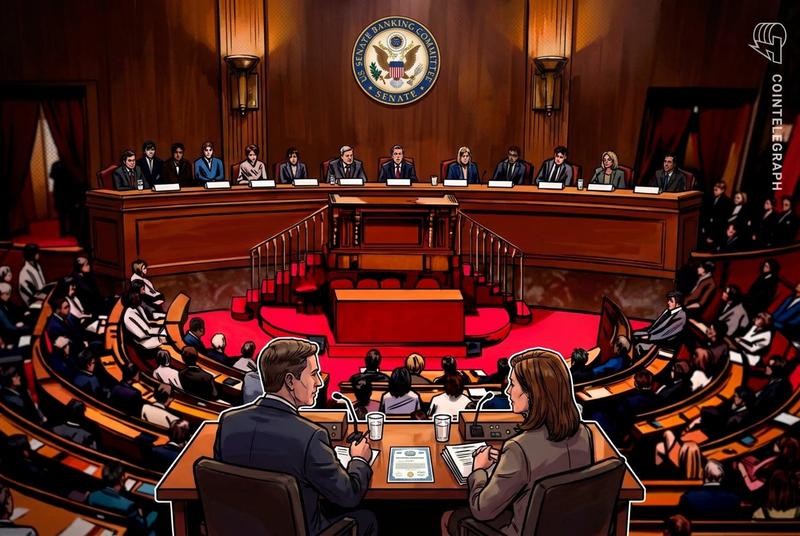
During a Senate confirmation hearing held Thursday, two individuals selected by President Donald Trump to occupy open positions at the United States Securities and Exchange Commission (SEC) responded to inquiries regarding financial innovation, regulatory supervision and investor safeguards, with particular attention paid to how the commission handles tokenized securities matters.
Kristin Johnson, nominated by Trump as the Democratic representative, expressed her support for implementing formal rulemaking procedures to tackle concerns surrounding the commission's exemptive relief for tokenized stock trading operations.
"I believe deeply that the regulatory process benefits from public notice and comment procedures," Johnson informed the Senate Banking Committee when responding to questions from Democratic Senator Angela Alsobrooks. She further stated her eagerness to explore matters encompassed by the exemption through such procedural mechanisms.
The exemption issued by the SEC on Sept. 17 permits qualified platforms to facilitate trading in blockchain-based representations of shares listed in US markets without obtaining registration as securities exchanges, subject to specific requirements. The directive became operative without delay and solicits public feedback regarding potential modifications.
Johnson, who previously served as a commissioner at the Commodity Futures Trading Commission, testified alongside Steven Levine, a Republican and former assistant to SEC Commissioner Mark Uyeda. Upon confirmation, the pair would expand the five-member commission to four commissioners, establishing a composition of three Republicans and a single Democrat.
The confirmation proceedings occur during a period when the SEC has diminished its enforcement operations and advanced regulatory modifications designed to embrace digital assets, including initiatives to enable tokenized securities that have attracted examination from legislators and industry stakeholders.
Companies reject tokenized stock listings
The exemptive order has encountered resistance from corporations whose shares trade publicly, with 67 entities expressing opposition to having their securities tokenized on the OKXICE platform, based on a Nov. 5 public disclosure.
Johnson additionally referenced apprehensions regarding Anti-Money Laundering and Know Your Customer regulatory compliance, observing that opposition to the exemption went beyond matters of investor protection alone.
Levine, in contrast, acknowledged he had not thoroughly examined the innovation exemption but grasped it to be temporary in duration and incorporate investor safeguards. He stressed that the legislative branch had empowered the SEC to issue exemptions from federal securities regulations when such action advances the public interest and aligns with investor protection mandates.
He referenced exchange-traded funds as an illustration of financial market innovation that originally evolved through regulatory exemptions prior to becoming governed by comprehensive agency regulations.
Senate weighs bipartisan SEC appointments
Upon confirmation, Johnson would assume the position as the sole Democratic commissioner at the SEC, a circumstance that certain cryptocurrency industry observers consider could enhance the commission's regulatory methodology.
"Crypto isn't a partisan issue, and the rules that come out of a bipartisan commission will stand on firmer footing."
Jessica Martinez, US policy director at digital asset infrastructure company Fireblocks
Martinez further noted that commissioners serving in the minority retain the capacity to shape policy decisions by questioning proposals and advocating for outstanding concerns to be resolved prior to rules reaching their final form.
Members of the Senate have until Friday at noon to file supplementary written inquiries for the nominees, with answers expected by 5:00 pm ET on Nov. 24, as stated in the committee's concluding statements.
The nomination process could subsequently move forward to a committee vote prior to receiving consideration from the complete Senate body. The two nominees must obtain Senate confirmation before assuming their positions at the SEC.