Research Warns of Fragmentation Dangers in Tokenized Stock Markets
New analysis from Tiger Research highlights concerns about fragmented liquidity and revenue distribution following the SEC's innovative exemption allowing third-party tokenized equity offerings.

Recent analysis from Tiger Research indicates that the United States Securities and Exchange Commission's decision to permit third-party entities to offer tokenized equities may trigger two significant structural challenges involving the fragmentation of both liquidity and revenue streams.
According to Ryan Yoon, director and head of research at Tiger Research, fragmentation of liquidity could emerge as capital becomes distributed away from centralized trading venues and spreads across various blockchain ecosystems, as he stated on Friday.
Yoon noted that "Traditional finance views the breakup of its previously consolidated, centralized liquidity as a serious structural threat."
He elaborated that when third-party entities tokenize identical listed equities on various blockchain networks and decentralized trading venues, the trading activity and order execution that would typically be concentrated on a unified platform like the NYSE or Nasdaq becomes scattered across numerous venues instead.
"This creates price discrepancies across platforms, increases slippage on large orders, and ultimately degrades overall market efficiency."
This analysis emerged five days following the SEC's Monday announcement of its "innovation exemption," a regulatory framework permitting third-party trading platforms to offer tokenized equities without requiring authorization from the issuing company.
Revenue fragmentation remains a risk
Revenue fragmentation represents the second major structural disruption that could occur, stemming directly from the fragmentation of markets.
Yoon explained that "As tokenized stocks trade across multiple platforms in disaggregated form, financial revenues that should accrue to domestic exchanges instead flow offshore, with direct implications for national financial competitiveness."
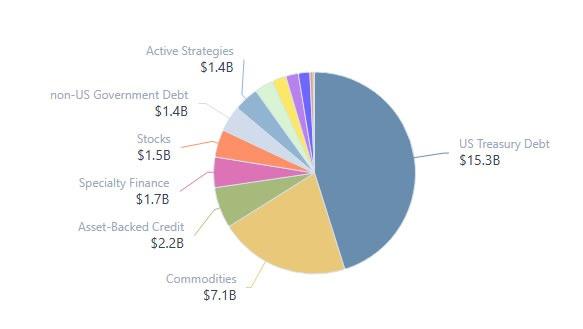
The fragmentation of capital has already begun materializing, evidenced by real-world asset open interest on the Hyperliquid decentralized exchange reaching a record peak of $2.6 billion during the current week.
In Yoon's assessment, this transformation "poses the deepest strategic dilemma for incumbent financial institutions and regulators alike."
Maja Vujinovic, CEO of digital assets at FG Nexus, similarly warned that markets risk being divided into "disconnected pools" which could generate "dangerous price tracking errors and shadow-shorting vulnerabilities where there aren't enough localized buyers to stabilize a specific token's price."
In the meantime, SEC Commissioner Hester Peirce indicated on Thursday that any such exemption would remain "limited in scope" by exclusively allowing "digital representations of the same underlying equity security that an investor could purchase in the secondary market today." The complete regulatory framework defining permitted and prohibited activities has not yet been made final.
Many practical market benefits
Proponents argue that tokenized equities deliver tangible market advantages, including expedited settlement processes, fractional ownership capabilities, reduced transaction expenses and the possibility for continuous trading operations, as noted by the Blockchain Council.
International accessibility enables investors outside the US to obtain exposure to sought-after American equities without facing restrictions imposed by their domestic brokerage platforms.
Brian Vieten, senior research analyst at Siebert Financial, stated "We believe this will accelerate the transition of the US financial system from legacy rails to onchain blockchain-based rails."
He continued, "We expect a portion of this flow to eventually flow to high-quality blockchain networks like Bitcoin and Hyperliquid."