Record-Breaking June Trading Volume at Kalshi Driven by World Cup Prediction Markets
June marked a historic milestone for Kalshi's trading volume, with the FIFA World Cup's expansion driving unprecedented prediction market engagement amid growing regulatory pressure across the United States and Europe.

June proved to be a landmark month for Kalshi's trading activity, with the platform achieving unprecedented volume levels as the 2026 FIFA World Cup spurred heightened engagement across the prediction markets landscape.
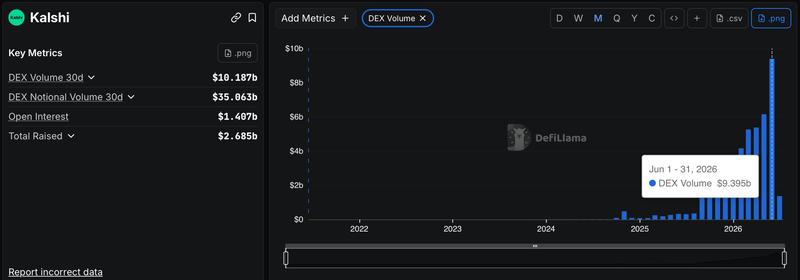
According to data from DefiLlama, Kalshi's trading volume reached approximately $9.4 billion during June, representing a substantial increase from the roughly $5.3 billion recorded in May. Meanwhile, Polymarket International experienced growth as well, climbing to approximately $4.3 billion from around $3.5 billion in the preceding month.
The World Cup tournament commenced on June 11 and represents the inaugural FIFA World Cup featuring an expanded format of 48 participating teams, a notable increase from the 32-team structure used in prior competitions. According to reporting by CNBC, the tournament emerged as the primary catalyst for prediction market trading throughout June, with analytics from Dune Analytics demonstrating unprecedented notional trading volumes across both Kalshi and Polymarket platforms.
The elimination phase of the tournament continues to generate some of the most substantial trading engagement. The Round of 16 encounter between Canada and Morocco, set to take place on Saturday, had accumulated more than $48 million in trading volume on Kalshi and surpassed $26.8 million on Polymarket as of the time of publication.
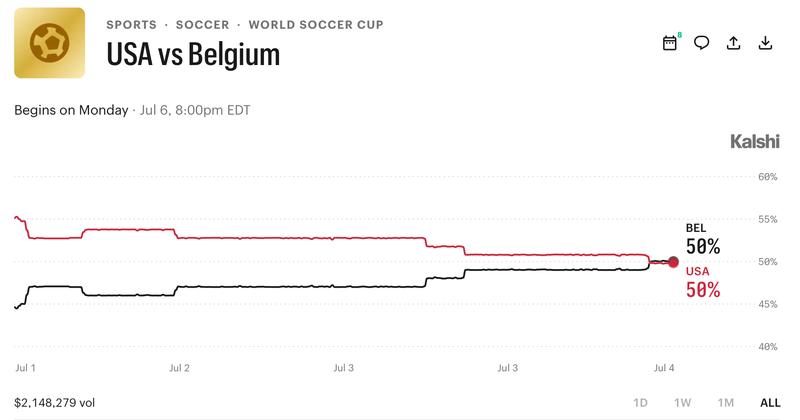
Considerable trader interest has also surrounded the United States' Round of 16 fixture. The market on Kalshi focused on which team will progress to the next round had accumulated in excess of $2.1 million in volume, while a similar market offering on Polymarket had drawn approximately $1.6 million as of Saturday.
Legal battles intensify as prediction markets grow
These elevated trading volumes emerge against a backdrop of prediction markets occupying a central position in an escalating legal and regulatory discourse throughout the United States.
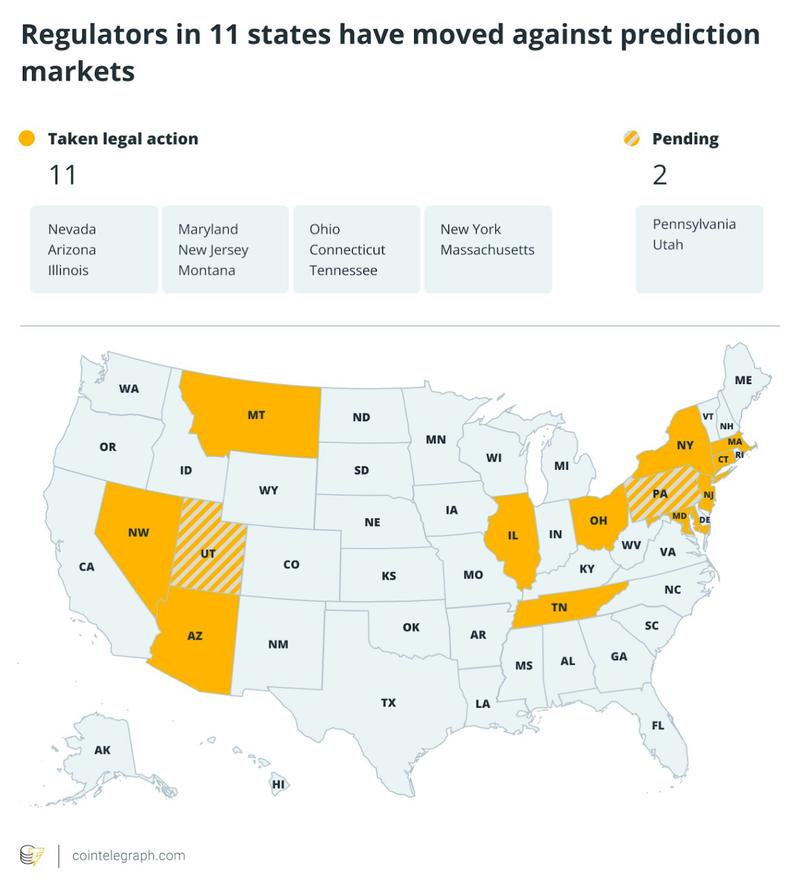
As early as March, close to a dozen states across the US had already initiated actions targeting platforms such as Kalshi and Polymarket, with certain jurisdictions attempting to suspend the markets' operations while others worked to incorporate them within prevailing gambling legislation and state taxation structures.
Federal oversight authorities have pushed back against state-level efforts to regulate prediction markets. In the subsequent month, CFTC Chair Michael Selig characterized state enforcement efforts as "illegal enforcement actions" targeting federally regulated exchanges, maintaining that Congressional authority had designated the agency as the exclusive regulator of commodity derivatives markets, prediction markets included.
To any state that seeks to nullify federal law and seize authority over these markets, we will see you in court.
Michael Selig, CFTC Chair
The regulatory discussion has extended beyond government agencies alone. During June, a coalition comprising casino operators, tribal organizations and labor groups petitioned Congress to exclude sports-event contracts from the CFTC's regulatory jurisdiction through an amendment to the Digital Asset Market Clarity (CLARITY) Act, contending that such contracts should instead fall under state gambling legislation and established gaming regulatory frameworks.
European authorities have adopted an alternative regulatory strategy. This past Friday, the European Securities and Markets Authority (ESMA) issued a reminder to market participants that numerous event contracts may already be subject to current restrictions governing binary options, emphasizing that regulatory classification hinges on a product's fundamental characteristics rather than any "event contract" designation applied to it.