Real-world commodity perpetuals see explosive growth as altcoin decline persists: Analysis
Middle Eastern conflict-driven spikes in energy costs have triggered substantial increases in trading activity for perpetual futures contracts tied to physical commodities.

Perpetual futures contracts tied to physical commodities such as oil and precious metals have experienced dramatic increases in onchain trading activity, pointing to a shift in investor preference away from altcoins toward commodity-backed digital assets, a Thursday report from digital asset bank Sygnum reveals.
According to the report, perpetual futures markets for oil and precious metals on the Hyperliquid decentralized exchange (DEX) now represent more than 67% of HIP-3 contracts during Q1 2026, referred to as "Builder-Deployed Perpetuals" within the Hyperliquid ecosystem.
Index contracts previously dominated HIP-3 trading activity at approximately 90%, but Sygnum data shows this figure has now declined to roughly 17%.
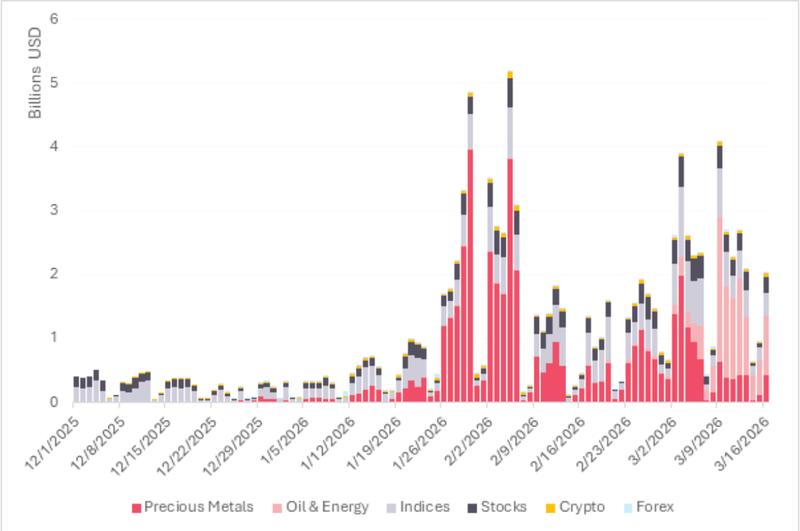
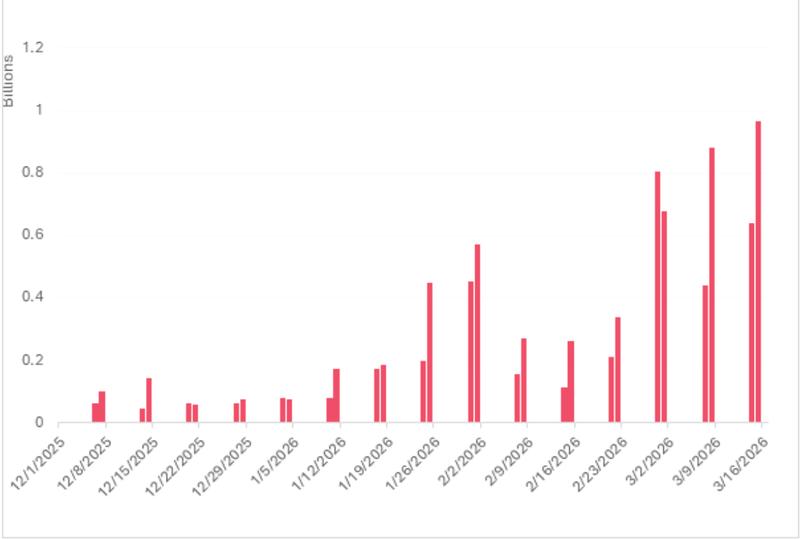
The report indicates that weekend HIP-3 trading volumes have experienced approximately 9x growth since January 2026, noting, "This is likely due to an uptick in crypto-native traders rotating into traditional assets as the broader altcoin market continues to underperform."
In a conversation with Cointelegraph, Lucas Schweiger, who leads digital asset ecosystem research at Sygnum, explained that this migration toward onchain digital assets aligns with a 250% year-over-year increase in the market capitalization of tokenized real-world assets (RWAs).
At the current time of writing, approximately $23 billion worth of tokenized real-world assets are being traded across permissionless blockchain networks, he noted.
Schweiger also noted that market participants are viewing altcoins as "leveraged BTC proxies." In his statement to Cointelegraph, Schweiger explained:
"That creates an environment where crypto-native capital naturally gravitates toward traditional asset perps that can be traded through the same wallet, using the same margin, just a different trade."
According to Sygnum, the continuing Middle Eastern conflict and resulting disruptions to energy infrastructure have driven oil prices higher, while numerous altcoins remain 80-90% below their all-time high valuations.
Recessionary concerns mount as Middle East war drags on
The military conflict involving the United States, Israel and Iran has severely disrupted vital energy infrastructure throughout the Middle East, pushing global oil prices to spike as high as approximately $120 per barrel.
Since the conflict began, oil prices have experienced significant volatility, moving up or down based on statements from US President Donald Trump and the Iranian government, as well as evolving developments within the geopolitical crisis.
Should oil prices remain elevated above $100 per barrel throughout 2026, inflation will experience a sharp increase, according to Nic Puckrin, a market analyst and founder of the Coinbureau media channel.
Market participants continue to price in the possibility of de-escalation or a rapid resolution to the conflict, but Puckrin cautioned they may face a "rude awakening" should the crisis continue and elevated inflation eliminates any possibility of additional interest rate cuts in 2026.
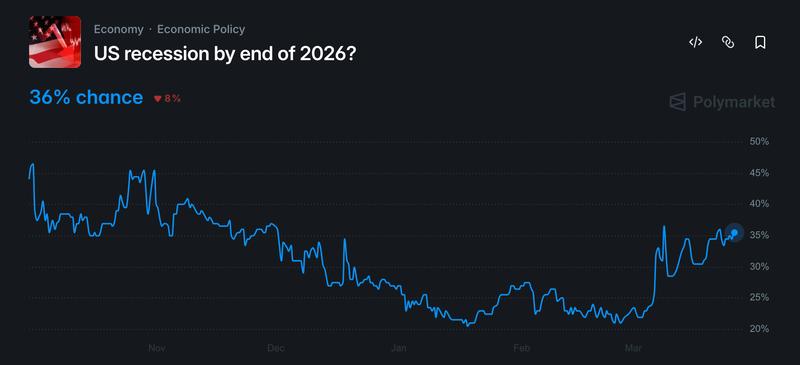
Following the conflict's commencement on February 28, the probability of a US recession has climbed to 36% on the Polymarket prediction market platform.
According to ratings agency Moody's, the US economy now faces close to a 50% probability of slipping into recession in 2026.