Q1 2026 Bitcoin Sales by Public Miners Exceed Entire 2025 Volume: Analysis
The cryptocurrency mining sector reveals a clear divide: operators selling Bitcoin holdings to maintain operations versus firms preserving their BTC reserves for long-term expansion strategies.

Bitcoin (BTC) mining operations with publicly traded shares have liquidated a higher volume of BTC during the first quarter of 2026 compared to the combined total across all four quarters of 2025, reflecting increasingly challenging operational conditions facing the mining sector.
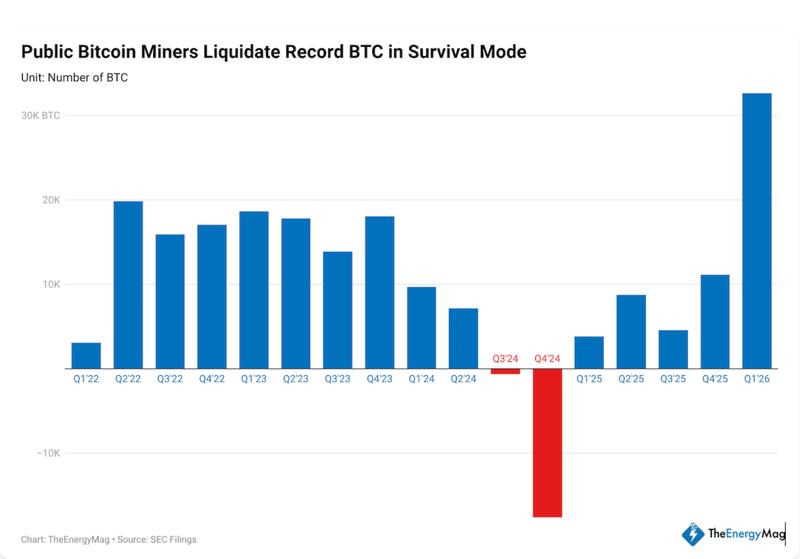
Major publicly listed Bitcoin mining firms, such as MARA, CleanSpark, Riot, Cango, Core Scientific and Bitdeer, have together liquidated in excess of 32,000 BTC throughout Q1 2026, based on data compiled by TheEnergyMag.
These first-quarter liquidations eclipsed the 20,000 BTC that was sold during Q2 2022 amid the cryptocurrency bear market sparked by the Terra-Luna ecosystem's implosion, establishing a "new record" for Bitcoin miner liquidations within any three-month period, according to TheMinerMag's analysis.
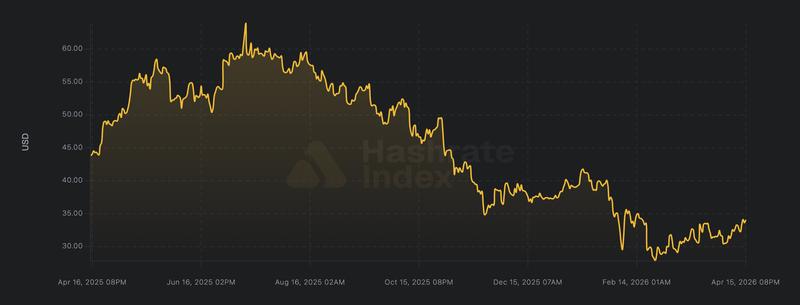
These liquidations arrive at a time when hashprice, which represents the computing cost and serves as a crucial profitability indicator for miners, remains at historically low levels below $35 per petahash/second per day (PH/s), based on information from Hashrate Index.
The $35 PH/s threshold represents the breakeven point for numerous Bitcoin mining operations, especially those utilizing older-generation mining equipment, and with the current hashprice hovering around $33 PH/s per day, approximately 20% of the overall mining industry finds itself operating at a loss.
The substantial BTC liquidations occur as the mining sector grapples with intensified competition reflected in an expanding hashrate, which measures the aggregate computing power dedicated by miners to network security, alongside diminished block rewards and challenging macroeconomic conditions.
Long-term decline in miner-held BTC contrasts with treasury company accumulation
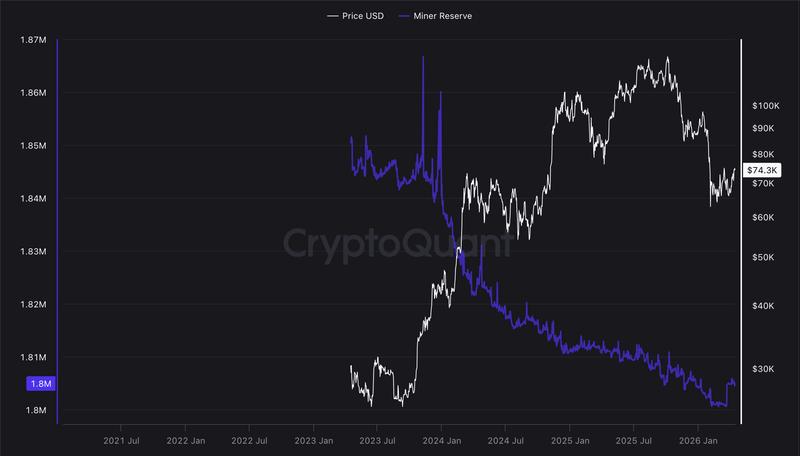
The Bitcoin Miner Reserve, which serves as a measurement of the complete BTC holdings across all mining operations, has experienced a steady downward trend beginning in 2023, based on CryptoQuant data.
Mining operations collectively controlled more than 1.86 million BTC as 2023 concluded, but their holdings have decreased to approximately 1.8 million BTC as of this writing.
Mining companies routinely liquidate segments of their Bitcoin reserves to fund operational costs, however the convergence of depressed cryptocurrency valuations and escalating energy expenses has compelled certain miners to dispose of coins they otherwise would have retained within their corporate reserves.
"We expect further capitulation among higher-cost operators in H1 2026 unless BTC's price recovers materially,"
asset manager CoinShares said in its Q1 2026 Bitcoin Mining Report
Presenting a stark counterpoint to the selling pressure from miners are Bitcoin treasury corporations, such as Strategy, which has maintained its position as a consistent purchaser of the leading cryptocurrency.
Michael Saylor, the co-founder of the largest Bitcoin treasury corporation, signaled earlier this week that Strategy is accumulating additional BTC, following the price pullback from the local peak exceeding $73,000 that was achieved this week.
"Think bigger," Saylor stated on Sunday, accompanying his message with the chart documenting Strategy's BTC acquisition timeline that has come to be recognized as an indication of forthcoming BTC purchases.