Prediction market operators face new lawsuit as Kentucky takes legal action against Kalshi and Polymarket
In a lawsuit targeting prediction market platforms, Kentucky has taken legal action against Polymarket and Kalshi, along with Kalshi's associated partners including Coinbase, Robinhood, and Webull, alleging unauthorized sports event contract offerings.

In legal action targeting prediction market operators, Kentucky has taken five platforms to court, among them Kalshi and Polymarket, contributing to an expanding trend of American states initiating legal confrontations with prediction markets concerning sports event contract offerings.
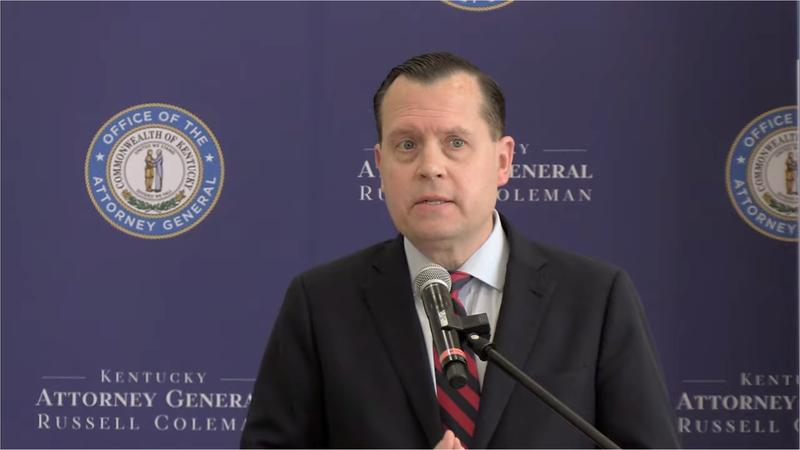
In a Wednesday statement, State Attorney General Russell Coleman announced that his office had initiated legal proceedings in state court targeting Polymarket and Kalshi — while also identifying Kalshi's affiliated partners Coinbase, Robinhood and Webull — with allegations of "operating unlicensed and illegal sports betting and gambling platforms."
Kalshi and Polymarket are operating illegal sportsbooks in Kentucky and breaking our laws. These multi-billion dollar corporations and their legal fictions don't pass the sniff test. As one of our state legislative leaders said it best, 'If it looks like a duck and quacks like a duck…'
Russell Coleman, Kentucky Attorney General
According to Token Terminal data, Kalshi and Polymarket collectively achieved $25 billion in trading volume during May. Legal challenges from numerous American states present the risk of excluding these platforms from access to some of America's most significant markets.
No fewer than 17 additional states have initiated court proceedings against prediction market operators, drawing participation from both the US Commodity Futures Trading Commission and the White House.
Numerous state regulatory bodies have contended that event contracts connected to sporting events constitute sports betting and necessitate licensing at the state level. Operators of prediction markets have countered that their event contracts represent swaps governed under federal commodities legislation.
This stance receives support from the CFTC, which has initiated legal action against eight states following their moves against prediction markets, asserting these states were encroaching upon its regulatory jurisdiction.
Kentucky's legal filings asserted that Polymarket, Kalshi and their associated partners are "doing business without a Kentucky gaming license or following state regulations" and that their sports event contracts "fall squarely within the definition of 'sports wagering' under Kentucky law."
The state further claimed the platforms provide users with "few or no resources" for identifying or obtaining assistance for gambling-related issues as mandated by state regulations.
A Polymarket spokesperson told Cointelegraph Kentucky's action "runs counter to the CFTC's established framework for regulating prediction markets. We look forward to addressing these claims through the appropriate legal process."
Kalshi spokesperson Jacki McGavick told Cointelegraph that "Kalshi is a federally regulated exchange — the CFTC is our regulator, not the states. Courts have already recognized this, and we're confident they will here too."
The CFTC did not immediately respond to a request for comment.
Kalshi and Polymarket, working through a coalition of platforms, are already engaged in legal proceedings with Kentucky following their lawsuit filed Friday against the state, challenging its unprecedented 14.25% tax on prediction market transaction fees as discriminatory and in violation of federal law.
Kentucky's legal action arrives after regulatory authorities in Montana, Nevada, Utah, Iowa, Illinois, Ohio, Tennessee, New York, New Jersey, Connecticut and Maryland had delivered cease-and-desist notices to prediction markets and were then met with lawsuits from the platforms.
Washington, Arizona, New Mexico, Wisconsin, Michigan, Massachusetts and Kentucky have also opted to initiate lawsuits against prediction market platforms, including Kalshi.
Certain legal disputes have progressed to appeals courts thus far and have produced varying outcomes. On Wednesday, a federal judge in Michigan delivered a ruling unfavorable to Polymarket in its case against the state, determining that its sports event contracts do not qualify as swaps under the CFTC's regulatory purview.
Other judicial bodies have ruled in favor of prediction markets, including the Third Circuit Court of Appeals' decision in April that regulators in New Jersey lacked authority to block Kalshi from providing sports event contracts within the state.
US President Donald Trump, whose son Donald Trump Jr. is on the advisory board for Polymarket and is an adviser to Kalshi, said in May that it was "critically important that the CFTC's exclusive authority over Prediction Markets is maintained."