Polymarket's World Cup Betting Drew 60% Crypto Newcomers to Blockchain
Nearly 60% of individuals who wagered on World Cup outcomes via Polymarket were experiencing their first blockchain interaction, using the prediction platform as their gateway into cryptocurrency.

Approximately 60% of individuals who wagered on World Cup matches through Polymarket for the first time had no prior experience with blockchain protocols, indicating that prediction markets are serving as a gateway for crypto adoption.
This discovery stems from a 90-day research study conducted by Bitget Wallet, which was provided to Cointelegraph on Thursday, analyzing the onchain behavior of 857,000 active participants on the Polymarket platform.
According to Bitget Wallet, the research results indicate that certain users are gaining their initial crypto exposure via prediction markets rather than starting their journey with token trading or decentralized finance protocols.
Alvin Kan, who serves as chief operating officer at Bitget Wallet, explained to Cointelegraph that previous attempts to onboard crypto users concentrated primarily on making blockchain technology more accessible through streamlined wallets and enhanced user interfaces, yet users were still required to grasp how cryptocurrency functioned before they could engage.
Prediction markets shifted that dynamic. Users show up because they have a view on something happening in the world.
Alvin Kan, COO at Bitget Wallet
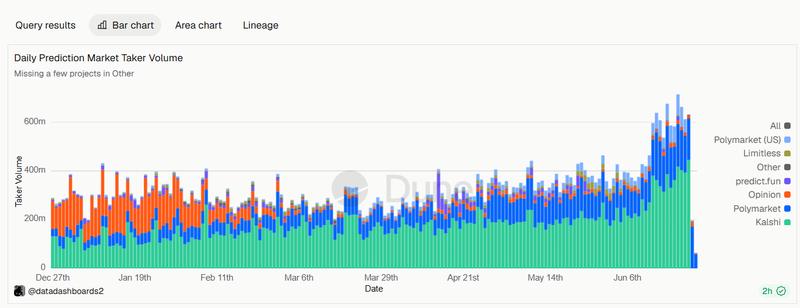
The daily taker volume, representing contracts purchased or sold by traders executing against existing orders, hit an all-time high of $713 million on Saturday, based on Dune analytics. This record was achieved over a week following the World Cup's commencement on June 11.
World Cup contracts drive $3.1 billion in volume to Polymarket
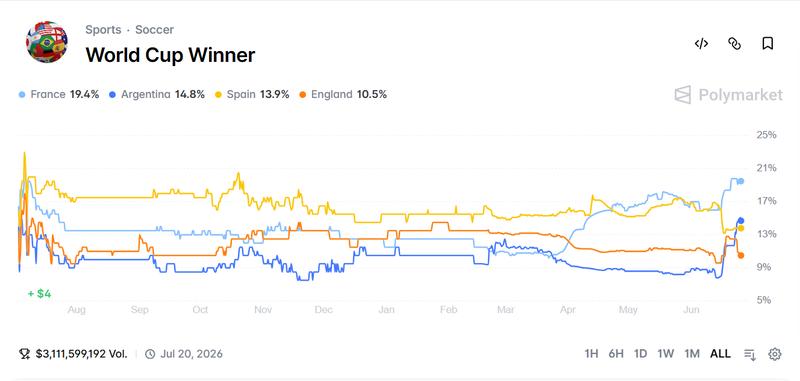
A research report from Bernstein dated June 11 forecasted that the 2026 FIFA World Cup would produce over $3 billion in additional sports betting handle and somewhere between $5 billion and $10 billion in extra consumer prediction market volume. The contract for the World Cup winner by itself has produced over $3.1 billion in trading volume on Polymarket, based on data from the platform.
Sports-related contracts were among the most significant contributors to prediction market activity during the last 30 days. On the Kalshi platform, these contracts produced $8.5 billion throughout the past 30 days, establishing them as the platform's most active category. Meanwhile, on Polymarket, sports also claimed the top position with over $4.9 billion in trading volume for the identical timeframe, as shown by Defirate analytics.
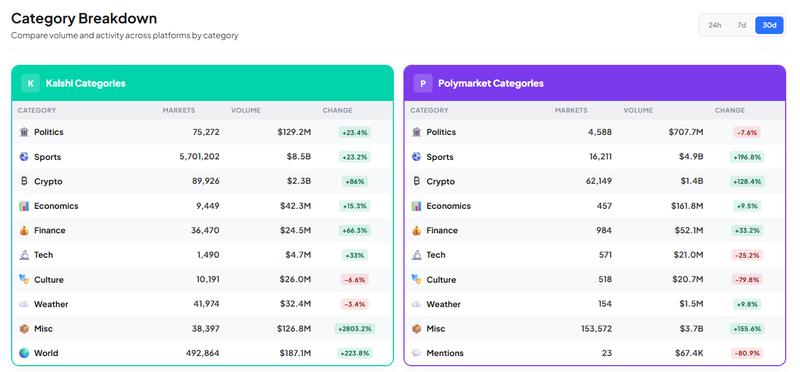
The dramatic increase in sports-focused trading activity has simultaneously heightened regulatory examination within the United States.
On June 17, the state of Kentucky filed lawsuits against five prediction market platforms, with Kalshi and Polymarket among them, charging them with running sports betting platforms without proper licensing. A minimum of 17 additional states have brought prediction market operators before the courts, drawing attention from both the Commodity Futures Trading Commission and the White House.
Subsequently, the CFTC initiated legal action against eight states, contending that they had encroached upon the federal regulator's sole jurisdiction over federally regulated event contracts.