One-Fifth of Bitcoin Mining Operations Running at a Loss, CoinShares Reports
A new analysis from CoinShares indicates approximately 20% of Bitcoin mining operations are operating in the red under present hashprice conditions, with legacy equipment operators and those facing elevated electricity expenses most affected.

The financial viability of Bitcoin mining operations is reaching pressure points that are rendering a segment of the worldwide infrastructure financially unviable, based on findings from digital asset investment firm CoinShares.
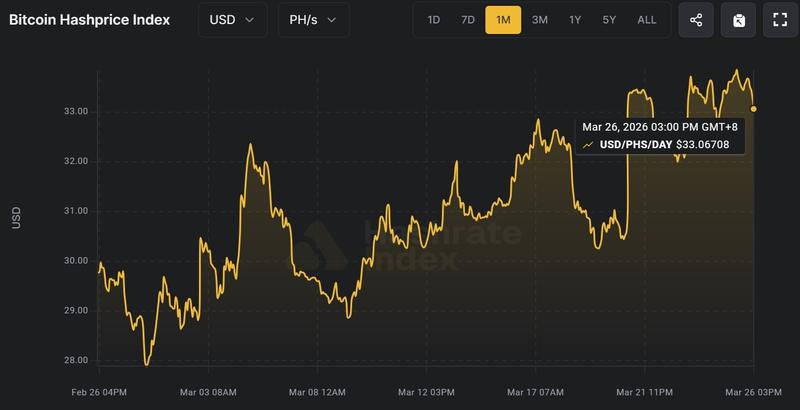
Within its first quarter 2026 Bitcoin mining analysis, CoinShares reported that hashprice, an essential metric for measuring mining revenue, declined to approximately $28 per petahash per second per day (PH/s/day) during February 2026, representing a fresh post-halving bottom and squeezing profitability margins throughout the industry.
Current data from Hashrate Index, a platform specializing in mining analytics, indicates that hashprice has climbed back to approximately $33 PH/s/day at press time, although this figure remains within the lowest range observed over the previous five-year period. Despite this modest rebound, CoinShares calculates that between 15% and 20% of Bitcoin mining operations worldwide are currently operating unprofitably at these price points, with the burden falling heaviest on those utilizing legacy mining equipment or confronting elevated power expenses.
According to the analysis, the current downturn extends beyond typical market cycles and is progressively limiting the field of economically sustainable operators to those possessing structural competitive edges, including more power-efficient mining infrastructure or access to discounted electricity rates, as miners face a triple squeeze from depressed Bitcoin valuations, ascending network difficulty and anemic transaction fee revenues that collectively compress operational income.
Network statistics have begun reflecting this pressure. Bitcoin's mining difficulty experienced a decline of approximately 7.7% on March 20, representing one of the most significant drops witnessed this year as financial strain on mining operators continued. A reduction in difficulty decreases the amount of computational effort necessary to successfully mine a block, providing some measure of economic relief to miners who continue operations.
Higher-cost miners face pressure as margins approach breakeven
According to CoinShares, mining operations utilizing mid-generation equipment are currently operating in negative territory under prevailing hashprice conditions, especially those paying approximately $0.05 per kilowatt-hour or higher for electrical power.
The analysis indicated that operators deploying mid-generation mining hardware require electricity costs below 5 cents per kilowatt-hour to maintain cash-flow positive operations, whereas those running the most current-generation equipment can still preserve substantial profit margins even at standard industrial electricity pricing.
CoinShares anticipates additional strain on mining profitability should Bitcoin valuations remain depressed. In the report, James Butterfill, head of research at CoinShares, indicated that an extended price downturn could compel mining operations to power down unprofitable equipment, potentially reducing overall network hashrate expansion and bringing stability to revenue metrics.
If prices were to stay below $80k for the remainder of the year, we forecast the hashprice to continue to fall. The hashprice would more likely flatline as weaker operators exit the network.