New York Stock Exchange partners with Securitize to launch round-the-clock tokenized trading system
The NYSE has chosen Securitize as its inaugural digital transfer agent for creating blockchain-powered stock shares and establishing frameworks for regulated tokenized equity offerings.
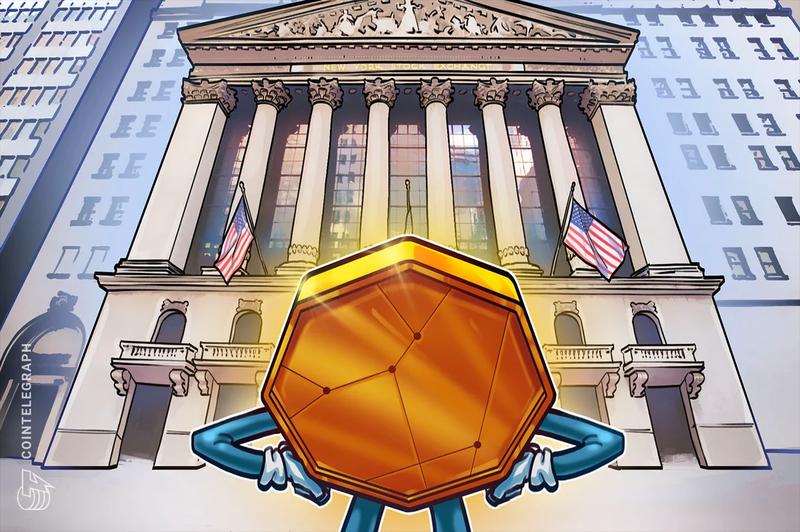
In a move to advance blockchain-enabled stock trading capabilities for Wall Street, the New York Stock Exchange (NYSE) has entered into a memorandum of understanding (MoU) alongside tokenization platform Securitize.
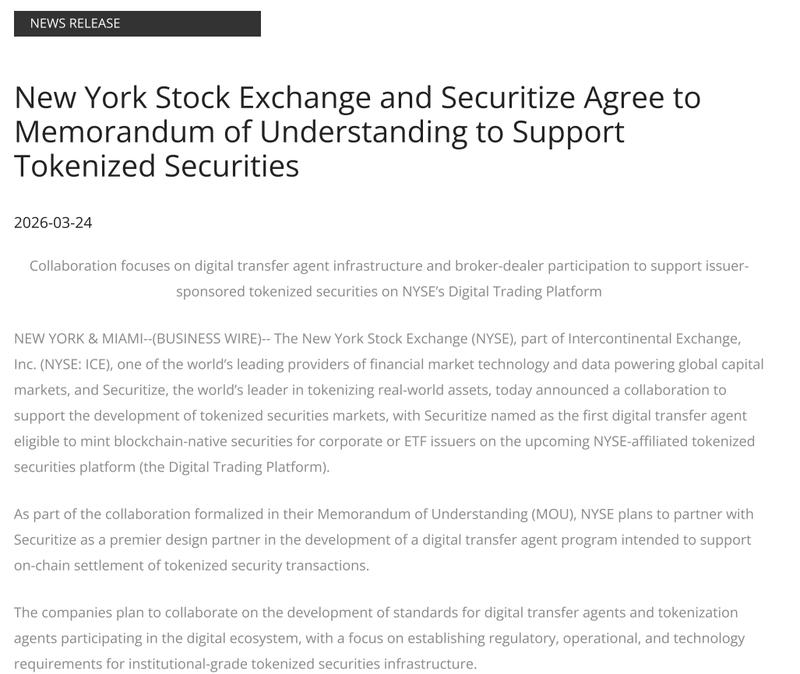
According to a Tuesday announcement released by Intercontinental Exchange (ICE), the parent organization of the NYSE, Securitize has been designated as the inaugural digital transfer agent. This designation empowers the company to create blockchain-based shares for stocks and exchange-traded funds (ETFs) through the forthcoming tokenized securities platform known as the Digital Trading Platform.
The MoU outlines collaborative efforts between the companies to establish a digital transfer agent program alongside comprehensive standards for digital transfer agents and tokenization agents. This initiative emphasizes regulatory, operational and technology requirements essential for tokenized securities infrastructure development.
This announcement represents a continuation of ICE's Jan. 19 vision for a tokenized securities venue featuring 24/7 trading capabilities, instant settlement mechanisms, stablecoin-based funding options and onchain settlement processes.
According to ICE, the proposed venue aims to accommodate both tokenized shares maintaining fungibility with traditionally issued securities, as well as securities originally issued as digital tokens. The platform will maintain traditional shareholder dividends and governance rights throughout. Tokenized stocks represent shares of conventional company stocks recorded on the blockchain ledger, providing investors with stock price exposure alongside benefits such as 24/7 accessibility and fractional ownership capabilities.
This agreement represents another indication that leading exchange operators are constructing blockchain-powered trading and settlement infrastructure, despite the ongoing development of regulatory frameworks and market structure for tokenized public securities.
This development comes after the US Securities and Exchange Commission approved Nasdaq's pilot proposal on Thursday, which aims to facilitate the trading of tokenized versions of high-volume stocks and securities.
"As we explore how tokenization can enhance capital markets, it is critical that new infrastructure is developed in a way that preserves the trust, transparency, and protections investors expect,"
Lynn Martin, president at NYSE Group
Tokenized stocks surpass $1 billion amid rising demand
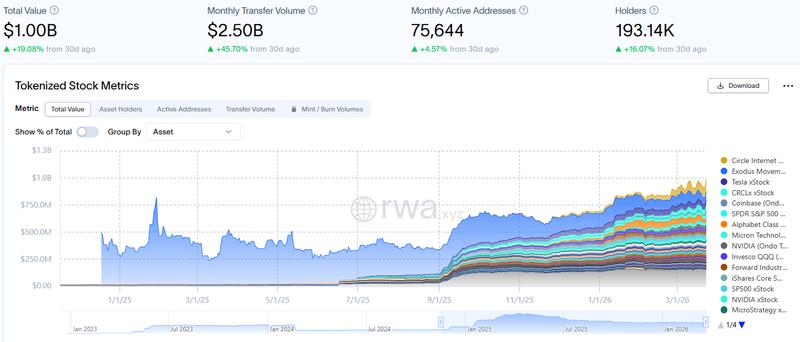
The appetite among investors for blockchain-powered tokenized stocks continues to grow. On March 10, the aggregate value of tokenized stocks crossed the $1 billion threshold, marking a significant milestone for the real-world asset (RWA) sector.
Data from RWA.xyz reveals that over the preceding 30 days, tokenized stockholders experienced a 16% increase, reaching 193,140 participants, while monthly transfer volume climbed 45% to reach $2.5 billion.
Despite this growth, tokenized stocks currently represent only the sixth-largest category within the $26 billion value secured in tokenized RWAs. Leading the rankings is tokenized treasury debt at $11.8 billion, followed by tokenized commodities in second position with over $5 billion.
Major crypto exchanges are simultaneously competing to introduce tokenized stock offerings. On Friday, Coinbase unveiled 24/7 stock perpetual futures for traders outside the United States, providing cash-settled exposure to prominent US stocks and indices, such as Apple and Nvidia.
Additional crypto exchanges including Binance and Kraken have similarly introduced tokenized perpetual futures trading for non-US traders, alongside various other offshore platforms offering comparable services.