New Jersey and Delaware Push Forward Legislation to Prohibit Cryptocurrency ATMs
Legislative bodies in New Jersey and Delaware have moved forward with proposals that would impose complete prohibitions on crypto ATMs, joining just three other states that have implemented such restrictions.

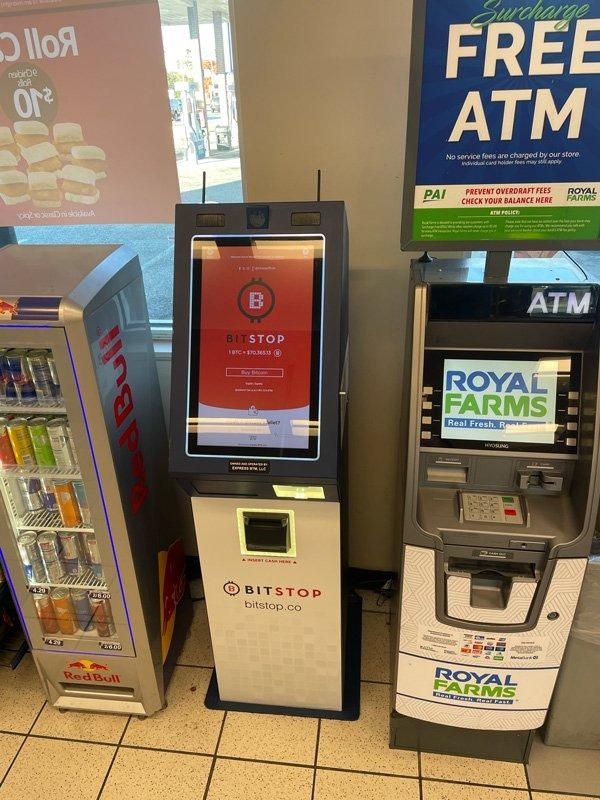
Both Delaware and New Jersey have made progress on legislative measures aimed at prohibiting cryptocurrency ATMs, reflecting an expanding movement among US states where legislators express alarm that these kiosks primarily facilitate fraudulent activities.
On Tuesday, Delaware's House Economic Committee approved House Bill 441 and forwarded it to the complete legislative chamber. The proposed legislation would prohibit the ownership, installation, and operation of cryptocurrency kiosks throughout the state.
This development came after New Jersey's Senate Commerce Committee conducted a unanimous vote on Monday, advancing its own proposal to ban crypto ATMs to the entire chamber for consideration.
A minimum of three additional US states — Minnesota, Tennessee and Indiana — have already enacted comprehensive prohibitions on crypto ATMs as a response to their utilization in fraudulent schemes.
According to the FBI's May announcement, the agency received close to 13,500 complaints regarding crypto ATMs in 2025, representing more than $388 million in financial losses. This marked a 23% rise in complaints and a 58% surge in losses compared to 2024. More than fifty percent of these complaints came from individuals over the age of 50, with their losses surpassing $302 million.
Regular crypto traders generally do not use crypto ATMs due to their much higher fees, which can be upwards of 20% of the value of the transaction, versus the 0.4% to 1% in fees for online exchanges. There is no reason to support a business structure that enables scammers to extort money from our most vulnerable populations.
The Delaware legislation would additionally prohibit fiat-to-cryptocurrency transactions that "replicate or substitute" cryptocurrency ATMs, including those conducted through point-of-sale systems or via cashiers. The bill further requires that all existing crypto ATMs be dismantled and removed within a 90-day period following the law's enactment.
According to the bill's provisions, violations could result in penalties reaching up to $10,000. In cases where a kiosk is discovered in operation, operators must provide refunds of all fees collected from users, or alternatively contribute those funds to a consumer protection fund if individual users cannot be located.
New Jersey's proposed legislation would likewise prohibit the ownership, control, installation, management, sale, or offering for sale of crypto ATMs, citing "a significant rise in scams associated with their use."
The New Jersey bill establishes penalties reaching up to $10,000 for an initial violation, with the amount increasing to $20,000 for any subsequent offenses.
Bitcoin ATM operators push back
The state of Indiana became the nation's first to prohibit crypto ATMs when it signed legislation into law in March. Tennessee implemented its prohibition in April, with Minnesota following suit by passing a ban in May.
Several US cities have either enacted or are currently considering ordinances that would ban crypto ATMs within their jurisdictions. Meanwhile, certain states, such as California and Arizona, have implemented caps limiting the transaction values permitted through crypto ATMs.
Last month, Bitcoin Depot, previously the world's largest crypto ATM operator with a network exceeding 9,000 kiosks, identified regulatory pressures as a primary factor in its decision to file for bankruptcy protection.
Nevertheless, operators of crypto ATMs have consistently maintained they should not bear responsibility for scams conducted through their machines. Many operators have implemented on-screen warnings about potential scams or established voluntary transaction limits designed to reduce illicit activity.
In response to an ICIJ investigation into crypto scams published in December, Bitcoin Depot stated that it "cannot be held liable for the criminal acts of third-party scammers" and emphasized that it maintained "robust warnings and safeguards" both on its machines and throughout the transaction process.