MetaMask Unveils Yield-Generating Stablecoin Account with Card Integration
MetaMask introduces its Money Account product featuring variable returns of up to 4% APY on mUSD stablecoin holdings combined with card payment functionality, utilizing DeFi vault strategies for yield generation, unavailable in EU and UK markets.

Consensys-developed self-custodial wallet MetaMask is rolling out a new offering that the company says enables users to generate returns on its MetaMask USD (mUSD) stablecoin while also making purchases through a card, operating exclusively on the Monad blockchain.
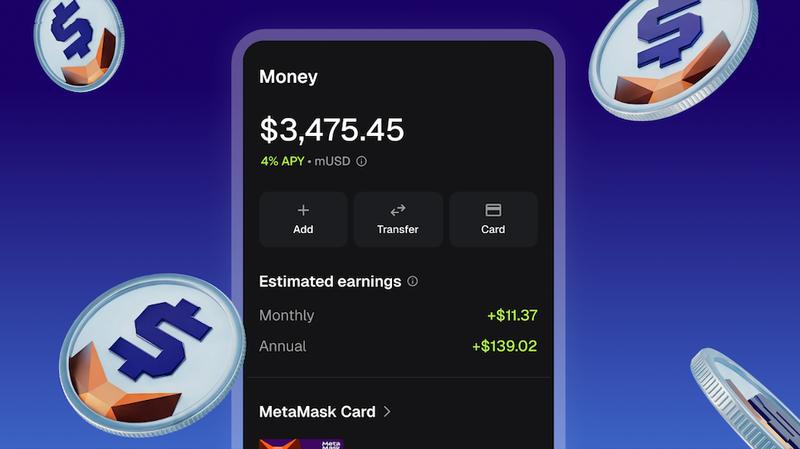
On Tuesday, the company unveiled Money Account, an offering that the firm says delivers variable annual percentage yield (APY) of up to 4% on qualifying stablecoin balances in jurisdictions where the service is available.
Your balance earns the moment you add funds, and you can spend the moment you need to.
Consensys CEO Joe Lubin
The product introduction arrives during continuing discussions surrounding yield-generating stablecoin offerings in the United States, where proposed CLARITY Act legislation contains provisions that would limit the distribution of interest or yield on payment stablecoins when connected to token ownership.
Yield engine powered by DeFi vaults
According to Johann Bornman, MetaMask senior director of product, who spoke with Cointelegraph, Money Account produces yield via decentralized finance (DeFi) lending mechanisms as opposed to interest paid directly by the issuer.
Bornman explained that the architecture depends on two completely distinct mechanisms, creating separation between the stablecoin's backing structure and its yield generation process.
The initial mechanism concerns the stablecoin's reserve backing. Bridge, which operates as a Stripe company, maintains reserves in US dollars and short-duration Treasury bills that provide 1:1 backing for mUSD. Within this framework, the issuing entity does not distribute yield to token holders.
The secondary mechanism represents the DeFi-based yield component. When participants make deposits into a Money Account, their capital gets directed through Veda, an onchain vault provider, which then distributes the capital across proven lending protocols including Aave and Morpho.
Simply put, mUSD's reserve backing and the yield users earn are structurally separate. The yield doesn't come from the issuer, it comes from DeFi protocol activity.
Johann Bornman, MetaMask senior director of product
KYC and availability: EU and UK among restricted geos
Bornman stated that the Money Account is becoming available worldwide on Tuesday, with exceptions for the United Kingdom, member nations of the European Union, and jurisdictions under sanctions.
Because MetaMask functions as a self-custodial wallet platform, Know Your Customer verification is not mandated by the platform itself, though KYC processes are necessary for functionalities that interface with regulated financial services, such as fiat currency on-ramps and the MetaMask Card.
Money Account itself does not require KYC, users can hold mUSD and earn yield with the click of a button. Where KYC is required, those checks are carried out by third-party providers that operate those regulated services, not by MetaMask.
Johann Bornman
The rollout occurs under a year following MetaMask's official introduction of its wallet-integrated mUSD stablecoin in September 2025.
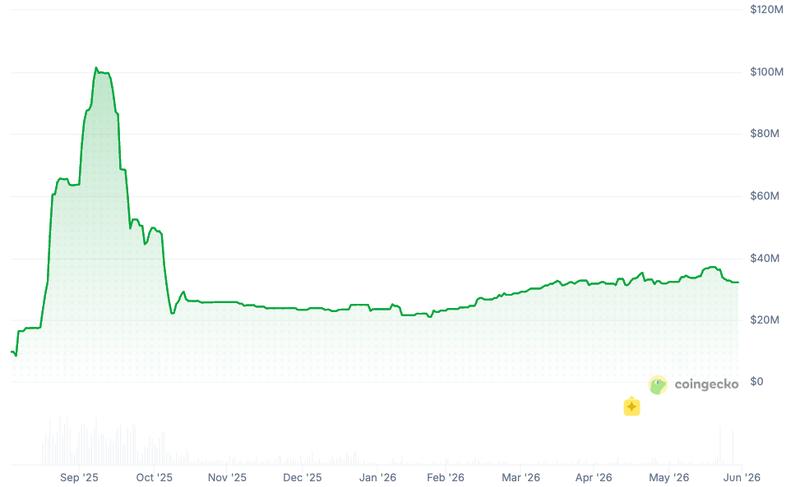
The stablecoin's total market capitalization temporarily surpassed the $100 million threshold soon after its debut before declining to levels under $30 million, based on data from CoinGecko.
As of the current time of writing, mUSD maintains a market cap of $32 million, positioning it within the category of smaller US dollar-denominated stablecoins measured by total market size.