Mantle Token Holders Green-Light 30,000 ETH Aave Credit Line Following rsETH Security Breach
A newly approved credit line aims to support Aave in managing bad debt that emerged following the rsETH exploit in April, which put pressure on its WETH lending market.

Token holders in the Mantle ecosystem have approved a proposal to establish a credit facility providing up to 30,000 Ether (ETH), valued at approximately $68 million, to Aave DAO as part of efforts to address bad debt stemming from the rsETH security breach that occurred in April.
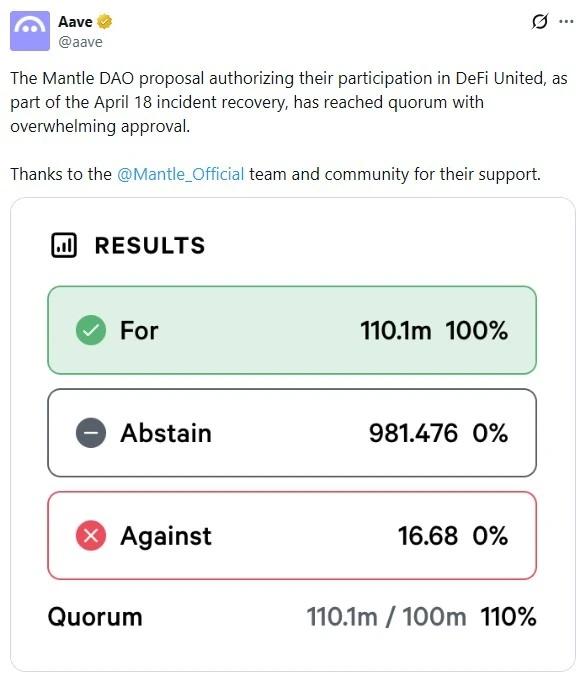
Known as MIP-34, the proposal successfully passed through a seven-day voting period on Snapshot that concluded on Friday, as confirmed by data from the DAO governance platform Snapshot. The approved measure grants authority to the Mantle Foundation to enter into negotiations and execute final agreements with Aave DAO for a loan originating from the Mantle Treasury, with the facility contingent upon Aave's implementation of its recovery strategy and both parties reaching agreement on final terms.
The purpose of this credit facility is to mitigate the consequences of the rsETH incident on Aave V3's operations. According to the proposal, the malicious actor deposited 89,567 unbacked rsETH tokens on the Aave platform and proceeded to borrow approximately $190 million across WETH, wstETH and stablecoins, resulting in potential bad debt estimated to fall between $123.7 million and $230.1 million.
This governance vote arrives as consequences from the rsETH security breach have progressed beyond the immediate liquidity crisis into a more comprehensive remediation stage, with Mantle strategically deploying its treasury resources as a safety net while Aave undertakes efforts to resolve bad debt issues and rebuild trust in its lending platform ecosystem.
Aave WETH market cools after post-exploit squeeze
The proposed Mantle credit facility is designed to bridge the funding gap that simultaneously triggered liquidity pressures throughout Aave's various lending markets.
In a report published on Thursday, Galaxy Research detailed how the rsETH exploit drove Aave's Wrapped Ether (WETH) market into an extended period of strain, with WETH utilization rates maintaining levels exceeding 99% for a duration of 12.7 days following the security incident.
"Throughout the complete analysis timeframe, WETH utilization remained structurally elevated and approached the 100% threshold, with an average hovering around 99.6% and only declining to approximately 98.47% by the conclusion of the snapshot period," Galaxy said.
Elevated utilization rates indicate that the majority of the available asset has been borrowed out, resulting in minimal idle liquidity remaining for users seeking immediate withdrawals. According to Galaxy's assessment of Aave's situation, the WETH market continued to experience stress because the rate of supply contraction outpaced the decline in borrowing activity, maintaining utilization rates close to maximum capacity even following the initial disruption.
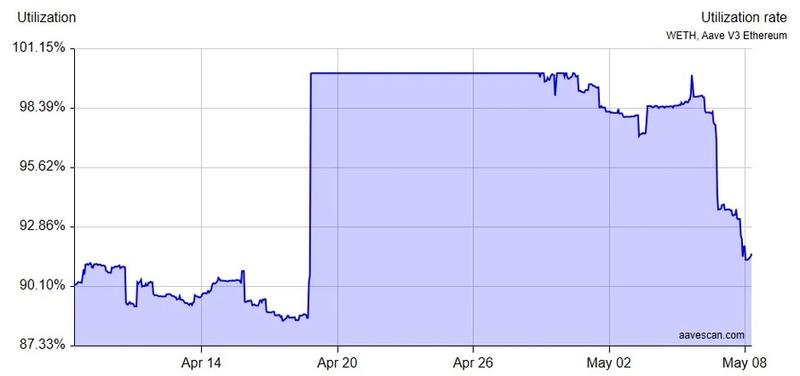
Conditions in the market have since moderated from the near-100% utilization figures documented in Galaxy's research. Data from Aavescan revealed that Aave's Ethereum V3 WETH market stood at approximately 91.6% utilization as of Friday, with roughly 2.02 million WETH in total supply and 1.85 million WETH currently borrowed.